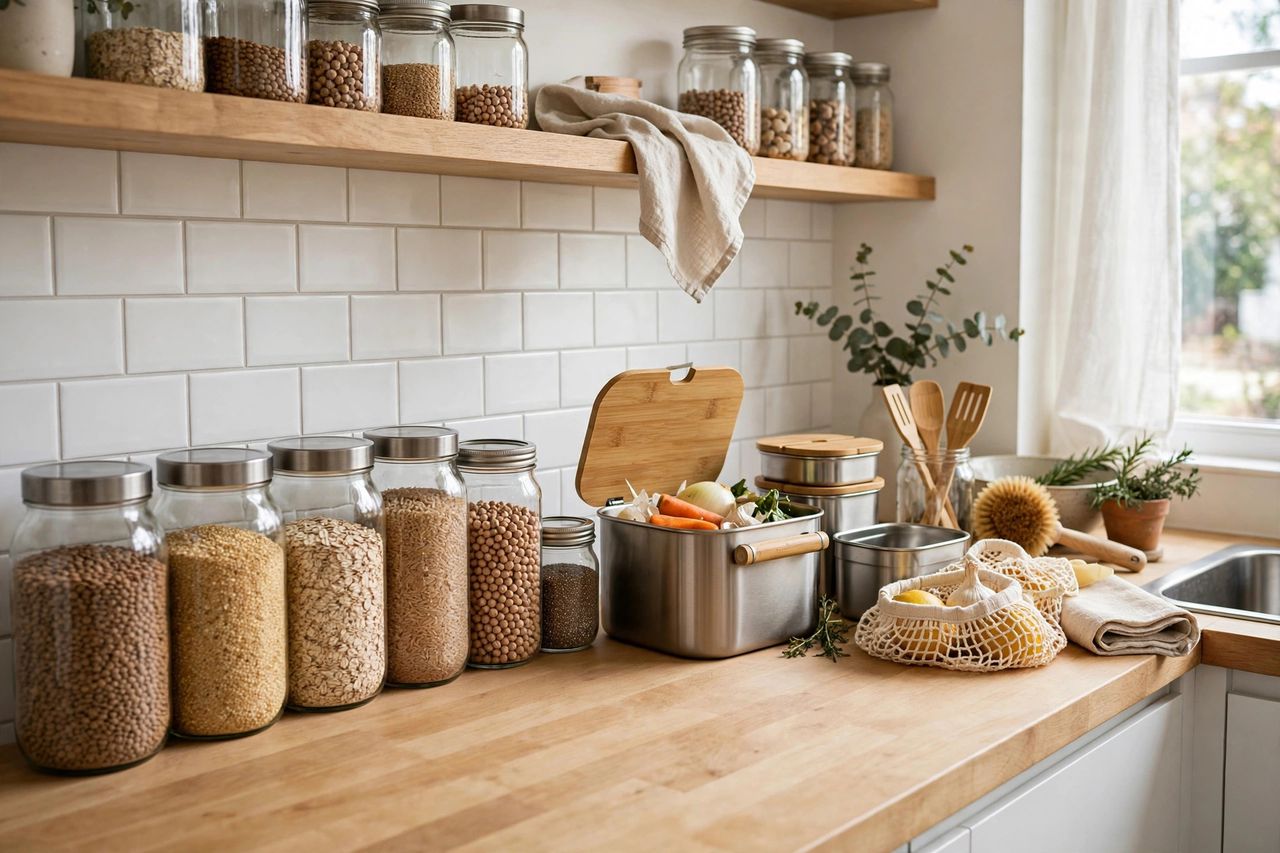
The average household throws away a shocking amount of food every year — and every item in the bin is money you already spent. A zero-waste kitchen is not about perfection; it is about simple systems that stop good food from becoming garbage. Families who apply these habits typically save around $100 a month on groceries, while shrinking their environmental footprint at the same time.
Audit your trash for one week
You cannot fix what you do not measure. For seven days, keep a small notepad on the counter and write down everything you throw away — wilted lettuce, expired yogurt, half a loaf of bread. At the end of the week, patterns jump out: most households waste the same five or six items repeatedly. Your trash audit reveals your personal top offenders — attack those first and you will cut waste by half with almost no effort.
Plan meals and shop with a list
Impulse buying is the number one source of food waste. Plan three to four dinners per week, check what you already have, and write a strict shopping list. Buy loose produce instead of pre-packed bags so you take only what you need. Shop the bulk bins for rice, lentils, and spices. A list turns grocery shopping from a guessing game into a mission — and missions do not buy a second bunch of spinach you will never eat.
Store food like a professional
Most spoilage is a storage problem, not a buying problem. Keep herbs in a jar of water in the fridge, wrap greens in a damp towel, and move older items to the front so you use them first. Freeze bread, cooked grains, and ripe fruit before they turn. Label leftovers with the date so mystery containers stop accumulating. Good storage buys you days of extra freshness — days that are the difference between dinner and the bin.
Turn scraps into resources
Vegetable peels, bones, and stale bread are ingredients, not waste. Simmer scraps into free stock, blend overripe fruit into smoothies, and turn stale bread into croutons or breadcrumbs. What is truly inedible — coffee grounds, eggshells, onion skins — goes to compost or a countertop bokashi bin. When scraps become inputs instead of outputs, your kitchen stops producing garbage and starts producing value.
Pick one habit this week — the trash audit, the shopping list, or the freezer — and master it before adding the next. Within a month your bin will be lighter, your fridge will be calmer, and your wallet will notice the difference first.