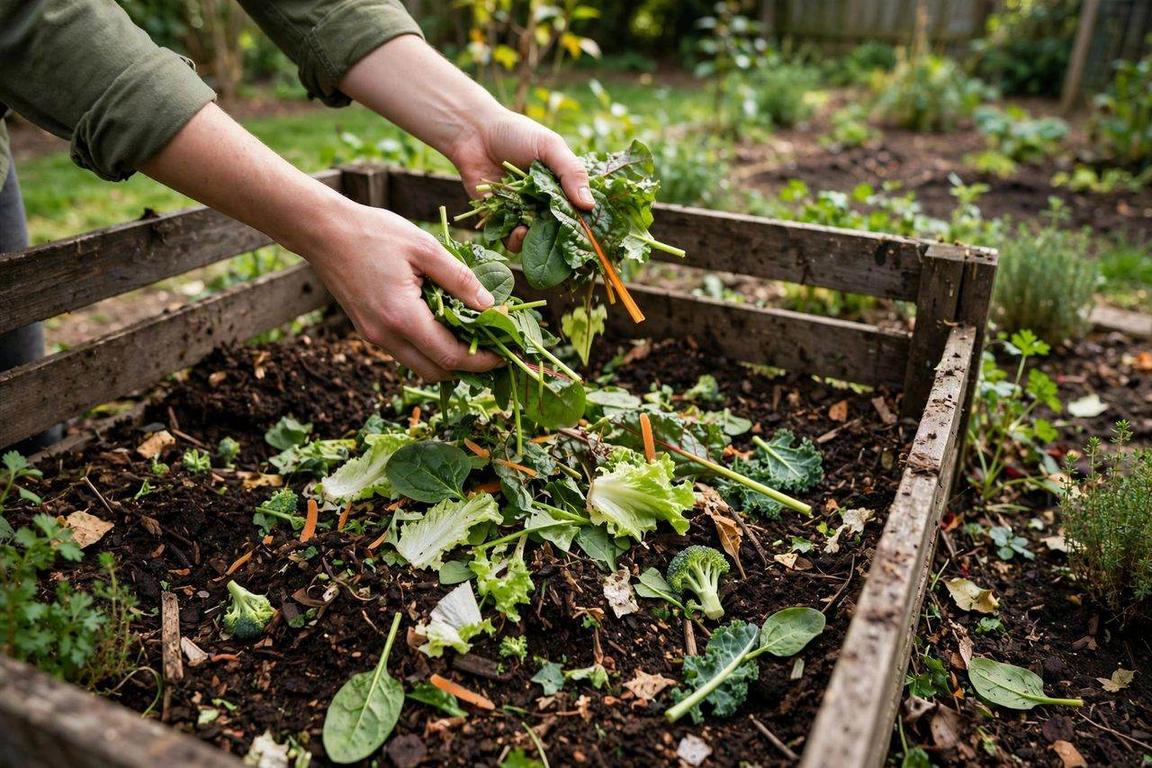
Almost a third of what households throw away could be composted instead — food scraps and yard waste that rot in landfills and release methane, a potent greenhouse gas. Composting turns that 'waste' into rich, free fertilizer for your plants. It's the easiest environmental win in your home, and it costs almost nothing to start.
Why Compost?
Beyond cutting methane emissions, compost returns nutrients to the soil, improves water retention, and replaces chemical fertilizers you'd otherwise buy. Your plants grow stronger and your trash bin gets lighter and less smelly. One household composter can divert hundreds of pounds of waste a year.
What Can Go In (and What Can't)
Fruit and vegetable scraps, coffee grounds, eggshells, shredded newspaper, dry leaves, and yard trimmings all compost beautifully. Keep out meat, dairy, oils, and pet waste — they smell, attract pests, and can carry pathogens. When in doubt about meat or dairy, leave it out.
Pick Your Method
A simple backyard bin works if you have a garden. A tumbler speeds things up and keeps rodents out. No garden? A worm bin (vermicomposting) fits under a sink and produces superb fertilizer. Bokashi buckets ferment scraps indoors with zero smell. Apartment dwellers: a small worm bin under the sink works year-round.
The Simple Ratio
Compost needs roughly three parts 'browns' (dry leaves, cardboard, newspaper — carbon) to one part 'greens' (food scraps, grass — nitrogen). Too many greens and it gets slimy; too many browns and it stalls. Bury fresh scraps under browns every time you add them.
Troubleshooting
Bad smell? Too many greens and not enough air — add browns and turn the pile. Fruit flies? Bury scraps deeper. Nothing happening? It may be too dry — sprinkle water. Bad smells always mean too many greens and not enough air — the fix takes two minutes.