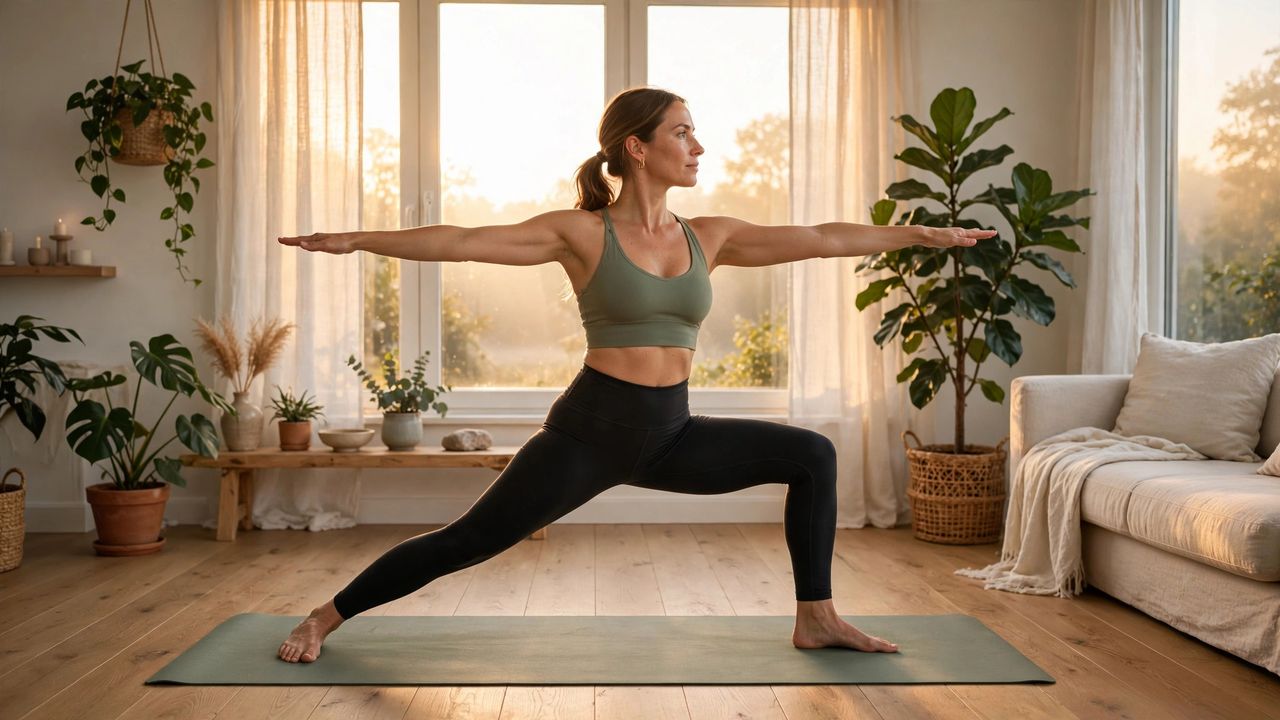
Yoga asks for no flexibility, no fitness level, and no studio — just a floor and twenty minutes. The secret beginners miss: yoga meets you where you are, and progress comes from showing up, not from touching your toes. You don't need to be flexible to start — flexibility is the result, not the requirement.
Start With the Foundational Poses
Learn five basics first: mountain pose, downward dog, warrior one and two, and child's pose for rest. Master these before chasing fancy ones — they appear in nearly every sequence. Five poses done well beat twenty poses done badly. Use free video classes to check your alignment.
Build a 20-Minute Daily Habit
Short and regular beats long and occasional. Pick a fixed time — mornings work well — and protect it like an appointment. A twenty-minute practice you actually do will change your body faster than a heroic weekly session you skip.
Breathe on Purpose
Yoga pairs movement with slow nasal breathing: inhale to expand, exhale to deepen. When a pose gets hard, return to the breath instead of holding it. If you're holding your breath, you're pushing too hard — back off and breathe. The breath is the practice; the poses are the vehicle.
You Need Almost No Gear
A mat keeps you from slipping; comfortable clothes keep you from fussing. That's the whole list. Blocks and straps help stiff beginners, but a stack of books and a belt work fine. Buy gear to solve real discomfort, not to look like a yogi.
Respect Pain, Embrace Discomfort
Stretching discomfort is normal; sharp or joint pain is a stop sign. Modify poses freely — bent knees and props are smart, not cheating. Yoga practiced gently for years beats yoga practiced aggressively for a month. Check with a doctor first if you have injuries or conditions.