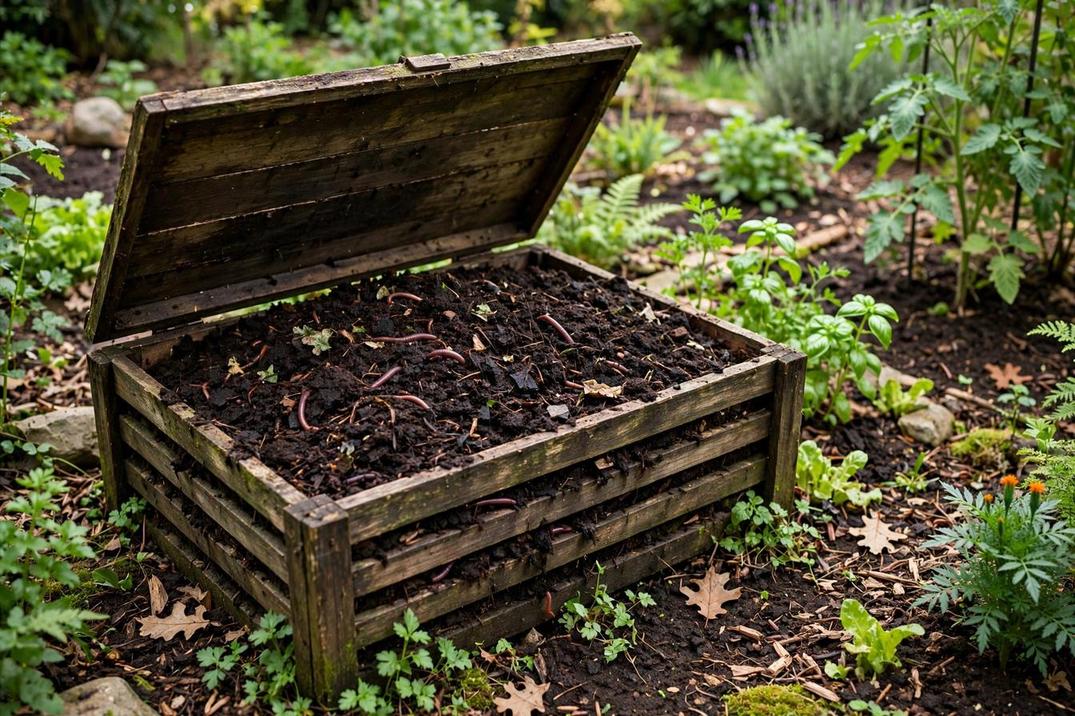
Worm composting turns kitchen scraps into the richest natural fertilizer on earth, right under your sink. A well-run worm bin smells like forest soil, not garbage — odor means something needs fixing, usually overfeeding.
Setting Up Your First Bin
Use a shallow opaque bin with air holes, filled with damp shredded cardboard and newspaper bedding. Bedding should feel like a wrung-out sponge — moisture is the foundation of the whole system. A 10-gallon bin handles scraps for a small household.
Meet the Red Wigglers
Red wigglers (Eisenia fetida) are the composting champions — they eat half their weight daily and breed fast. Start with about one pound of worms per square foot of bin surface. Give them 2–3 days to settle into the bedding before the first feeding.
What to Feed (and What to Skip)
Fruit and vegetable scraps, coffee grounds, tea bags, and crushed eggshells are perfect worm food. Bury food under the bedding every time — exposed scraps attract fruit flies, the number-one beginner complaint. Never feed meat, dairy, oils, or citrus in large amounts.
The Golden Feeding Ratio
Balance nitrogen-rich food scraps with carbon-rich bedding at roughly a 1:2 ratio. When in doubt, add more bedding — excess carbon never hurts, but excess food always does. Chop scraps small so worms process them faster.
Harvesting Black Gold
After 3–4 months, push finished compost to one side and add fresh bedding and food to the other — worms migrate, letting you scoop clean castings. Vermicompost is 5x richer in nitrogen than garden soil — a little goes a long way. Mix it into potting soil or brew it into compost tea.
Troubleshooting Common Issues
Worms fleeing the bin signals acidity, heat, or soggy bedding — add crushed eggshells and fresh dry bedding. Fruit flies disappear within days once you bury food properly and stop overfeeding. Keep the bin between 15–27°C for happy, productive worms.