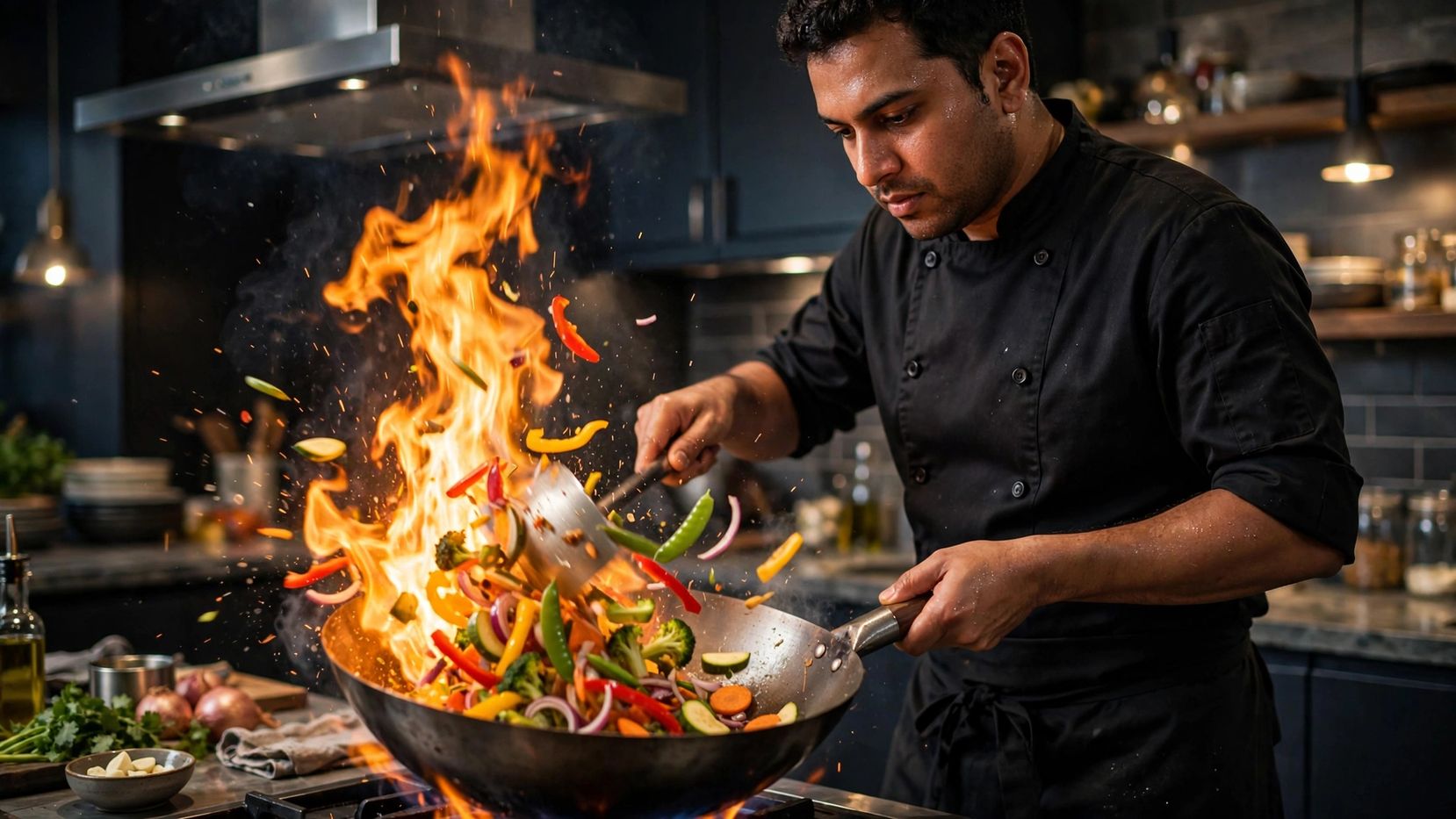
The wok is the world's most versatile pan — it stir-fries, steams, deep-fries, and smokes with one curved surface. Mastering the wok is really about mastering heat: fierce heat, fast motion, and everything prepped before you start.
Choosing Your First Wok
A 12- or 14-inch carbon steel wok with a flat bottom suits home stoves best. Carbon steel is the classic choice — it heats fast, seasons naturally, and lasts decades. Avoid nonstick woks for stir-frying; the coating cannot handle the extreme heat.
Seasoning: Building the Nonstick Patina
Scrub off the factory oil, heat the wok until it changes color, then wipe thin layers of high-smoke-point oil over the hot surface. Thin oil layers are the secret — thick oil turns sticky instead of slick. Repeat 2–3 times, then cook with it often.
Wok Hei: The Breath of the Wok
Wok hei is the smoky char that makes restaurant stir-fries taste magical — it comes from oil vapors igniting at searing heat. Get the wok smoking hot before adding oil; lukewarm woks steam food instead of searing it. Work in small batches so the pan stays hot.
Essential Stir-Fry Technique
Prep everything first (mise en place), add aromatics like garlic and ginger for seconds, then proteins, then vegetables by hardness. Keep food moving constantly — 90% of stir-fry skill is just tossing and timing. A sauce of soy, oyster sauce, and cornstarch slurry finishes most dishes.
Beyond Stir-Fry: Steaming and Smoking
With a bamboo steamer lid, your wok becomes a dumpling station; with foil and tea leaves, a smoker. One wok replaces a skillet, steamer, and deep fryer — that is its real value. Try popcorn in a wok once and you will never go back.
Cleaning and Daily Care
Rinse a hot seasoned wok with water and scrub with a bamboo brush — no soap needed on a good patina. Dry the wok over heat after every wash to prevent rust; a seasoned wok hates sitting wet. Store it lightly oiled in dry air.