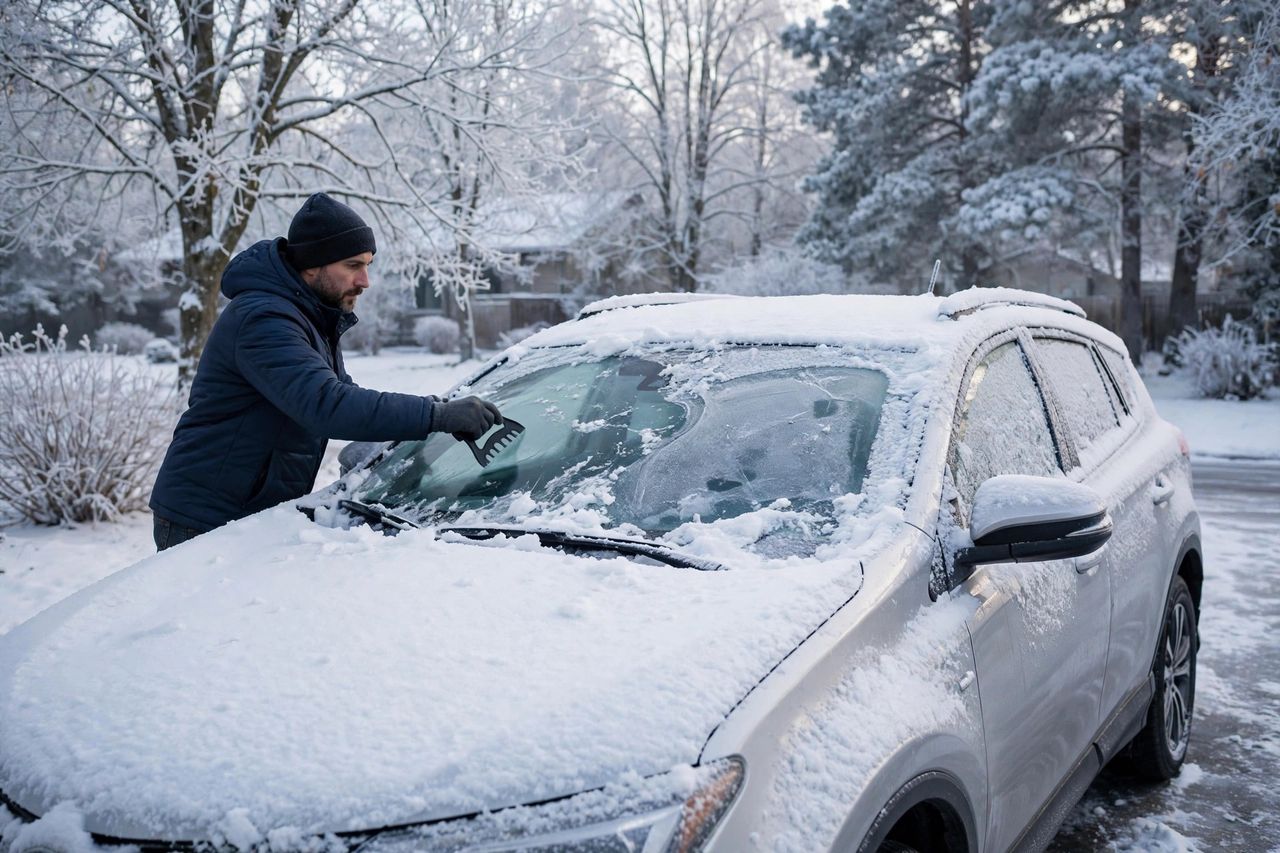
Freezing temperatures punish every part of your car — the battery, the tires, the fluids, even the wipers. A little preparation now prevents expensive breakdowns and dangerous moments on icy roads later. Here is your complete 2026 winter car care checklist.
Test Your Battery Before the First Frost
Car batteries lose about half their cranking power at −20°C, and cold is when weak batteries die. Have your battery tested at an auto shop — most do it free — and replace it if it is older than four years. Clean any corrosion from the terminals, since grime creates resistance that a struggling battery cannot afford.
Switch to Winter Tires
All-season tires harden below 7°C and lose grip exactly when you need it most. Winter tires use softer rubber and deeper tread to bite into snow and ice. Install them on all four wheels — mixing tire types unbalances handling. Check pressure monthly, since cold air shrinks and underinflated tires skid more easily.
Check Fluids and Antifreeze
Your coolant must protect the engine down to at least −30°C; a cheap test strip or a shop visit confirms it. Top up washer fluid with a winter formula rated for deep frost, and make sure the oil grade suits cold starts. Running low on any fluid in winter turns a small neglect into a seized engine.
Protect Your Visibility
You cannot drive safely if you cannot see. Replace worn wiper blades and consider winter blades that resist ice buildup. Check every light — headlights, brake lights, indicators — because winter daylight is short. Test the defroster and the rear-window heater now, not during the first snowstorm.
Pack a Winter Emergency Kit
Keep this in the trunk all season: a blanket, gloves and a warm hat, a flashlight with fresh batteries, jumper cables, a small shovel, a bag of sand or kitty litter for traction, snacks, and a phone charger. Add a spare bottle of washer fluid — it empties fast in slushy weather.
Cold-Start Driving Habits
Let the engine idle 30 seconds, then drive gently for the first few minutes — hard acceleration on a cold engine wears it fast. Brake earlier and gentler on icy roads to avoid skids, and keep the fuel tank at least half full so condensation cannot freeze in the lines.
An hour of winter prep now buys you a whole season of safer, cheaper driving. Do the checklist before the cold arrives.