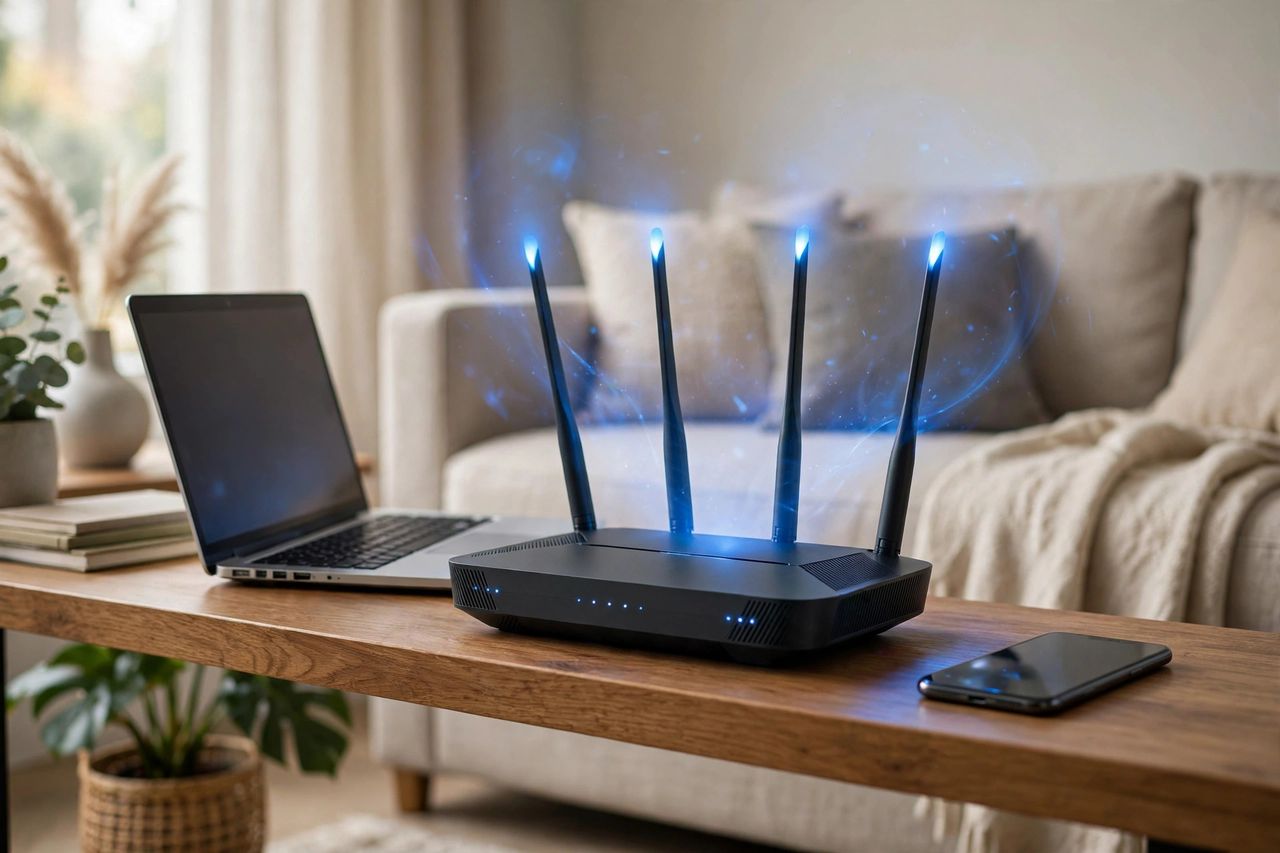
Wi-Fi 6E adds a brand-new 6 GHz band to your wireless network — more lanes, less traffic. But new routers aren't cheap, and not every home needs one. Here's an honest breakdown of who should upgrade in 2026 and who should wait.
What 6E Actually Gives You
The 6 GHz band is like a new empty highway: wide 160 MHz channels with zero legacy devices clogging it. In real homes that means faster top speeds (often 1 Gbps+ over Wi-Fi) and much lower latency — great for gaming, video calls, and 4K streaming. The catch: 6 GHz has shorter range and struggles through walls, so it's best in the same room as the router.
Who Should Upgrade
Upgrade if you have gigabit internet but your Wi-Fi can't deliver it, if you game or video-call daily, or if you live in an apartment building with dozens of competing networks. You'll also need 6E-capable devices — a new router does nothing for a 5-year-old laptop. Check your phone and laptop specs first.
Who Can Skip It
If your internet plan is under 300 Mbps, your current router probably isn't the bottleneck. Small apartments with few devices won't feel a difference. And if your devices are older, wait until your next phone or laptop upgrade — then buy the 6E (or Wi-Fi 7) router to match.
Buying Tips
Look for WPA3 security, at least one 2.5 Gbps Ethernet port, and good reviews for firmware updates — abandoned routers become security risks. Mesh 6E systems solve the range problem in bigger homes. Don't pay extra for gaming branding; the underlying chips are usually identical.
Wi-Fi 6E is genuinely great tech — for the right home. Match the router to your internet speed and your devices, and you'll feel the difference. Buy blindly, and you've just bought an expensive paperweight with blinking lights.