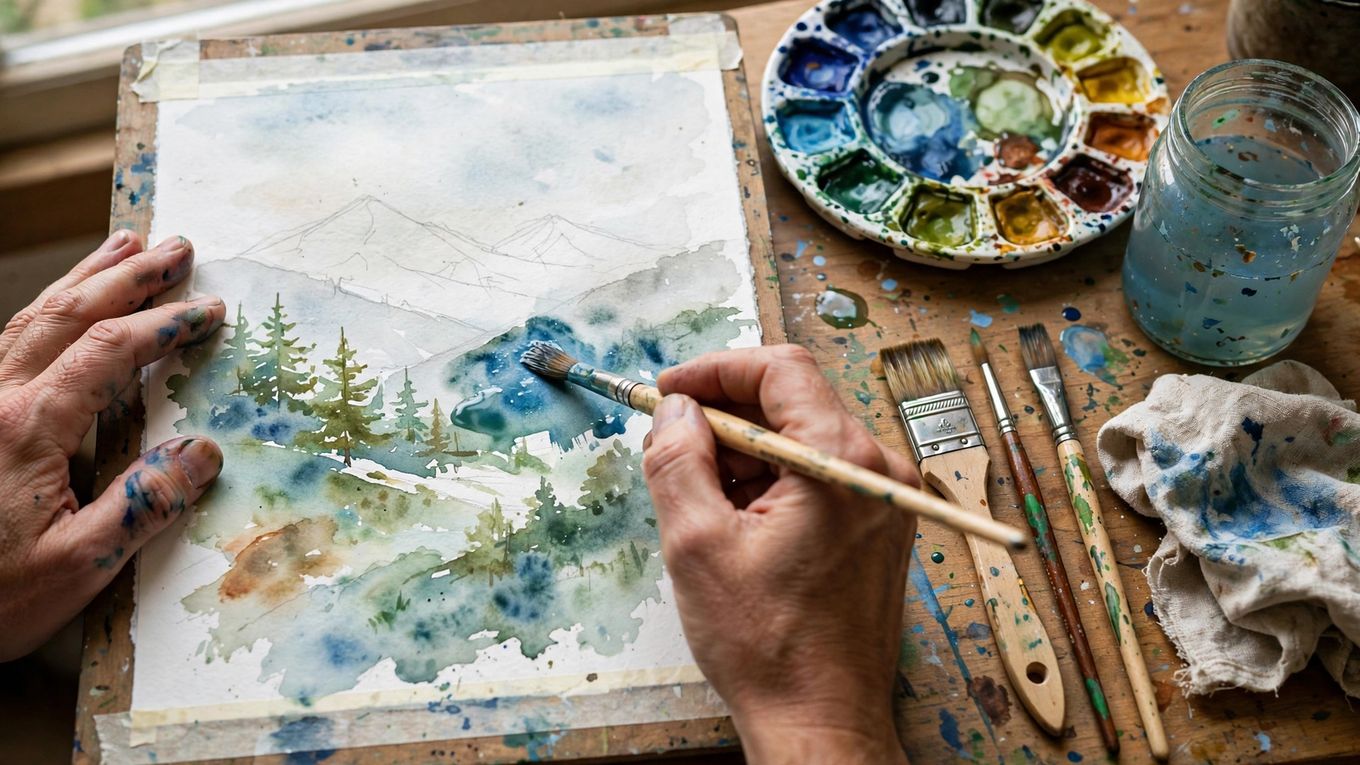
Watercolor's glowing transparency intimidates beginners, but its basics are simple: pigment, water, and paper. With a small palette and two key techniques, you can paint something beautiful this weekend. Unlike oils or acrylics, watercolor needs minimal cleanup and almost no dedicated studio space. Control the water and you control the painting.
Buy Smart Supplies
Start with student-grade tube paints (a warm and cool of each primary plus burnt sienna), two round brushes, and 100 percent cotton paper. A small spray bottle and two water jars — one for rinsing, one for clean water — complete your setup. Good paper matters more than expensive paint — cheap paper buckles and kills washes.
Learn Flat and Graded Washes
A flat wash lays even color across an area, working quickly top to bottom. A graded wash dilutes as you go for a light-to-dark fade. Washes are the alphabet of watercolor — practice them before painting "words."
Mix Colors Simply
Mix on the palette, not on the paper, until you gain control. A limited palette teaches color harmony automatically. Muddy colors come from overmixing — three strokes, then stop.
Paint Your First Landscape
Wet the sky area, drop in blue, and let it bloom. While damp, add a distant tree line in muted green. Once dry, paint a simple foreground. Work light to dark — you can always darken, never lighten.
Embrace Happy Accidents
Blooms, backruns, and granulation are watercolor's signature beauty. Tilt the paper to guide the paint; lift mistakes with a thirsty brush. Fight the water less and beautiful accidents happen more.
Daily Practice Exercises
Paint one 10-minute color chart, one wash gradient, and one tiny sketch daily. Keep everything in a sketchbook to track your progress. Photograph your work weekly; comparing old and new paintings reveals progress you might miss day to day. Small daily paintings beat one ambitious monthly masterpiece.