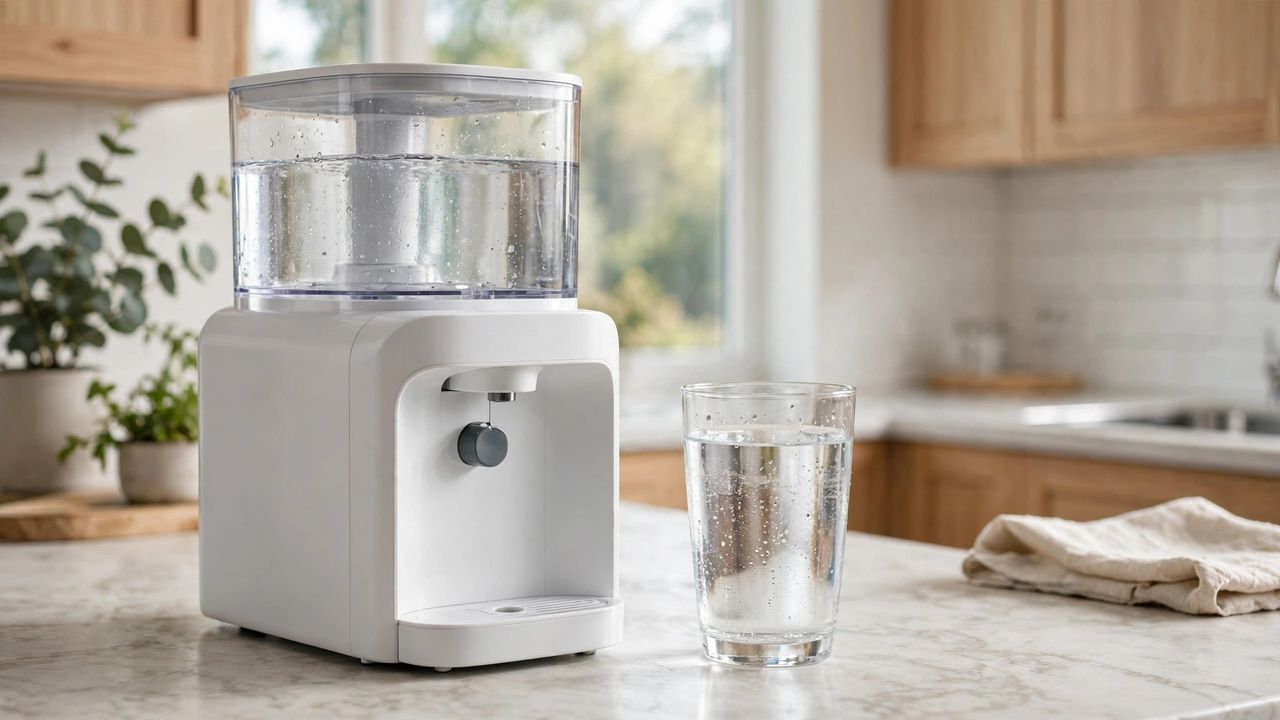
Walk into any appliance store in 2026 and you will face a wall of water purifiers, all claiming to be the best. But the truth is simple: the right purifier depends on your water, not on the marketing. Once you understand RO, UV and UF, picking the right one takes ten minutes instead of ten days of confusion.
RO: reverse osmosis, the heavy-duty option
Reverse osmosis pushes water through an ultra-fine membrane that blocks dissolved salts, heavy metals like lead and arsenic, and most contaminants. It is the best choice when your tap water tastes salty, comes from a borewell, or has a high TDS (total dissolved solids) reading. Buy RO only if your TDS is above roughly 200–300 ppm — for already-soft city water it strips useful minerals and wastes a lot of water for no benefit.
UV: ultraviolet, the germ killer
UV purifiers use ultraviolet light to destroy bacteria and viruses without changing the water's taste or removing minerals. They are ideal when your municipal supply is already treated and low in dissolved solids but you worry about microbes, especially during monsoon or pipe repairs. UV only works on clear water and removes nothing chemical — pair it with a basic filter if your tap runs cloudy.
UF: ultrafiltration, the simple membrane
UF uses a fiber membrane that physically traps bacteria and suspended particles while keeping dissolved minerals intact — no electricity or water waste required. It suits areas with soft but dusty or chlorinated water where you mainly want cleaner-tasting water. UF is the cheapest to run and maintain, but it cannot touch dissolved salts or heavy metals the way RO can.
Test your water, then maintain your filters
Buy a cheap TDS meter (a few dollars) and check your tap water before shopping — the number instantly narrows your choice. After buying, replace pre-filters every 6–9 months, RO membranes every 12–18 months, and UV lamps about once a year, or performance silently drops. Set calendar reminders for filter changes; a purifier with old filters is worse than no purifier, because it can become a breeding ground for bacteria.
Do not pay for technology your water does not need. Test first, match the technology to the problem, and budget for replacement filters — the sticker price is only half the real cost. With the right setup, every glass you pour in 2026 will be safe, tasty and cheap.