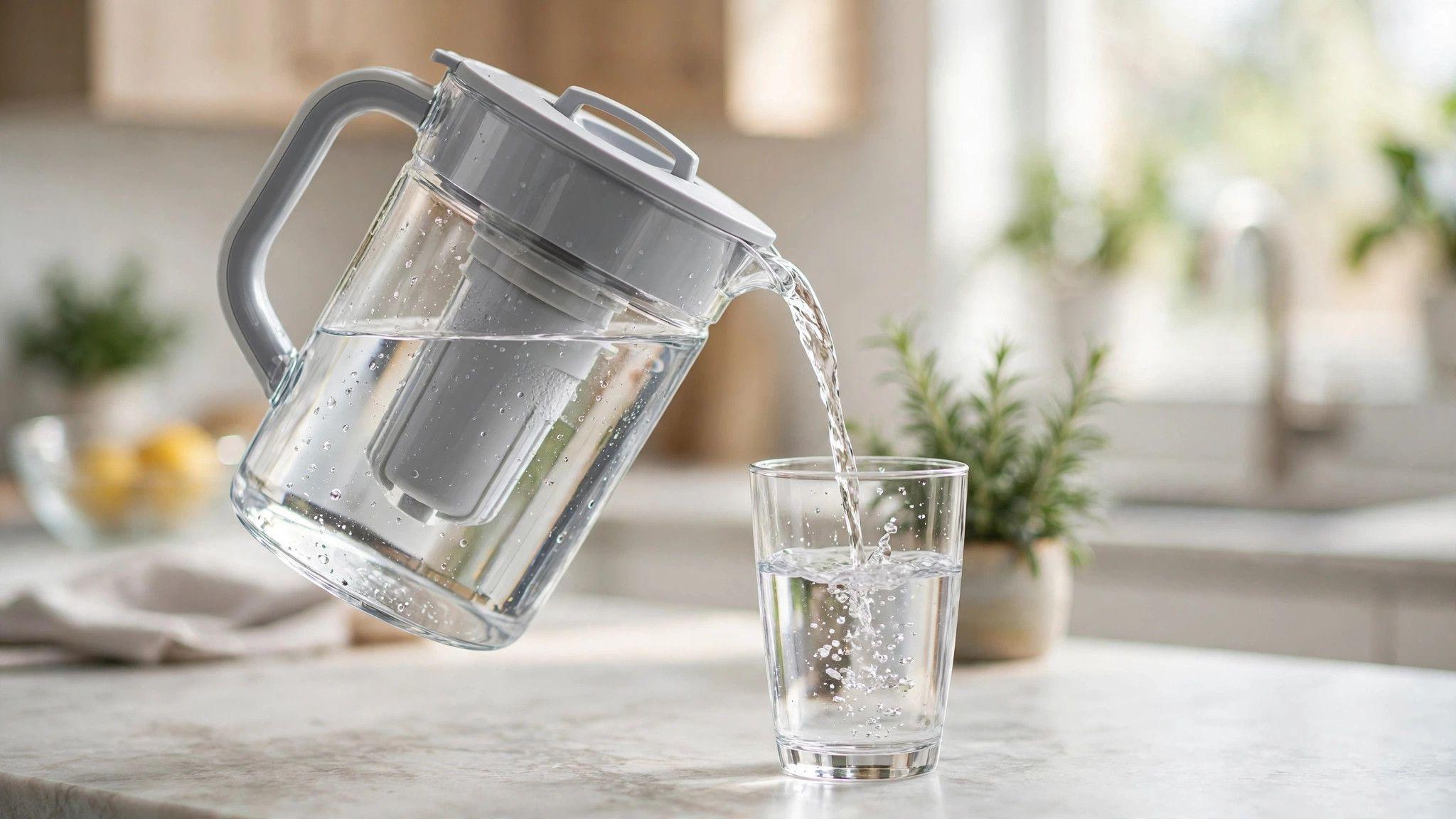
Bottled water is expensive and wasteful, yet not everyone trusts the tap. A home water filter fixes both — but the right type depends on what is actually in your water. Here is how to choose in 2026 without overspending.
Know Your Options: Four Main Types
Pitcher filters are the cheapest and easiest — great for renters, but slow and limited in what they remove. Faucet-mounted filters are faster and filter more, though they can slow water flow and look clunky. Under-sink filters offer excellent filtration with a dedicated tap, but need installation. Reverse osmosis (RO) systems remove the widest range of contaminants, including lead and fluoride, but cost more and waste some water in the process.
What Each Filter Removes
No filter removes everything, so match the filter to your water problem. Standard carbon filters handle chlorine taste and odor well. Look for NSF-certified models if you worry about lead or specific contaminants — certification means an independent lab verified the claims. If you are on a private well, consider testing for bacteria and nitrates, which basic pitchers do not address.
Test Your Water First
Before buying, find out what you are filtering. Many cities publish free annual water quality reports — check your utility's website. Cheap home test strips give a quick snapshot of hardness, chlorine, and pH, while a certified lab test (around $30–$50) is worth it if you suspect lead or well contamination. Buying a filter without knowing your water is like buying medicine without a diagnosis.
Count the Replacement Costs
The filter unit is just the down payment. Calculate the annual cost of replacement cartridges — a cheap pitcher with pricey monthly cartridges can cost more over two years than a mid-range under-sink system. Check cartridge life in gallons, not just months, since a large family burns through filters faster. Set a phone reminder to replace on schedule; an old cartridge can harbor bacteria and filter nothing.
Test your water, pick the simplest filter that addresses your problem, and budget for cartridges. Clean, good-tasting tap water is one of the cheapest upgrades a home can have.