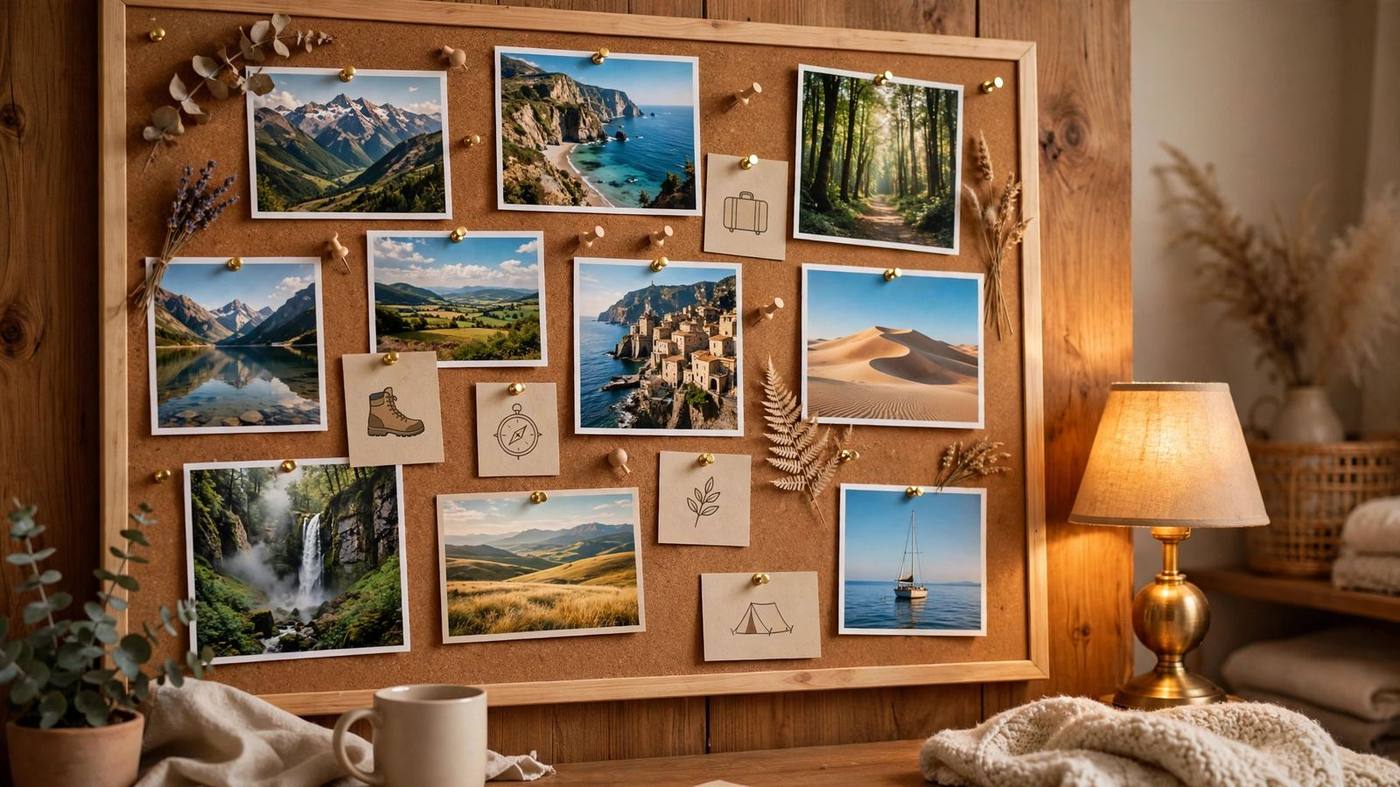
A vision board is a collage of images and words representing the life you want — but it's not magic wallpaper. It works because it keeps your goals visible every single day, nudging your decisions toward them. Athletes and executives have used visualization for decades. Here's how to build a vision board in 2026 that actually changes behavior instead of just looking pretty.
What a Vision Board Really Does
Your brain filters thousands of daily inputs and notices what you've primed it to see. A vision board primes your attention toward opportunities related to your goals — the apartment listing, the course, the conversation you'd otherwise scroll past. It doesn't replace action; it makes action more likely by keeping your target in your visual field daily.
Physical vs. Digital: Pick Your Format
A physical board (corkboard, poster, or framed collage) works best if you'll hang it where you see it — bedroom wall, office, bathroom mirror. Cut images from magazines or print them; the tactile process deepens commitment. A digital board (Canva, Pinterest, or your phone wallpaper) travels with you and is easier to update. The format matters less than one rule: you must actually see it every day.
How to Build One That Works
Start with specific goals, not vague wishes — "run a 10K in October" beats "get fit." Choose images that make you feel something: the street you'll run on, the medal, the sunrise training run. Add power words and short affirmations in the present tense ("I am disciplined"). Limit yourself to 5–8 goals so the board stays focused, and place it somewhere unavoidable.
Mistakes That Kill Vision Boards
The biggest mistake is building it and never looking at it — a board in a closet is décor, not a tool. Next is vagueness: a Ferrari photo with no plan is a fantasy, not a goal. Avoid cramming in 30 images (visual noise your brain ignores), and refresh the board quarterly — cross off achieved goals and add new ones. Finally, pair every image with a next action: the board shows the destination, your calendar shows the steps.
Spend an hour this weekend building yours. Then spend two minutes each morning actually looking at it — that tiny daily habit is where the real power lives.