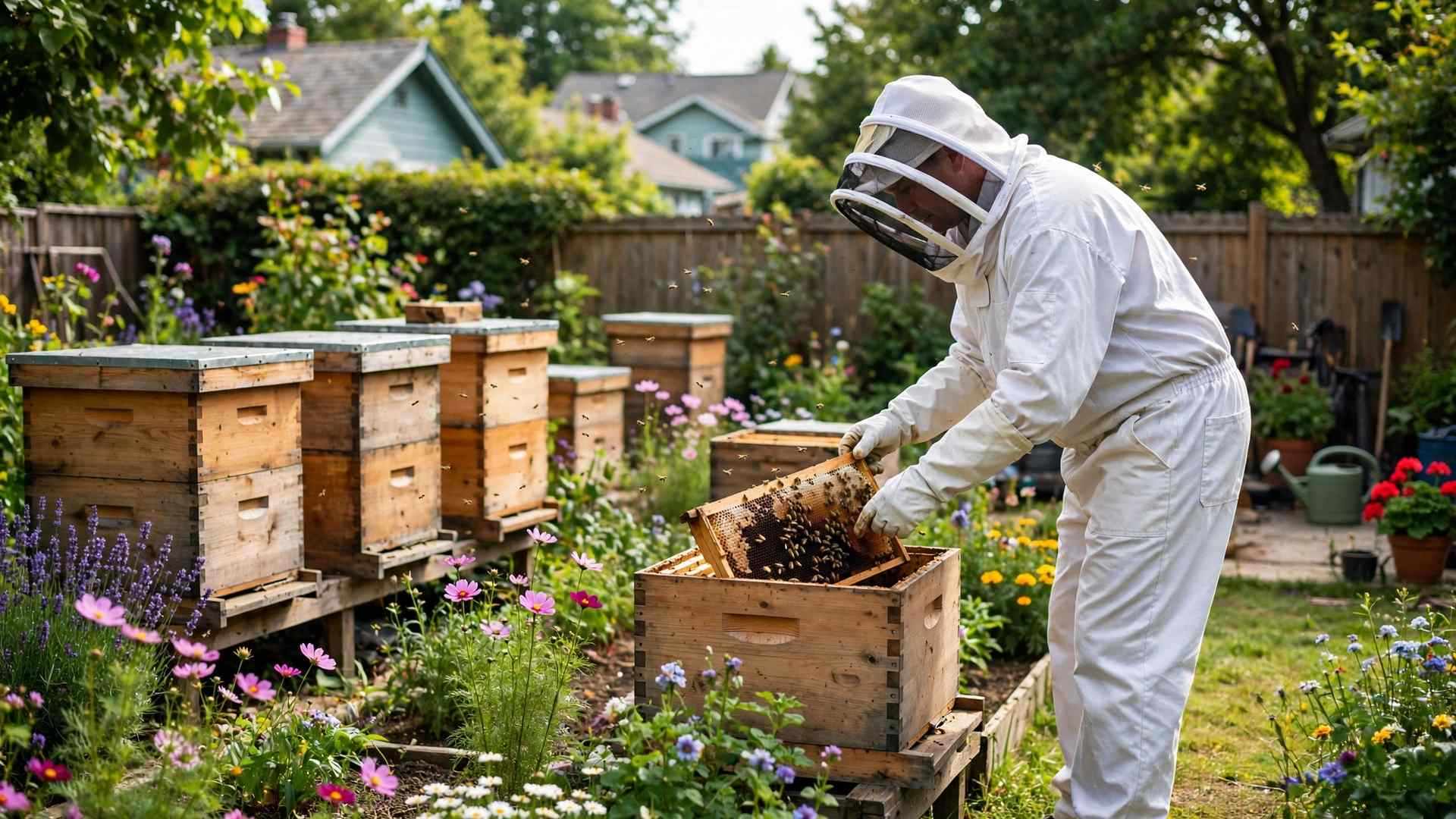
Bees thrive in cities — rooftop and backyard hives are booming in 2026, and a single healthy hive can produce 30–60 pounds of honey a year. But beekeeping isn't just about honey: it's about watching a 50,000-bee superorganism run itself, and helping pollinators along the way. Here's how to start your first hive the right way.
Check Your Local Rules First
Many cities and HOAs allow backyard hives but have rules: hive limits, setback distances from property lines, and sometimes registration or permits. Check your city ordinances before buying anything. Good neighbor practice also matters: place the hive so its flight path goes up and over fences (a tall fence or hedge in front of the entrance works), and keep a water source nearby so bees don't visit neighbors' pools.
Choose a Beginner-Friendly Hive
The standard Langstroth hive is the best starter choice — it's affordable, modular, and every book and mentor teaches with it. Top-bar hives are simpler and cheaper but harder to expand. Skip gimmicky "flow" gadgets for your first year: learning to inspect frames and read the colony is a skill you want, not a shortcut past. Budget roughly $300–$600 for the hive, protective gear, and basic tools.
Essential Gear & Safety
Buy a ventilated bee suit or jacket with veil, goatskin gloves, a smoker, and a hive tool. Smoke calms bees by masking their alarm pheromones — a few gentle puffs at the entrance and under the lid are all you need. Work the hive on warm, calm days (avoid rainy or windy days when bees are grumpy), move slowly, and never swat. Most stings happen when bees get crushed or trapped in clothing.
Your First Season Game Plan
Start in spring with a "nuc" (nucleus colony) — a small established colony with a laying queen — from a local supplier. Inspect every 7–10 days in the first months: look for eggs (proof the queen is working), check food stores, and watch for pests like varroa mites. Your first-year goal isn't honey — it's a strong colony that survives winter. Leave them all their honey the first year; harvests come from year two onward.
Beekeeping rewards patience more than bravery. Take a local beginner course or find a mentor through your nearest beekeepers' association — an hour with an experienced keeper beats ten hours of videos. Want help planning your hive placement or gear list? Ask US AI's free chat anytime.