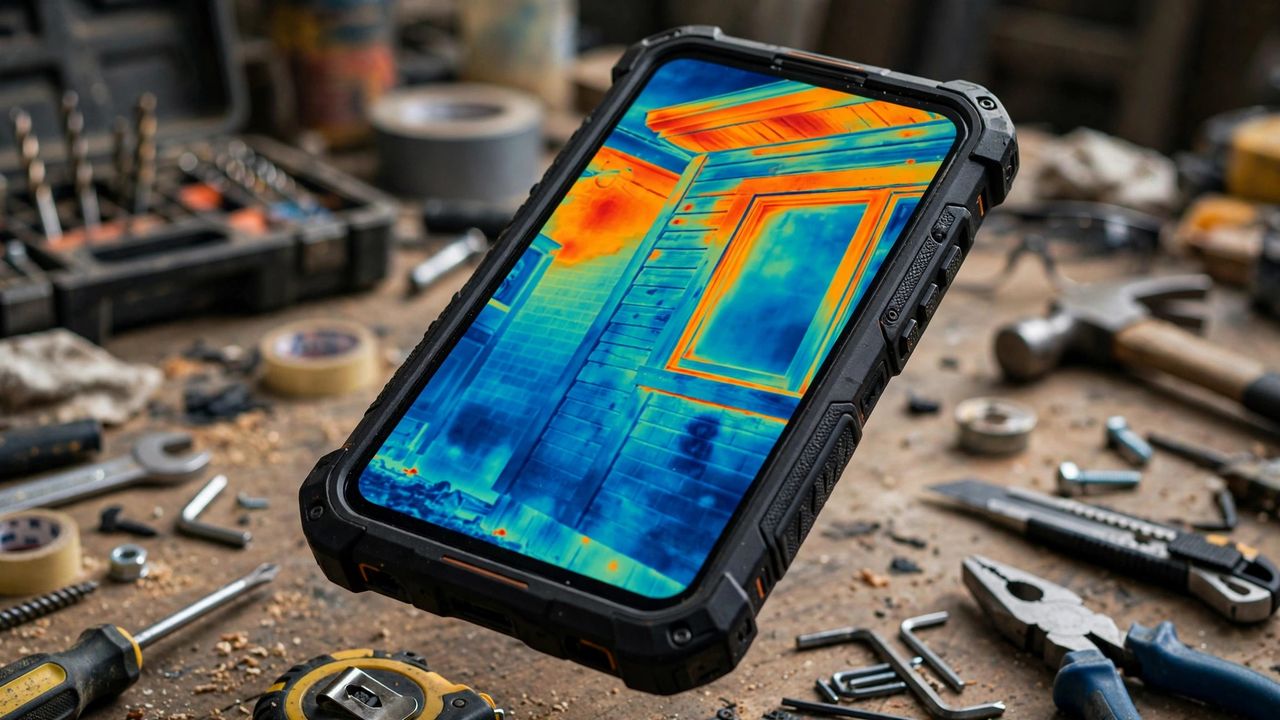
A phone that sees heat sounds like spy gear, but thermal camera phones are becoming a genuinely practical tool for homeowners, electricians, and DIYers. Point one at a wall and you can spot missing insulation, a hidden water leak, or an overheating breaker before it becomes an expensive disaster. Here is what to know before you buy one in 2026.
How the Thermal Camera Actually Works
These phones pack a real infrared sensor (usually a FLIR-style Lepton module) alongside the normal camera. It does not see through walls — it reads surface temperatures and paints them as colors. Most models blend the thermal image with a visible-light outline (called MSX overlay) so you can tell exactly what you are looking at. It is the difference between a blob of orange and "that is the pipe behind the drywall."
Real-World Uses That Save Money
Scan your home on a cold night to find insulation gaps around windows and doors — the number one cause of wasted heating bills. Damp spots from slow leaks show up as cold patches long before paint bubbles. Electricians use them to find overloaded breakers and loose connections glowing hotter than their neighbors. Car owners can spot a dragging brake or a dead cylinder in minutes.
Which Specs Actually Matter
Thermal resolution ranges from 160×120 on budget models to 640×512 on flagships — higher means sharper detail at distance. For home use, 160×120 with MSX overlay is honestly enough. More important: temperature range (look for at least −10°C to 400°C), frame rate, and whether the phone itself is rugged, since these devices tend to live in tool bags, not pockets.
Tips for Accurate Readings
Look for temperature differences, not absolute numbers — a 5-degree cold stripe along a wall tells you more than the exact reading. Shiny metal surfaces reflect heat and lie to the sensor; matte tape fixes that. Scan when there is a temperature contrast, like a cold evening or right after the heating kicks on. And remember: it shows surface heat only, so pair it with a moisture meter before tearing into drywall.
A thermal camera phone will not replace a professional inspection, but it turns invisible problems into visible ones. For anyone who owns a home or works with their hands, that superpower pays for itself the first time it catches a leak early.