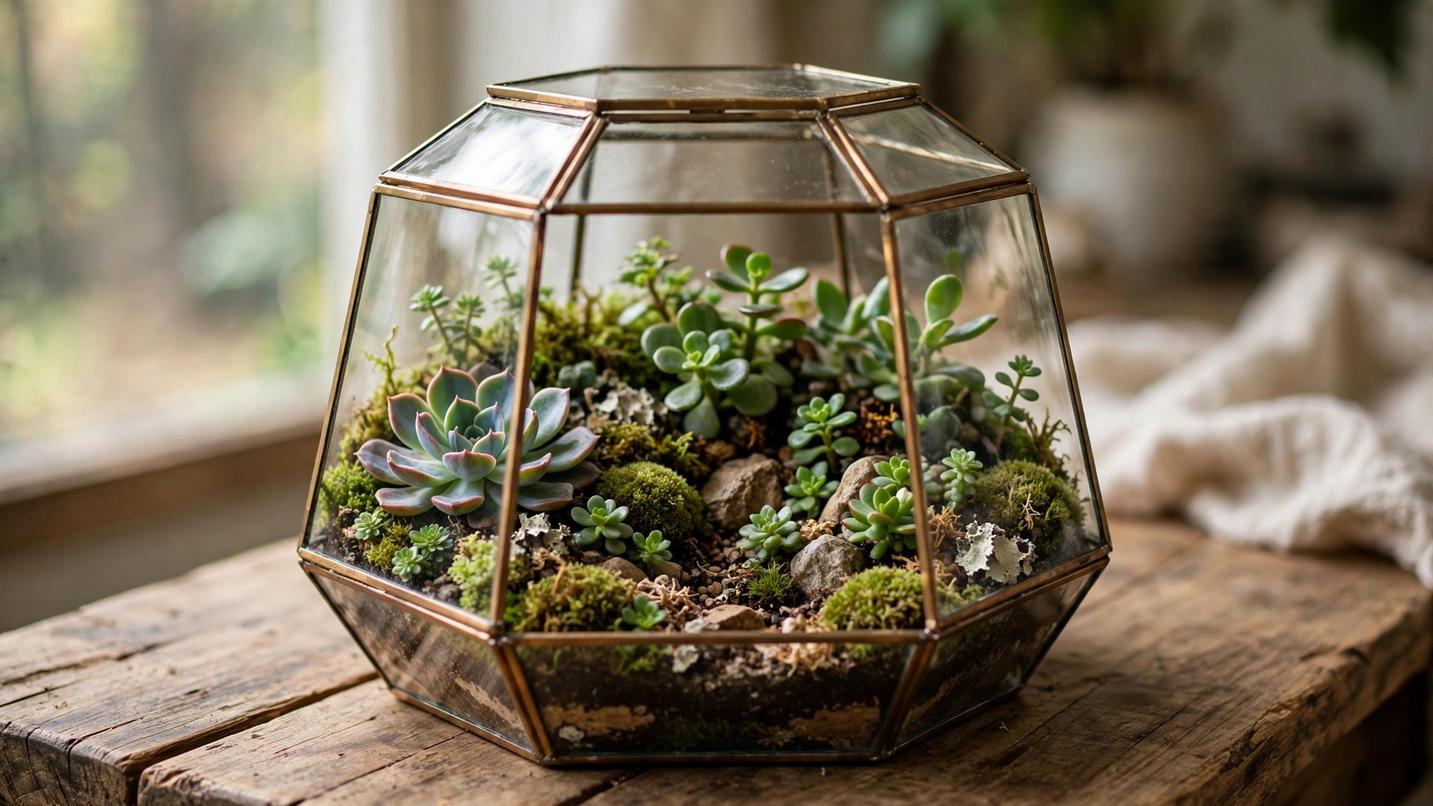
A terrarium is a self-contained miniature garden inside glass — beautiful, low-maintenance, and endlessly creative. Success comes from matching the right plants to a closed or open container, not from fancy decorations.
Choose Your Container: Open vs Closed
Closed terrariums with lids create humid microclimates for ferns and mosses; open bowls suit succulents and air plants. Match the container to the plants: humidity-lovers need lids, desert plants need airflow. Any clear glass jar or bowl works to start.
Layer 1: Drainage Comes First
Start with an inch of pebbles or gravel so excess water sinks away from roots. No drainage holes means this layer is mandatory — skipping it is the top reason terrariums rot. Add a thin sheet of mesh to keep soil from washing down.
Layer 2: Charcoal and Soil
A half-inch of activated charcoal filters water and prevents musty odors, then 2–3 inches of appropriate potting mix on top. Activated charcoal is cheap insurance against the number-two killer: stale, sour soil. Use cactus mix for succulents, regular mix for tropicals.
Planting: Less Is More
Choose 3–5 small plants with similar light and water needs, and leave room to grow. Crowded terrariums look great on day one and die by month two — space plants out. Moss, fittonia, and small ferns are forgiving closed-terrarium picks.
Decorate and Settle In
Add stones, driftwood, or tiny figurines for personality, then mist lightly and close the lid. Mist once, then watch for a week before watering again — closed terrariums recycle their own moisture. Wipe condensation that never clears; it means too much water.
Light and Ongoing Care
Place your terrarium in bright indirect light — direct sun turns closed glass into an oven. Bright indirect light is the sweet spot: enough to grow, not enough to cook. Trim dead leaves, rotate occasionally, and enjoy months of near-zero maintenance.