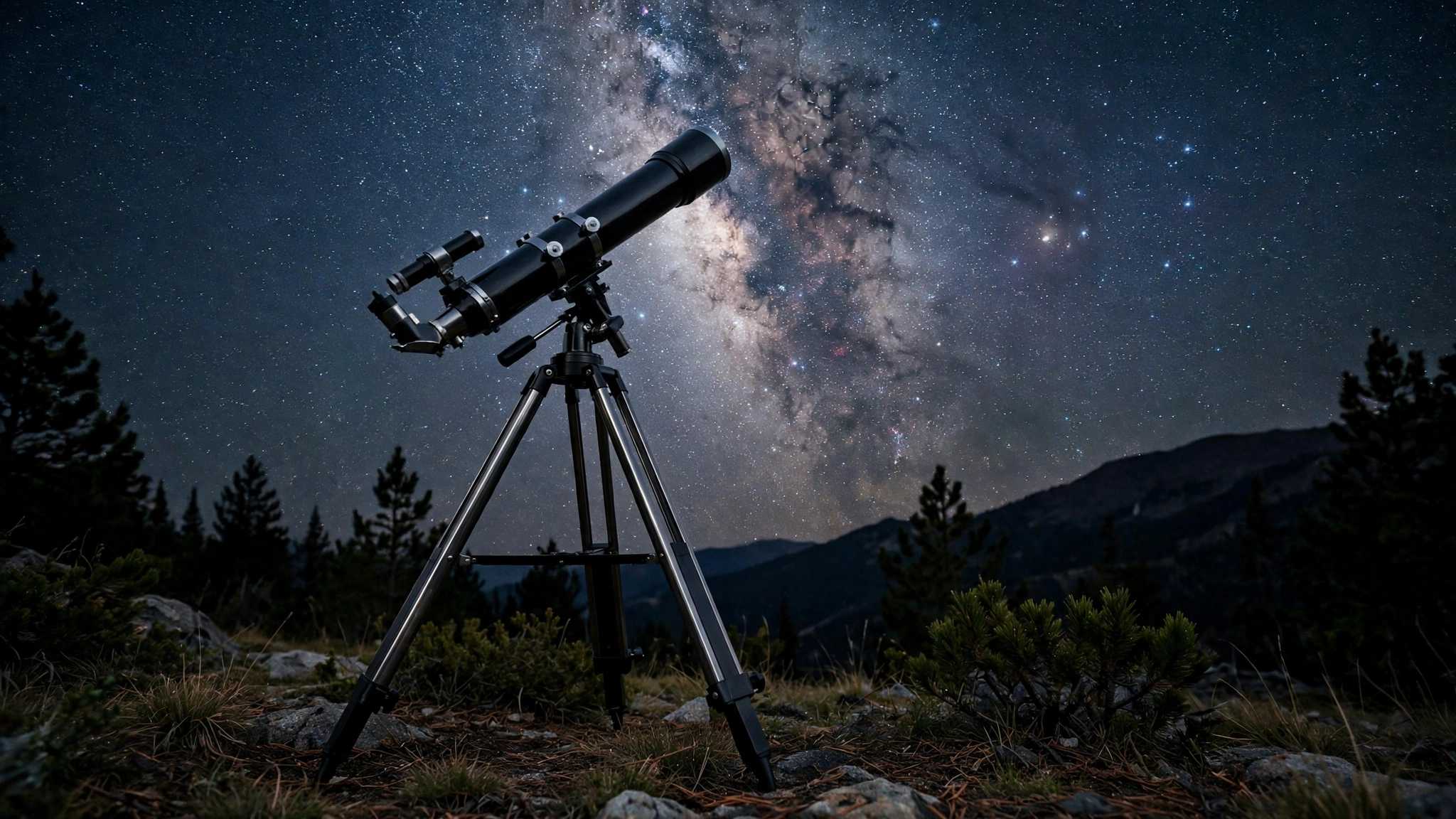
Your first telescope opens a universe of craters, rings, and galaxies — if you buy for aperture, not magnification. Aperture (mirror/lens size) is the spec that matters most; it determines how much light you gather and how much detail you see.
Aperture: Bigger Is Better
A 6- or 8-inch Dobsonian gathers far more light than a small "600x" department-store scope. Ignore huge magnification claims — they are marketing; aperture is physics. A 6-inch Dobsonian shows Saturn's rings, Jupiter's moons, and hundreds of deep-sky objects.
Dobsonian: The Beginner's Best Friend
Dobsonians are simple, sturdy, and give the most aperture per dollar with an intuitive push-to-point mount. A Dobsonian is the telescope experienced astronomers recommend to beginners more than any other type. Set it down, point it up, and start observing in minutes.
Mounts: Stability Over Gadgets
A shaky mount ruins views no matter how good the optics; computerized GoTo mounts help find objects but add cost and complexity. Prioritize a solid mount over electronics — wobbly views kill enthusiasm fast. Learn star-hopping with a phone app; it is free and genuinely fun.
Eyepieces and Magnification
Start with two eyepieces: a low-power wide view (25–30mm) for finding objects and a higher-power one (10mm) for planets. Useful magnification tops out around 50x per inch of aperture — beyond that, views just get blurry. A Barlow lens effectively doubles your eyepiece collection.
What You Will Actually See
Expect the Moon in stunning detail, Saturn's rings, Jupiter's cloud bands, and fuzzy star clusters — not Hubble-style color photos. Set realistic expectations: live views are subtle and magical in their own way, not glossy posters. Dark skies matter more than equipment upgrades.
Accessories Worth Buying First
A red flashlight preserves night vision, a planisphere or sky app finds targets, and a collimation tool keeps reflectors sharp. A red flashlight and a good sky app cost almost nothing and transform your first sessions. Join a local astronomy club — members love showing beginners the sky.