One lightning strike or grid fluctuation can kill your TV, gaming PC, or router in a second — and the damage often shows up weeks later as mysterious failures. A surge protector is the cheapest insurance your electronics will ever get. But not all of them actually protect anything. Here's how to buy one that does.
Surge Protector vs. Power Strip: Know the Difference
A power strip just gives you more outlets — it offers zero surge protection, no matter what the packaging implies. A real surge protector diverts excess voltage away from your devices using components called MOVs. Check the specs: if there's no joule rating listed, it's a power strip in disguise. For anything valuable, a $5 power strip is the wrong tool.
Joule Rating: Higher Is Better
The joule rating measures how much surge energy the protector can absorb before failing. Look for at least 1,000 joules for general use, and 2,000+ joules for expensive setups like home theaters or gaming PCs. Higher ratings also mean longer life, since small everyday surges wear the protection down gradually. A 3,000-joule unit can last a decade; a 600-joule one might die after one storm.
Clamping Voltage and Certifications
Clamping voltage is the level at which the protector kicks in — 400 volts or lower is what you want (UL lists 330V, 400V, 500V, and 600V ratings; lower is better). Also insist on UL 1449 certification, the safety standard for surge protectors. Response time under 1 nanosecond is standard on anything decent, so don't pay extra for marketing claims about "faster" response.
Features Worth Paying For
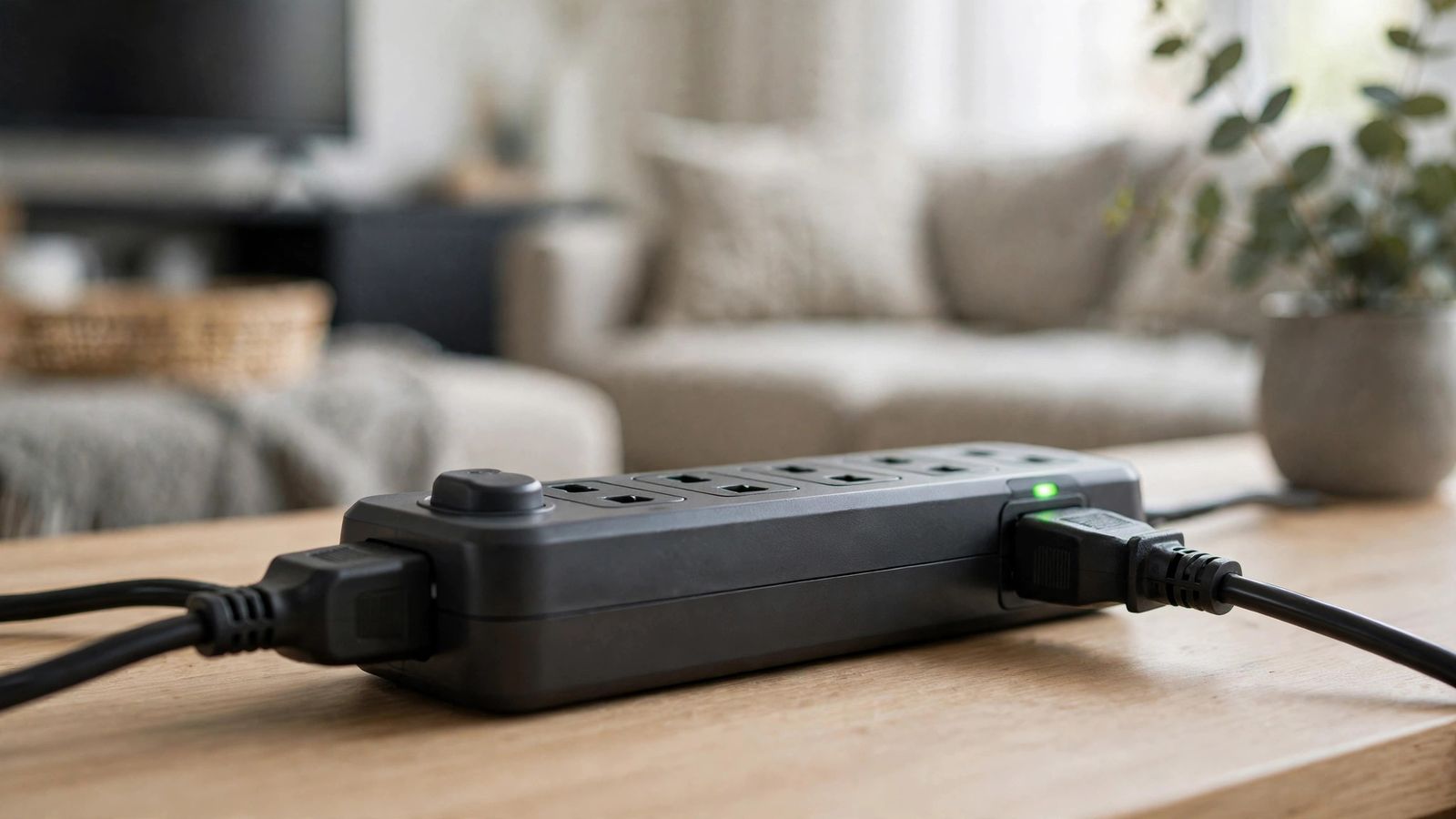
Get enough outlets with wide spacing for bulky adapters, plus a couple of USB ports for phone charging. If you have cable internet or a satellite dish, choose a model with coaxial and ethernet protection — surges travel through those lines too. An indicator light showing protection is active is essential: surge protectors die silently, and a dead one is just a power strip. After any major surge event, replace the unit.
Spend $25–$40 on a quality 2,000+ joule protector for your desk or TV, and a basic 1,000-joule model for smaller setups. It's a one-time purchase that protects thousands of dollars of gear — the easiest money you'll ever spend.