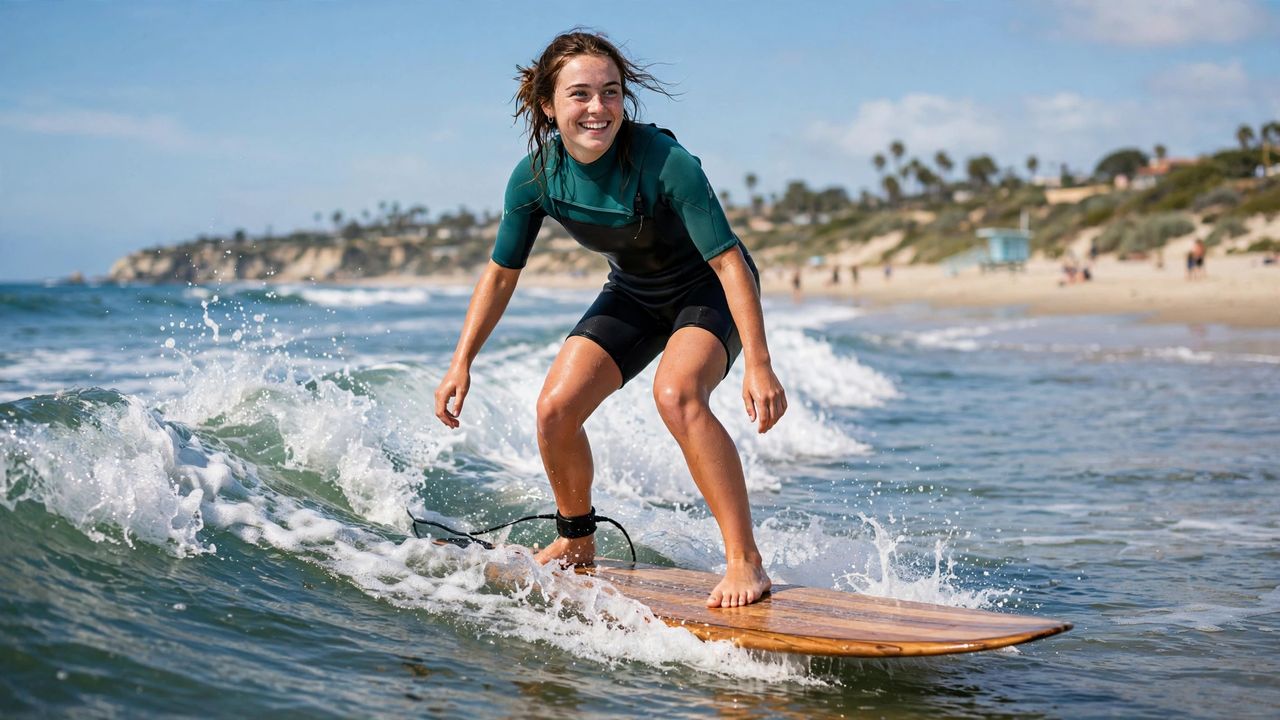
Surfing looks effortless from the beach and feels magical from the board. With the right board, the right beach, and realistic expectations, most beginners stand up on their first day. Everyone was a beginner once — even the pros ate sand on day one.
Start on a Foam Board
A long, wide foam board (8 to 9 feet) is stable, forgiving, and safe for you and others. Shortboards are for later — starting small only slows you down. The bigger the board, the faster you learn. Rent before you buy.
Choose a Beginner Beach
Look for sandy beaches with gentle, slow-breaking whitewater waves and lifeguards on duty. Avoid reefs, rocks, and crowded lineups. The right beach teaches you; the wrong one punishes you. Ask local surf schools where beginners go.
Master the Pop-Up on Land
Practice on the sand: from a lying position, push up and swing your feet under you in one smooth motion, landing with your front foot between your hands. Repeat 50 times before paddling out. Muscle memory on land becomes instinct in the water.
Paddling and Positioning
Paddle with long, deep strokes, keeping your body centered on the board. Start in waist-deep whitewater — do not paddle straight out to big waves on day one. Catch the wave before it breaks by paddling hard and early.
Learn Surf Etiquette
The surfer closest to the breaking peak has the right of way — never drop in on someone's wave. Paddle wide around the lineup, not through it. Etiquette is not politeness; it is how surfers avoid collisions.
Ocean Safety Rules
Never surf alone as a beginner, always wear a leash, and learn to spot rip currents before entering the water. If caught in a rip, swim parallel to shore. Respect the ocean and it will reward you; fight it and you will lose.