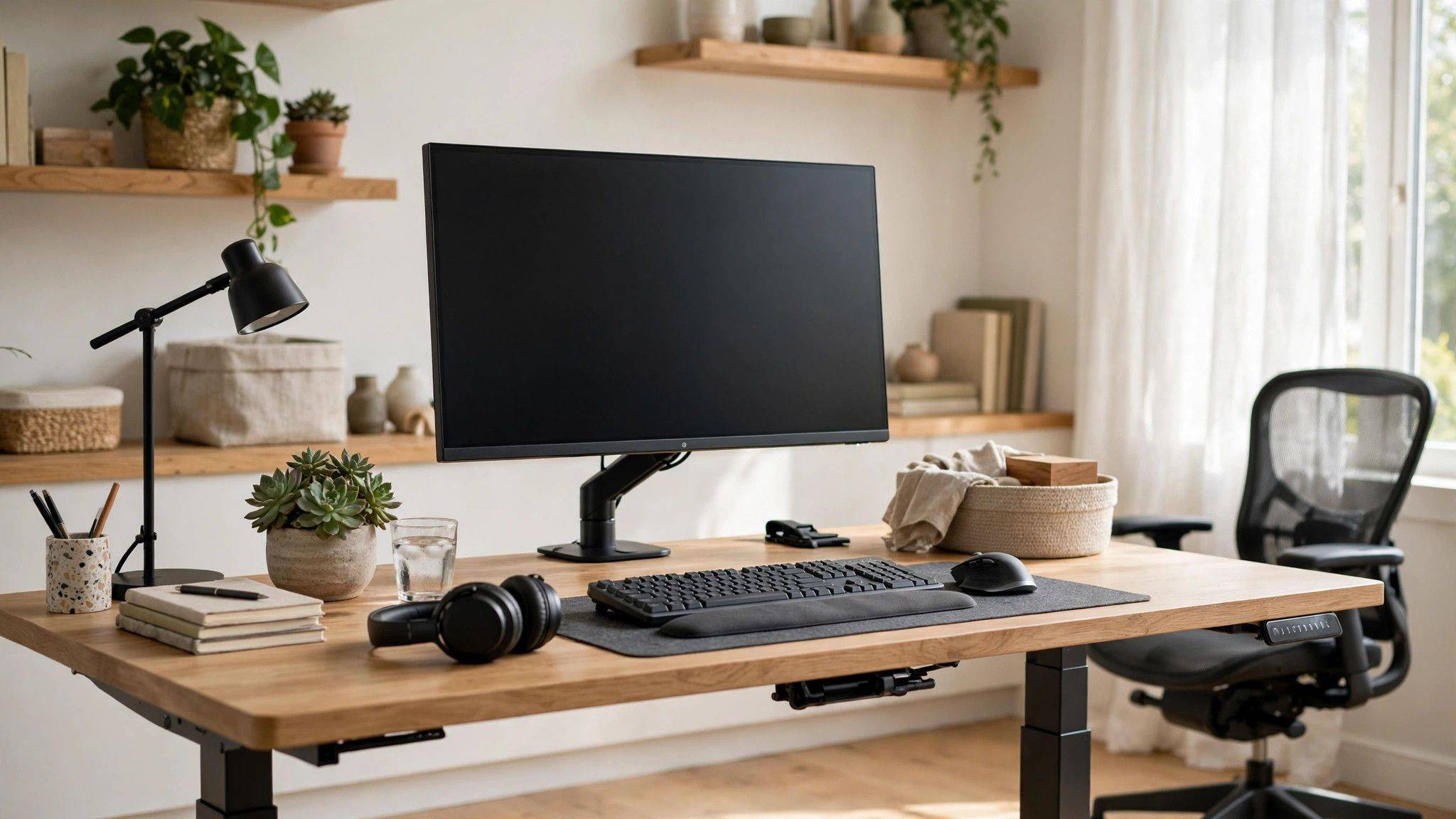
The average office worker sits for over nine hours a day — and backs, necks, and energy levels pay the price. In 2026, standing desks have matured from wobbly novelties into genuinely good furniture at every budget. But not all of them are worth your money. Here is what separates the great from the shaky.
Why Your Back Will Thank You
You do not need to stand all day — research favors alternating: roughly 30–60 minutes standing per hour of sitting. Even that modest change reduces back pain reports and the dreaded 3 p.m. energy crash for most people. A standing desk is not exercise; it is simply permission for your body to move the way it wants to.
Stability Beats Fancy Features
The number one complaint about cheap standing desks is wobble at full height — your monitor shaking with every keystroke. Look for a steel frame, a dual-motor lift (smoother and stronger than single-motor), and a weight capacity well above your setup. A rock-solid basic desk beats a wobbly one with memory presets and USB ports every time.
Electric vs Manual
Electric desks adjust with a button and remember your favorite heights — the convenience that actually gets you standing. Manual crank desks cost half as much and never break down, but the friction of cranking means most people stop adjusting after a month. If the budget allows, electric is worth it; the best desk is the one you actually raise.
Setting Up Right
When standing, your elbows should rest at 90 degrees and the top of your screen at eye level — a monitor arm helps enormously. Get an anti-fatigue mat; standing on hard floors all day trades back pain for foot pain. Start with 20–30 minute standing sessions and build up gradually, and keep comfortable shoes at your desk.
Buy the sturdiest desk your budget allows, set a timer to alternate, and give it two weeks. Most people who switch never go back to sitting all day — your back will send its thanks within the month.