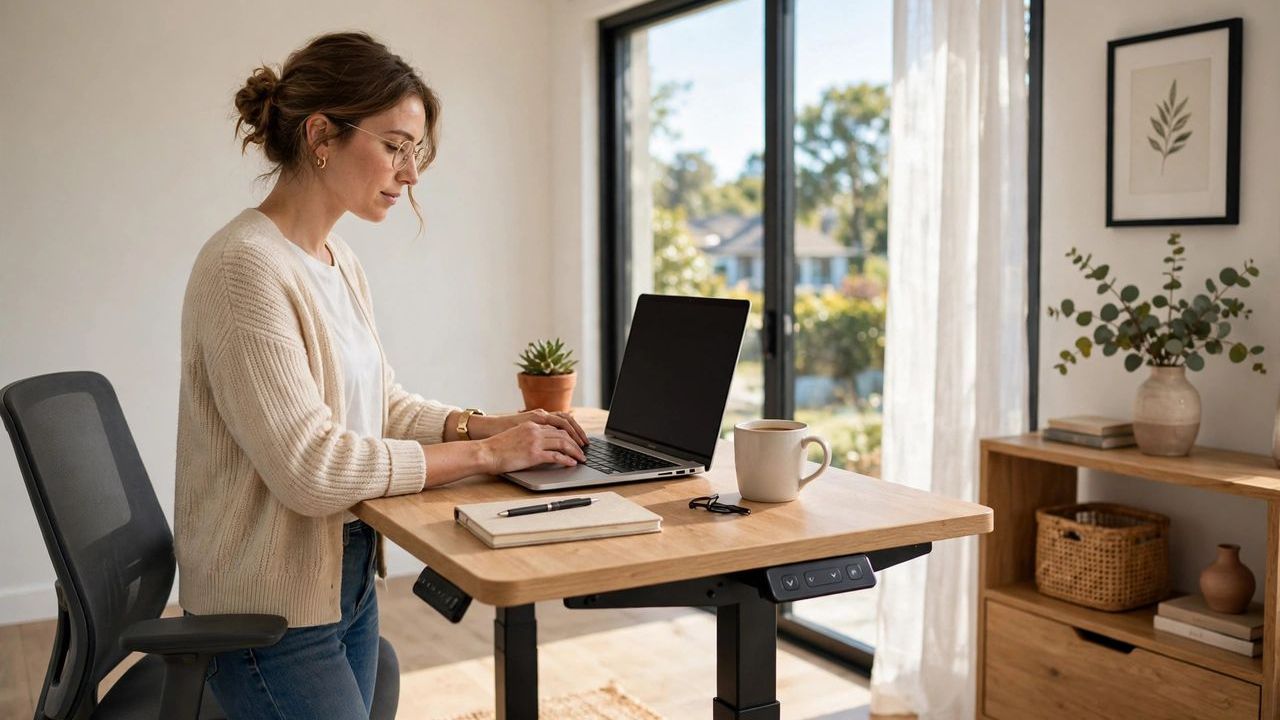
Eight hours of sitting a day adds up — stiff neck, aching lower back, and that mid-afternoon energy crash. A height-adjustable standing desk lets you alternate between sitting and standing, keeping your body moving without leaving your work. Prices have dropped sharply, and 2026 models come with memory presets, anti-collision sensors, and whisper-quiet motors. Here's how to choose and use one correctly.
What to Look for When Buying
Prioritize a dual-motor electric frame — it's sturdier and smoother than single-motor desks. Check the height range (roughly 62–128 cm covers most people) and the weight capacity; a desk that wobbles under two monitors will drive you mad. Memory presets save your sitting and standing heights so one tap adjusts the desk. Desktop material matters too: laminate is affordable, bamboo and solid wood look better and last longer.
Setting Up for Good Posture
A standing desk only helps if your posture is right. Your monitor's top edge should be at or just below eye level, about an arm's length away. Elbows stay near 90 degrees, wrists straight, and feet flat — use an anti-fatigue mat if you stand on hard floors. Raise the desk until your shoulders relax instead of hunching. A monitor arm and a decent keyboard tray make hitting these angles far easier than stacking books.
How to Actually Use It (Without Overdoing It)
The biggest rookie mistake is standing all day from day one — start with 20–30 minutes of standing per hour and build up over two or three weeks. Alternate tasks: stand for calls and email, sit for deep focus work. Shift your weight, stretch, and take short walks; standing still is almost as bad as sitting still. Good shoes or a mat protect your knees and feet.
Budget Tips and Alternatives
Decent electric desks now start around $250–$350; converters that sit on your existing desk cost half that but take up desktop space. Buy the frame and desktop separately if you want a nicer top without paying a brand's markup. Check for secondhand office-furniture sellers — quality used frames are common and cheap. Whatever you choose, measure your space twice: these desks are deeper than they look. A used sit-stand frame from a reputable brand can easily serve you for a decade.
Finally, remember that movement matters more than position — even the best desk can't undo a day without walking. Pair your desk with hourly stretch breaks and a short daily walk. Your back, neck, and energy levels will notice the difference long before your next office upgrade.