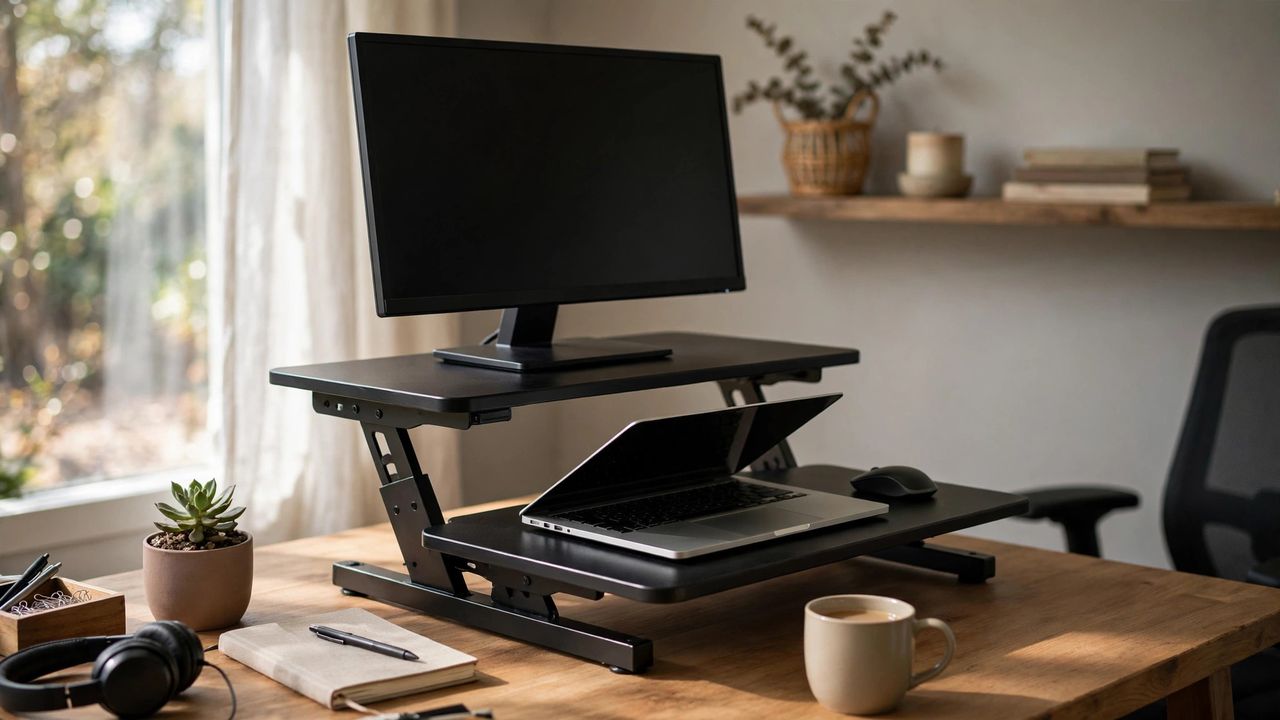
You want the benefits of standing without replacing your perfectly good desk — that is exactly what a standing desk converter does. These risers sit on your existing desk and lift your monitor and keyboard to standing height in seconds. In 2026 the mechanisms are smoother and the designs far more stable than the wobbly first generation.
Choose the Right Size and Lift Type
Measure your desk depth first: the converter must leave room for your keyboard tray while fitting your monitor setup. Pneumatic and gas-spring lifts move smoothly with one hand; manual crank models are cheaper but annoying daily. A converter that lifts straight up instead of swinging toward you keeps your setup stable and your desk space usable. X-frame designs are budget-friendly but eat more desk depth than Z-frame or column lifts.
Set the Ergonomics Correctly
Your monitor top should sit at or slightly below eye level, with the screen about an arm's length away. Elbows stay near 90 degrees with wrists straight, whether sitting or standing. The keyboard tray must go low enough for neutral wrists — converters that sit too high are the most common ergonomic failure. If you use a laptop, add an external keyboard and raise the laptop to eye level on a stand.
Ease Into Standing: The 20-8-2 Rhythm
Standing all day is as bad as sitting all day — the goal is movement variety. A practical rhythm is twenty minutes sitting, eight standing, two moving around. Alternate positions before you feel discomfort, because pain means you already waited too long. An anti-fatigue mat makes standing dramatically more comfortable, and supportive shoes matter more than the mat.
Stability and Daily-Use Details
Wobble is the dealbreaker: test the converter at full height with typing pressure before committing. Cable management clips prevent a tangled mess when the unit moves up and down. Keep frequently used items at the standing height zone, or you will unconsciously avoid raising the desk. A converter with a dedicated tablet or phone slot keeps your devices in the workflow instead of distracting from it.
A converter is the lowest-commitment way to fix a sedentary workday. Set it up right, alternate on schedule, and your back will notice the difference within weeks.