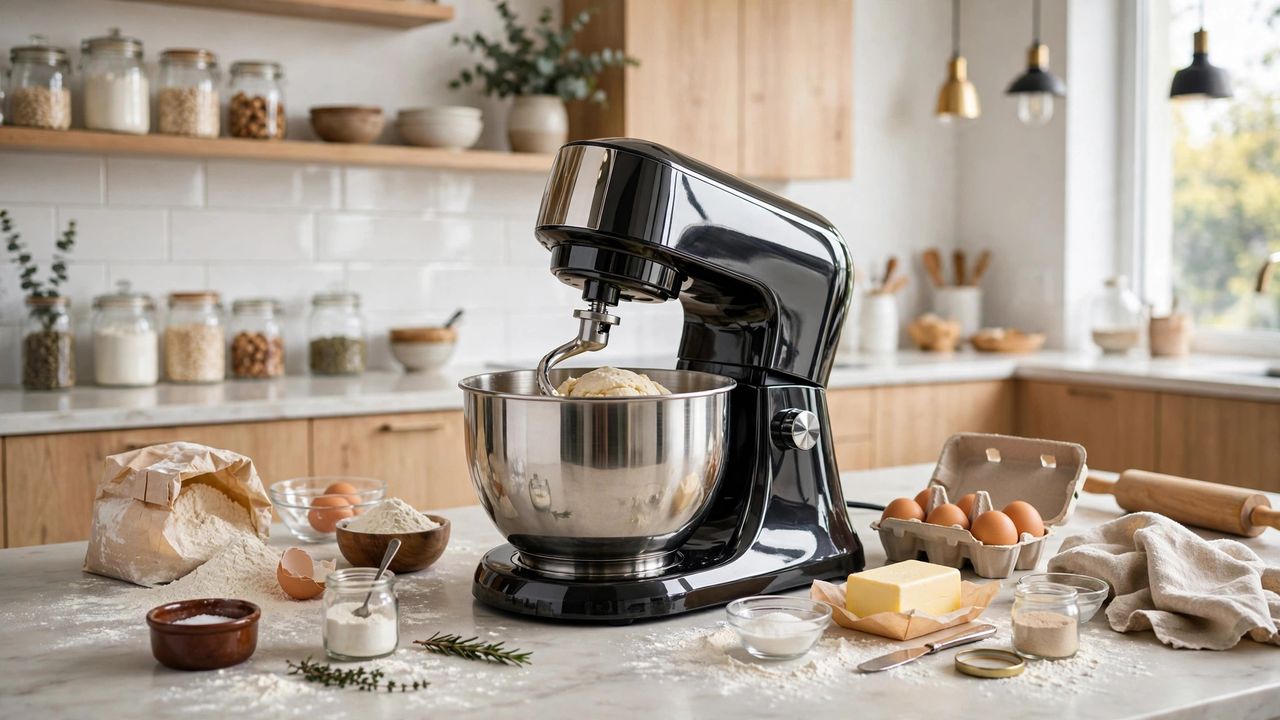
A good stand mixer quietly changes everything you bake: doughs develop better gluten, meringues whip higher, and you get your hands back for the creative part. The 2026 models are stronger, quieter, and smarter than ever — but the priciest option is rarely the right one. Here is how to choose the mixer that fits your kitchen, not the marketing.
Match the mixer to what you actually bake
Weekend cake bakers and daily bread makers need different machines. If you mostly whip cream, beat cake batter, and make cookies, a mid-range mixer with a 4 to 5 litre bowl is plenty. If you knead heavy doughs several times a week, look for higher wattage and all-metal gears that will not strain under load. Buying for the baking you actually do beats buying for the baking you imagine. List your top five recipes before you start shopping.
Power, capacity, and attachments matter most
For home baking, 300 to 500 watts handles most tasks; more power helps mainly with thick doughs. Bowl capacity matters more than people think — a bowl that is too small splashes, one that is too big fails to pick up small batches. Check which attachments come in the box: a dough hook, flat beater, and whisk cover almost everything. A complete attachment set in the box saves you from expensive add-ons later. Pasta rollers and grain mills are nice but optional.
Understand planetary mixing and tilt vs. bowl-lift
Good mixers use planetary action — the beater circles the bowl while spinning — so ingredients mix evenly with less scraping. Tilt-head models lift the head up for easy bowl access, which suits small kitchens and frequent bowl swaps. Bowl-lift models are sturdier for heavy doughs but bulkier. There is no universally better design, only the one that fits your counter and your hands. Test the tilt mechanism if you can; it should feel solid, not wobbly.
Smart buying and long-term care
Stand mixers go on sale around major holidays, so timing your purchase can save real money. Read owner reviews from people who have used the machine for a year, not a week — that is when weak gears show up. Clean the bowl and attachments right after use, wipe the body with a damp cloth, and never overload the bowl. A well-maintained mid-range mixer often outlasts an abused premium one. Keep the manual; torque and speed settings vary more than you would expect.
Pick the capacity your recipes need, confirm the attachments you will actually use, and buy at the right moment. Do that, and your mixer will quietly become the hardest-working appliance in your kitchen for years.