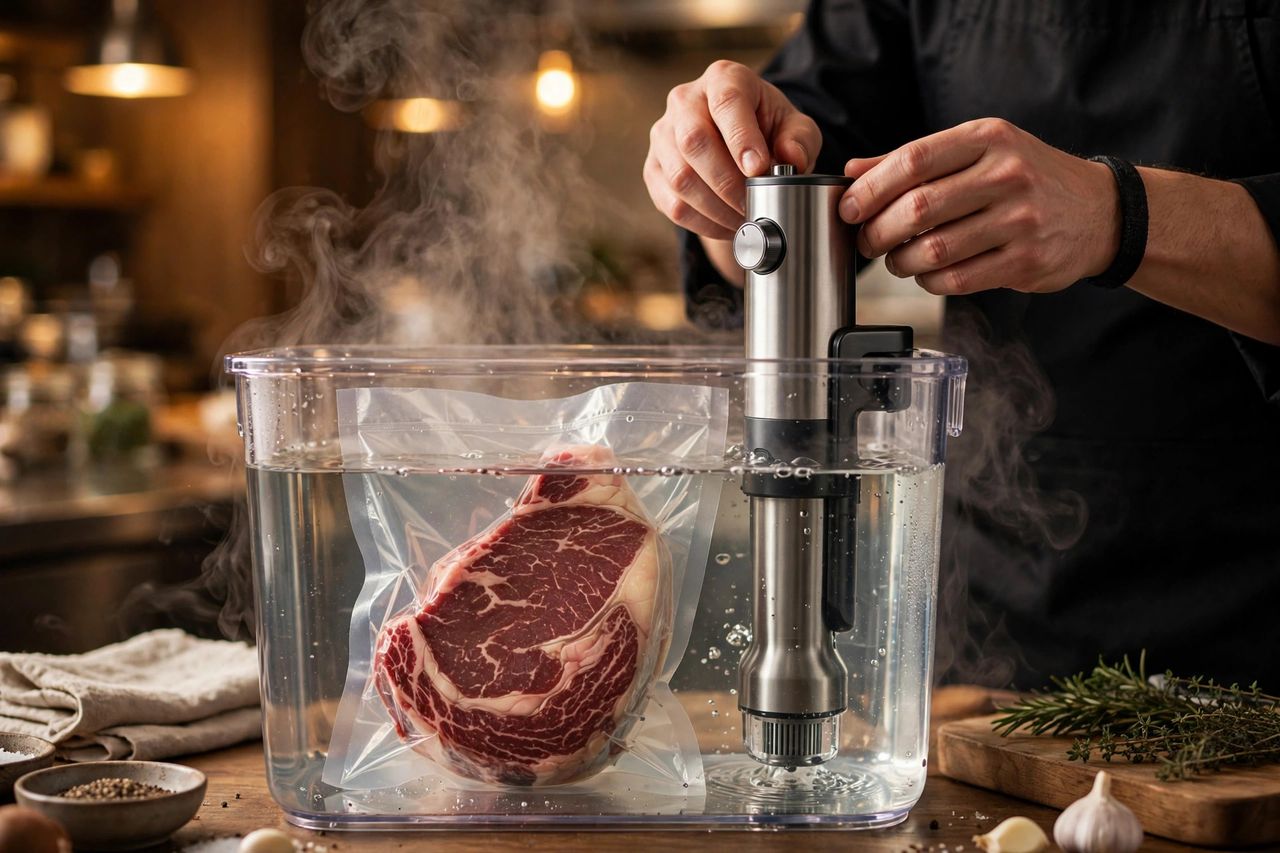
Sous vide — French for "under vacuum" — is the restaurant secret behind steaks that are perfectly medium-rare edge to edge, chicken that never dries out, and eggs with custardy yolks. The technique is shockingly simple: seal food in a bag, cook it in precisely heated water, and finish with a sear. Here's how to start.
How Sous Vide Works
An immersion circulator heats a water bath to an exact temperature — say 135°F (57°C) for medium-rare steak — and holds it there. Because the water never exceeds your target temperature, the food cannot overcook, even if you leave it in an extra hour. That precision is the whole magic: set it, forget it, and get restaurant-quality results every single time.
The Gear You Actually Need
Starter kits are affordable. You need an immersion circulator, a large pot or plastic container, and bags. A vacuum sealer is ideal but zip-top bags work fine using the water-displacement method: lower the open bag into the water and let pressure push the air out before sealing. Add a cast-iron skillet or torch for searing, and you're fully equipped.
Beginner Temperatures and Times
Start with forgiving proteins. Steak: 130–135°F (54–57°C) for 1–2 hours, then sear 60 seconds per side. Chicken breast: 150°F (66°C) for 1–2 hours — juicy and fully safe. Salmon: 122–130°F (50–54°C) for 30–45 minutes for silky texture. Eggs: 167°F (75°C) for 13 minutes for perfect jammy yolks. Season before bagging; butter in the bag adds richness.
Tips and Food Safety
Always pat food completely dry before searing — moisture is the enemy of a good crust. Don't overcrowd the bath; water needs to circulate freely. For food safety, don't leave food in the bath for more than 4 hours, and sear right after cooking. Leftovers cool quickly in an ice bath before refrigerating.
Sous vide turns "hope it's not overcooked" into a guarantee. Start with one steak this weekend — you'll taste the difference immediately. Ask US AI's free chat for time-and-temperature charts for any protein.