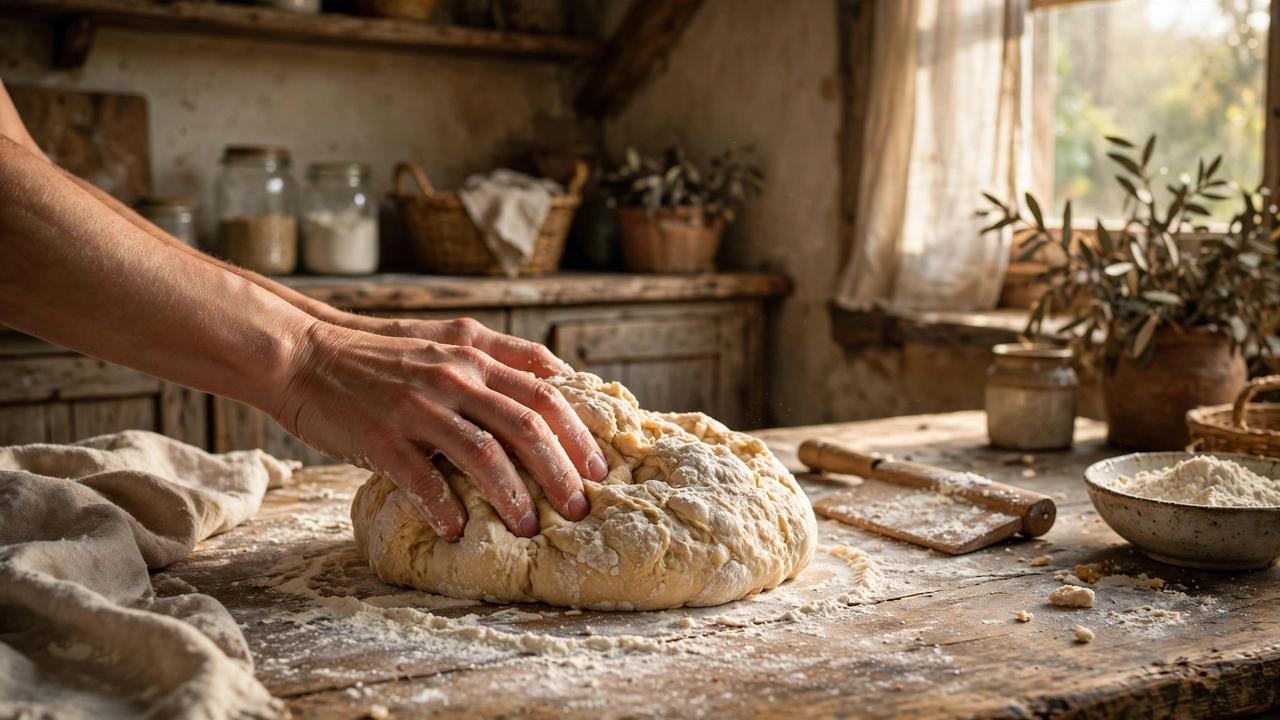
Sourdough has a reputation for being fussy, but that reputation is mostly earned by overcomplicated internet recipes. Strip away the jargon and the process is simple: flour, water, salt, time, and a living starter doing the heavy lifting. Here is the beginner-friendly path to your first genuinely good loaf.
Your starter: the living ingredient
A starter is just flour and water, fermented by wild yeast and bacteria. Feed it equal weights of flour and water once a day for a week or two until it reliably doubles within 4 to 8 hours of feeding. Whole grain flours kick-start activity faster; you can switch to white flour for maintenance later. A starter that floats a spoonful in water is ready to bake with. Keep a backup in the fridge — starters are resilient, and neglect is rarely fatal.
The basic method, step by step
Mix flour, water, and ripe starter, rest, then add salt. Over the next few hours, stretch and fold the dough every 30 to 45 minutes — four to six sets build strength without kneading. Let it rise until noticeably puffy, shape it into a round, and proof it in a floured basket. Bake in a covered pot at high heat for 20 minutes, then uncovered until deeply browned. That dark crust is flavor, not burning.
Mistakes every beginner makes
Under-proofing is the number one culprit behind dense, gummy loaves — when in doubt, give the dough more time. Cutting into a hot loaf ruins the crumb, so wait at least an hour. And resist the urge to add extra flour to sticky dough; wet dough feels wrong but bakes into an open, airy crumb. Trust the process, not your instincts.
Keep it simple, bake often
Your first five loaves teach more than any video. Bake the same basic recipe repeatedly, change one variable at a time, and keep notes. Consistency beats creativity until the fundamentals are second nature — and a warm, crackling loaf you made yourself never gets old.