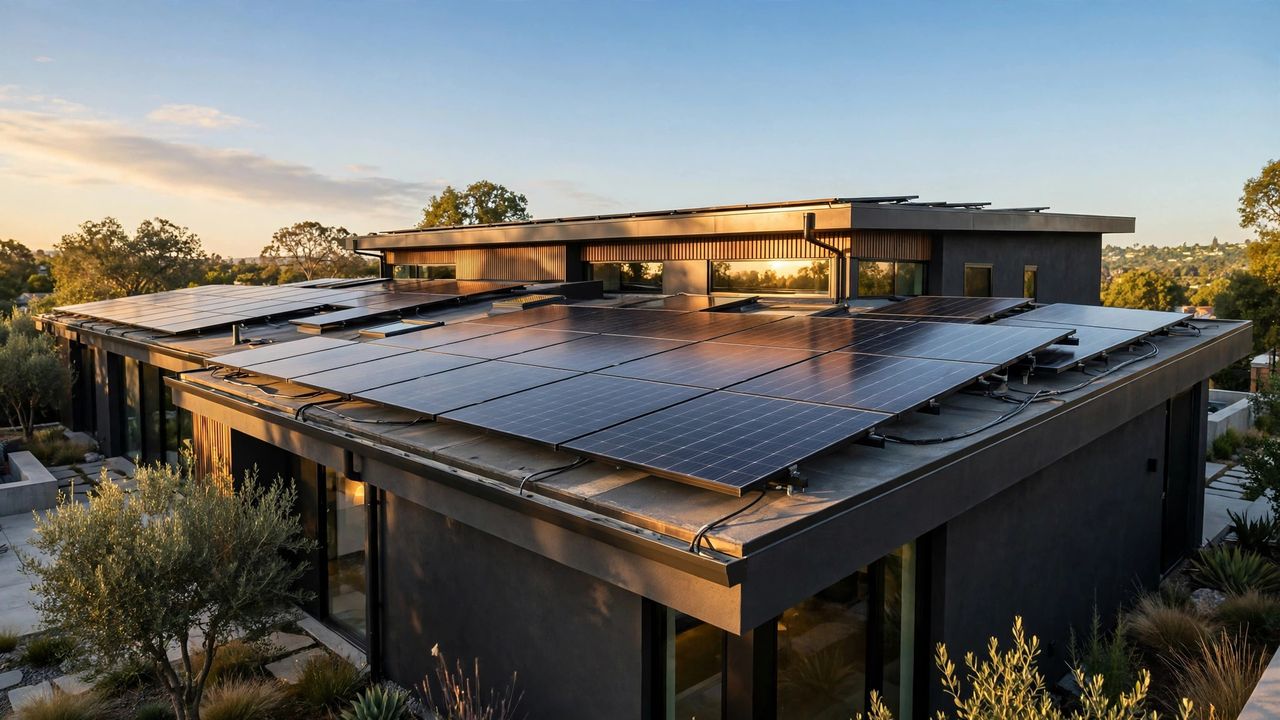
Electricity bills keep climbing, and meanwhile solar panels have become the cheapest new source of power in history. In 2026 a rooftop system is no longer a luxury project for enthusiasts — it is a financial decision millions of homeowners are doing the math on. Here is an honest look at what home solar really costs, what it saves, and what to check before any installer climbs onto your roof.
What a System Really Costs in 2026
A typical 6–8 kW residential system in the US runs roughly $12,000–$20,000 before incentives — and incentives change everything. The federal tax credit knocks 30% off, and many states and utilities add rebates or net-metering programs on top, often landing the final cost near $10,000–$14,000 for an average home. Prices have fallen so far that the panels themselves are now a fraction of the quote; labor, permitting and the inverter make up most of the bill. The sticker price matters less than the cost after incentives — always compare quotes as final out-of-pocket numbers.
Savings and the Payback Clock
Once installed, a well-sized system typically covers 70–100% of a household's electricity. Most owners in sunny states see payback in 6–9 years, then enjoy another 15+ years of nearly free power, since panels carry 25-year performance warranties. Your actual payback depends on local electricity rates, roof angle, and net-metering rules — which some utilities are making less generous, so check the current policy, not last year's. Model your payback with today's electricity price plus 3% annual increases — rates rarely stay flat.
Should You Add Battery Storage?
A battery lets you store daytime sunshine for the evening and keeps essentials running during outages. Expect to add roughly $8,000–$12,000 for a 10–13 kWh home battery installed. Batteries shine where utilities charge steep peak-evening rates or where blackouts are common; elsewhere they are mostly a resilience purchase rather than a money-saver. A battery pays for itself where outages or peak pricing hurt — everywhere else it is comfort first and savings second.
What to Check Before Installers Arrive
Start with your roof: if it is older than 15 years, replace or repair it first — removing panels later to fix a roof costs thousands. Check shading from trees or chimneys, confirm your roof faces roughly south (in the northern hemisphere), and verify your electrical panel has spare capacity. Then get three itemized quotes, compare inverter warranties (10–25 years), and confirm the installer is licensed, insured, and handles permits. Get three detailed quotes and ask each one what roof work is included — the cheapest bid often hides it.
Rooftop solar in 2026 is mature, well-priced, and genuinely worth the math for most homeowners with a decent roof. Run the numbers with real local rates, scrutinize the installer as hard as the hardware, and you will spend the next 25 years watching your meter spin backward.