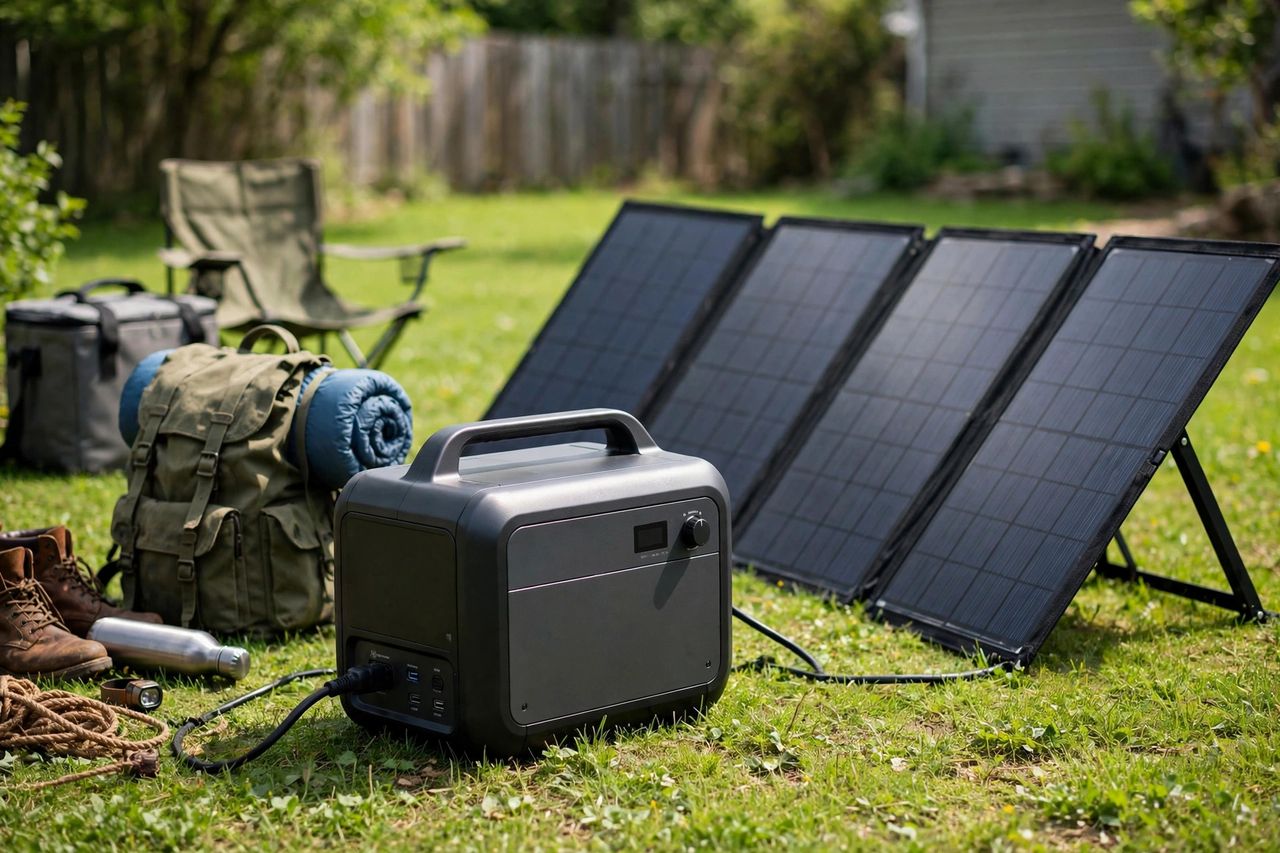
Portable solar generators have come a long way — today's models can run a fridge, charge your phone for days, or power your tools off-grid without a drop of fuel. Whether you're preparing for outages or heading into the wild, choosing the right unit comes down to a few key numbers.
How Much Power Do You Actually Need?
Start by listing what you'll run and checking each device's wattage. A phone charger pulls under 20W, a laptop 60–90W, and a full-size fridge 100–200W while running (but up to 1,000W for a split second when the compressor kicks in). Add up the running watts of everything you'll use at once, then add 20% headroom — that total is the minimum inverter size you need.
Battery Capacity: Reading the Numbers
Watt-hours (Wh) tell you how much energy the battery stores. A 1,000Wh station can theoretically run a 100W load for 10 hours — in practice, expect about 80–85% of that after conversion losses. For overnight fridge backup, aim for at least 1,000Wh; for weekend camping with lights and gadgets, 500Wh is plenty.
Solar Charging Speed Matters More Than You Think
A generator is only as useful as its recharge. Check the maximum solar input — a unit that accepts 400W of solar recharges four times faster than one capped at 100W. Foldable panels in the 100–200W range are the sweet spot for portability. Angle panels toward the sun, keep them clean, and avoid even partial shade, which can slash output dramatically.
Safety and Maintenance Tips
Modern lithium (LiFePO4) batteries are far safer than old lead-acid ones — they tolerate 3,000+ charge cycles and handle heat better. Still, never leave a unit charging in a closed hot car, keep vents clear, and store batteries at 40–60% charge if unused for months. Run a test discharge twice a year so your backup is ready when you need it.
The best solar generator is the one that matches your real needs — not the biggest one on the shelf. Size for your loads, prioritize fast solar charging, and maintain the battery, and you'll have silent, fuel-free power for years.