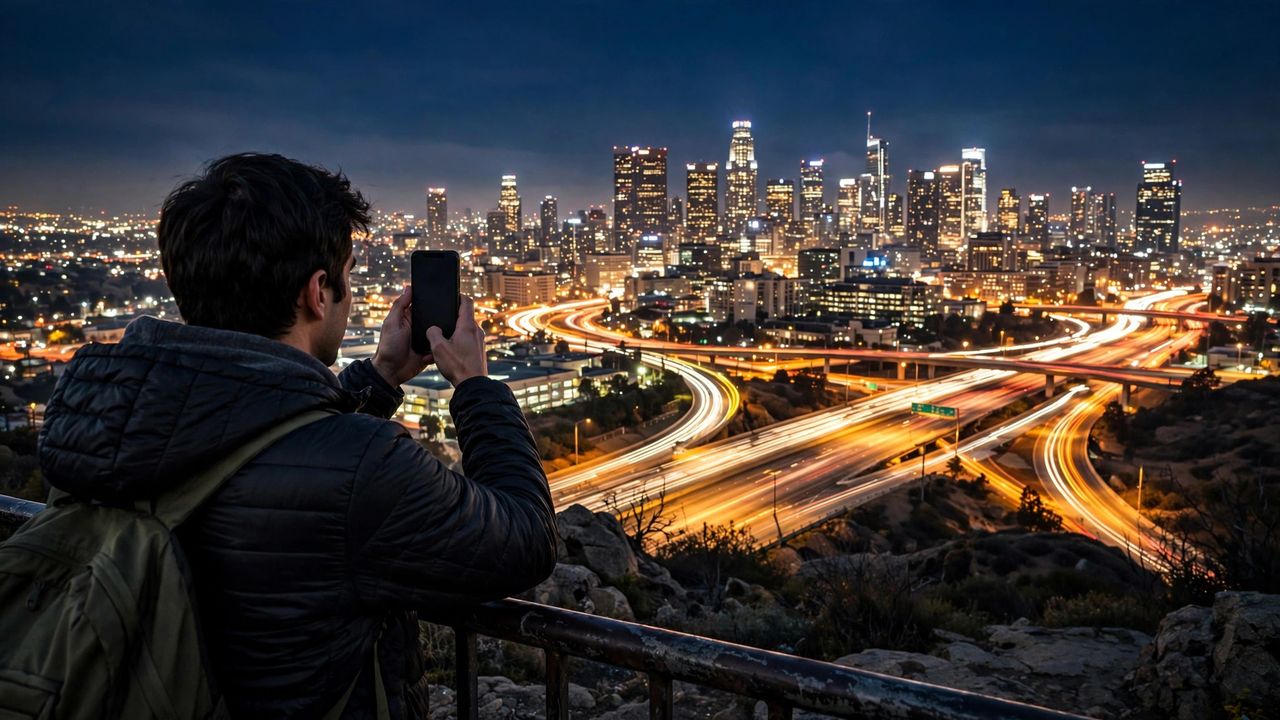
Night photography used to demand an expensive camera and a tripod, but in 2026 your smartphone can capture breathtaking photos after dark. Modern phones use multi-frame night modes that combine several exposures into one sharp, bright image.
Steady hands make sharper photos
Night mode works by taking several photos over two to five seconds and blending them. Any movement during that window creates blur. Brace your elbows against your body, lean on a wall or railing, or prop the phone on a table. Some phones detect a completely still position and extend the exposure for even brighter results. The number one rule of night photography is simple: a steady phone beats a great sensor every time. Even a two-second timer helps because it avoids shake from tapping the shutter button.
Use manual settings when auto fails
Automatic night mode does a fine job most of the time, but city lights can confuse it and turn skies orange or blow out street lamps. Try tapping the brightest light source to set exposure, then drag the exposure slider down slightly. Lower the ISO manually if your camera app allows it, because high ISO adds grain. Shoot in RAW or high-efficiency mode so you keep maximum detail for editing later. Reducing exposure slightly before shooting protects highlights that no editing can recover afterwards.
Find interesting light and reflections
Great night photos start with great light. Wet streets, puddles, and car windows create reflections that double the drama of your shot. Position neon signs or shop windows beside your subject for natural color fill. Avoid the harsh direct flash, which flattens everything and kills the mood. Instead, use nearby streetlights as a soft key light and experiment with silhouettes against bright backgrounds. Interesting light sources matter more at night than any camera setting.
Edit gently to reveal detail
Phone editors are surprisingly powerful for night shots. Lift the shadows a little, reduce noise carefully, and add a touch of clarity to make lights pop. Keep color temperature natural — slightly cool tones usually look better than the orange cast that street lamps produce. Crop away empty dark areas so the subject fills the frame. Subtle edits win: the best night photos look like the scene felt, not like a video game.
Practice on an ordinary street before your next trip, and compare your results week by week.