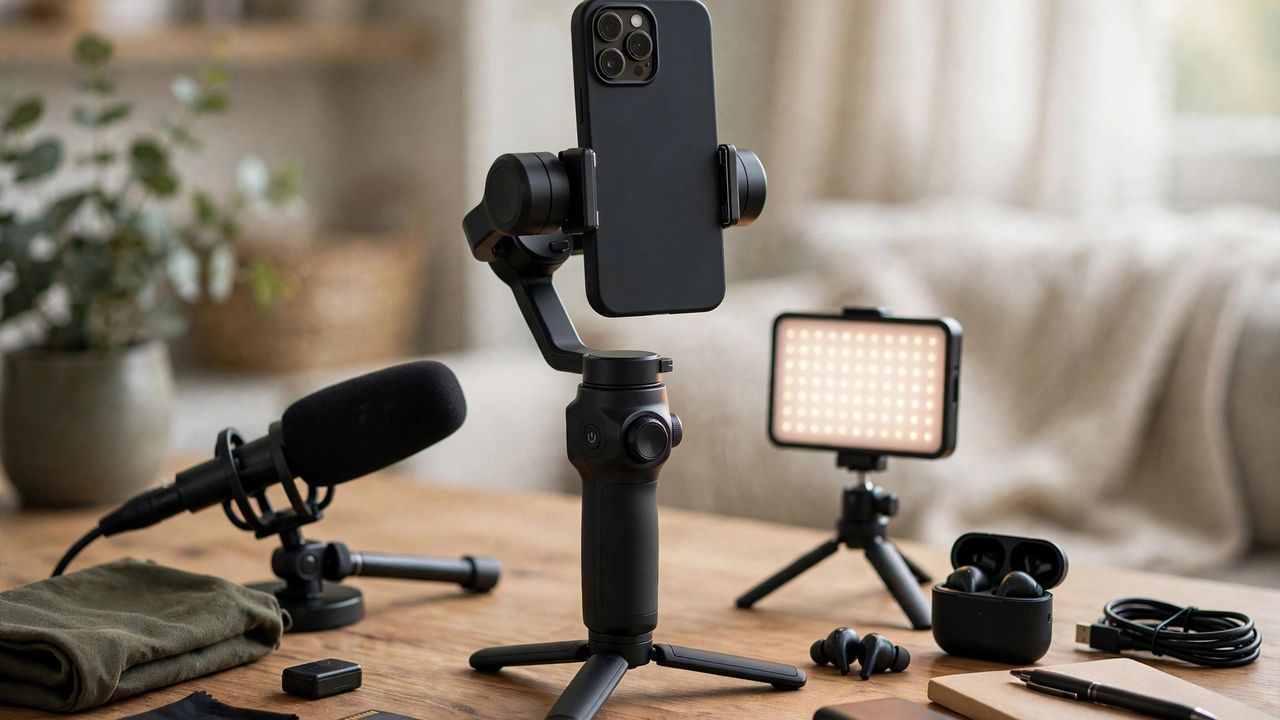
The difference between amateur and professional-looking video is often just stabilization. A smartphone gimbal uses motors to cancel out your hand shake, turning bouncy phone footage into smooth, cinematic shots. In 2026, gimbals are smaller, smarter, and packed with AI tracking features. Whether you vlog, film travel videos, or shoot for social media, this guide helps you pick the right gimbal and use it like a pro.
3-axis stabilization: the core feature
Every worthwhile gimbal in 2026 offers 3-axis stabilization — motors on three axes that counteract tilt, roll, and pan movements in real time. This is what makes walking shots look like they were filmed on rails. Cheaper 2-axis stabilizers exist but leave noticeable wobble. Never settle for less than 3-axis stabilization — it is the entire point of buying a gimbal.
AI tracking and smart features
Modern gimbals include AI subject tracking that follows your face or body automatically, gesture controls to start recording hands-free, and built-in fill lights for better low-light shots. ActiveTrack-style features are gold for solo creators who film themselves. Check that the tracking works with your phone's native camera app, not just the gimbal's companion app. AI tracking that works with your native camera app is far more useful than one locked to a companion app.
Size, weight, and battery life
A gimbal you leave at home is useless, so portability matters. Foldable designs fit in a jacket pocket, while larger models offer better balance for heavy phones with cases. Look for at least 8 to 10 hours of battery life and USB-C charging. Also confirm the payload capacity supports your phone model with its case on. Confirm the payload rating covers your phone plus case — an overloaded gimbal shakes instead of stabilizing.
Shoot like a pro: technique tips
Even the best gimbal needs good technique. Walk heel-to-toe like a ninja to minimize bounce, use slow deliberate movements, and let the gimbal do the work instead of fighting it. Practice the classic moves: push-in, pull-out, orbit, and low-angle tracking shots. Move half as fast as you think you should — slow, deliberate motion is what looks cinematic.
Pick a 3-axis gimbal with AI tracking that fits your phone, practice the basic moves for a weekend, and your 2026 videos will look dramatically more professional. Smooth footage is a skill and a tool — the gimbal gives you both.