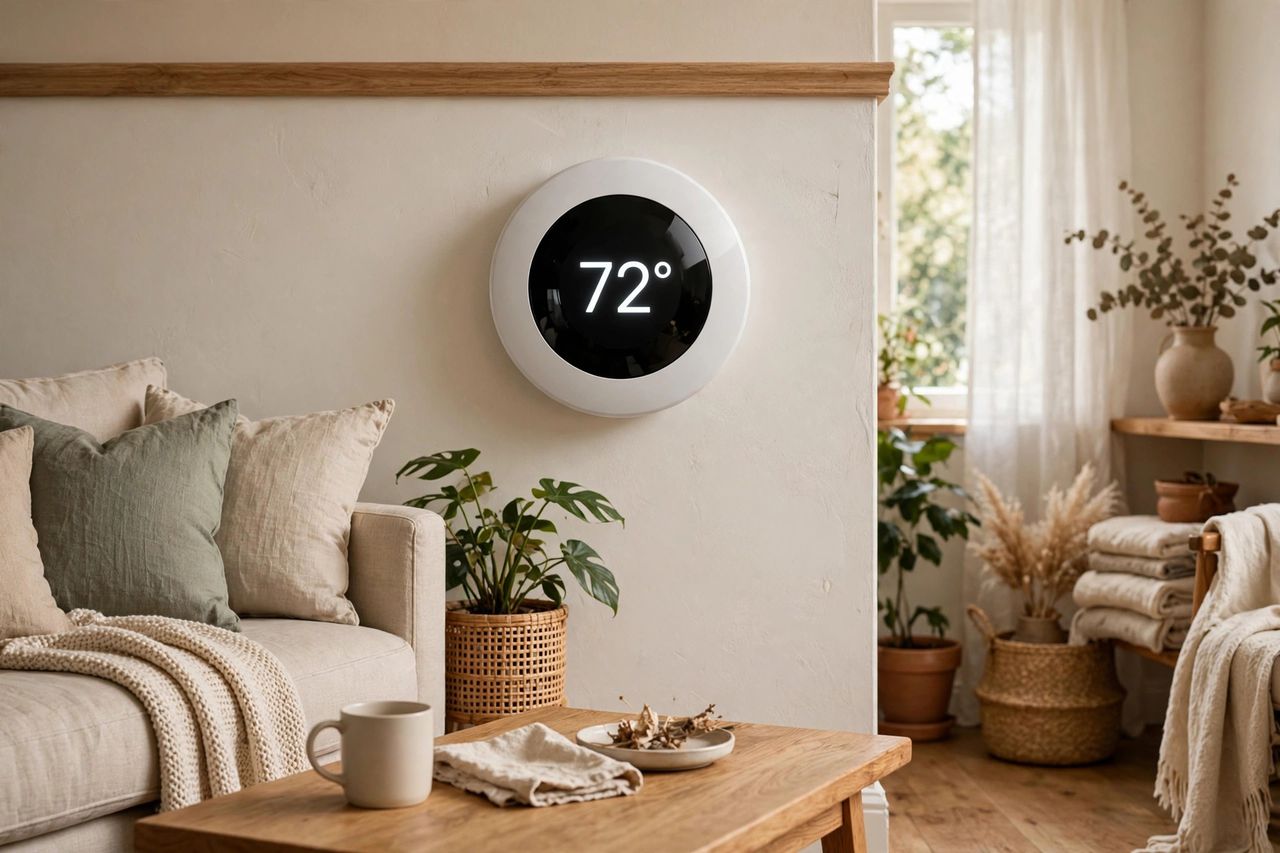
Heating and cooling eat the largest share of home energy bills, and most of that money heats empty rooms. Smart thermostats in 2026 learn your schedule, sense when rooms are occupied, and adjust automatically. The result is real savings — typically ten to fifteen percent — with better comfort than a manual thermostat.
Let learning schedules do the work
The thermostat observes your routine for a week or two, then builds a heating and cooling schedule automatically. It pre-heats the house before you wake and dials back when everyone leaves. Geofencing uses your phone location to start warming the house as you drive home. Automation beats willpower: a schedule that runs itself saves energy every single day without you thinking about it. Review the learned schedule monthly and correct anything it got wrong.
Use room sensors for real comfort
A single hallway thermostat cannot know your bedroom is freezing. Wireless room sensors report temperatures from the rooms that matter and let the system average or prioritize them. Place sensors in bedrooms for sleep comfort and in home offices during work hours. Some systems balance hot and cold spots automatically. Comfort where you actually are matters more than the temperature in an empty hallway.
Read the energy reports monthly
Smart thermostats show exactly when and how much energy you use, which turns vague bills into actionable insight. Compare months to see the effect of schedule changes. Look for unexpected heating at night or cooling of an empty house — those are pure waste. Many utilities offer rebates or time-of-use rates that the thermostat can exploit automatically. What gets measured gets managed: monthly reports reveal savings you would never find otherwise.
Integrate with the rest of your home
Connect the thermostat to smart blinds, fans, and voice assistants for a coordinated system. Blinds that close on hot afternoons reduce cooling load dramatically. Voice control lets you adjust temperature without getting up. Set vacation modes that protect pipes while minimizing energy use. A connected home multiplies the savings of each device working alone.
Check for utility rebates before buying — many cover half the cost. Install it on a weekend, let it learn for two weeks, then watch the next bill. The payback period is often under a year.