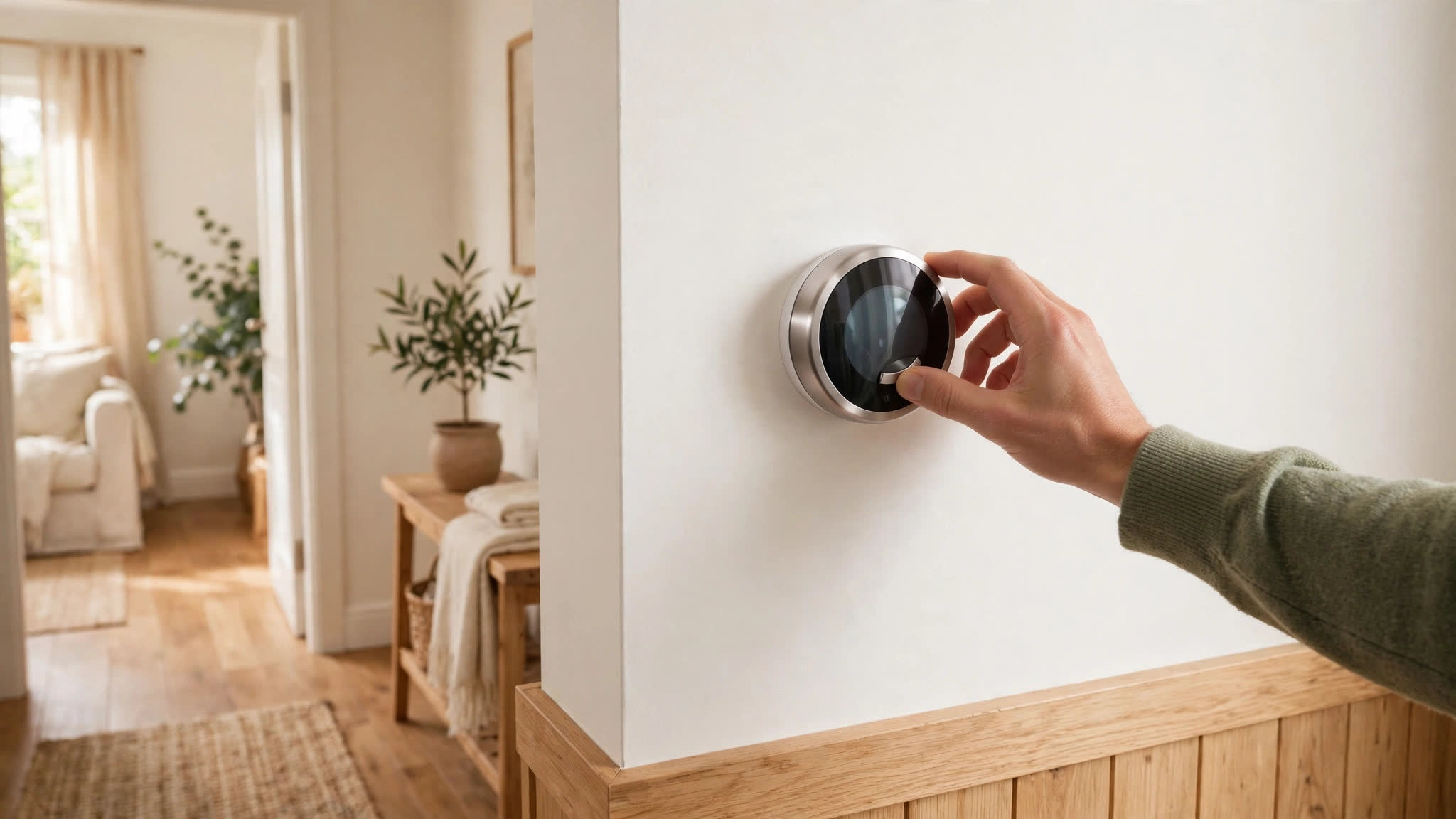
Heating and cooling eat up roughly half of a typical home's energy bill — and most of us heat empty rooms without thinking. A smart thermostat learns your routine, adjusts automatically, and lets you control temperature from your phone. Real-world savings run 10–15% a year, often paying for the device in 12–18 months.
How They Actually Save Money
The savings come from three behaviors. Smart scheduling lowers the temperature while you sleep and work — each degree lower saves roughly 1–3% on heating. Geofencing detects when everyone's gone and dials back automatically. Learning models notice patterns (like Tuesday gym nights) and pre-adjust. Energy reports show exactly when you use the most, which nudges better habits. None of this requires you to remember anything — automation does the work.
What to Look for in 2026
Check compatibility first — most makers offer an online checker; older systems without a C-wire may need an adapter or electrician. Look for room sensors that fix the classic "freezing bedroom, boiling living room" problem by averaging temperatures across rooms. Smart-home integration (Alexa, Google Home, Apple HomeKit, Matter) matters if you automate other devices. Demand-response rebates — many utilities pay $50–$100+ for enrolling in peak-savings programs — are the hidden bonus most buyers miss.
Top Picks for Different Homes
Best all-rounder: the flagship learning models (~$250) suit most homes with their polished apps and room sensors. Budget pick (~$130): stripped-down models from the same brands deliver 90% of the savings without the fancy display. Apple households: HomeKit-native models avoid ecosystem headaches. Renters: choose a model that installs with the existing wiring in 20 minutes and uninstalls cleanly when you move. Multi-zone homes benefit most — one thermostat per zone multiplies the savings.
Installation: Easier Than You Think
Most installs take 20–30 minutes with a screwdriver and the app's guided setup. Turn off the HVAC breaker first — this is the one safety rule that matters. Photograph the old wiring before disconnecting anything, label each wire, and the app will walk you through it. If you lack a C-wire, many kits include a power adapter; if not, an electrician visit (~$100–$150) is still worth it given the annual savings.
Squeezing Out Maximum Savings
Once installed, set eco temperatures and leave them alone — constant manual overrides defeat the learning. Enable every utility rebate and demand-response program you qualify for; some utilities even give the thermostat away free. Pair it with smart vents or door sensors for bigger gains. And remember: a smart thermostat can't fix bad insulation — if savings disappoint, check for drafts and attic insulation before blaming the device.