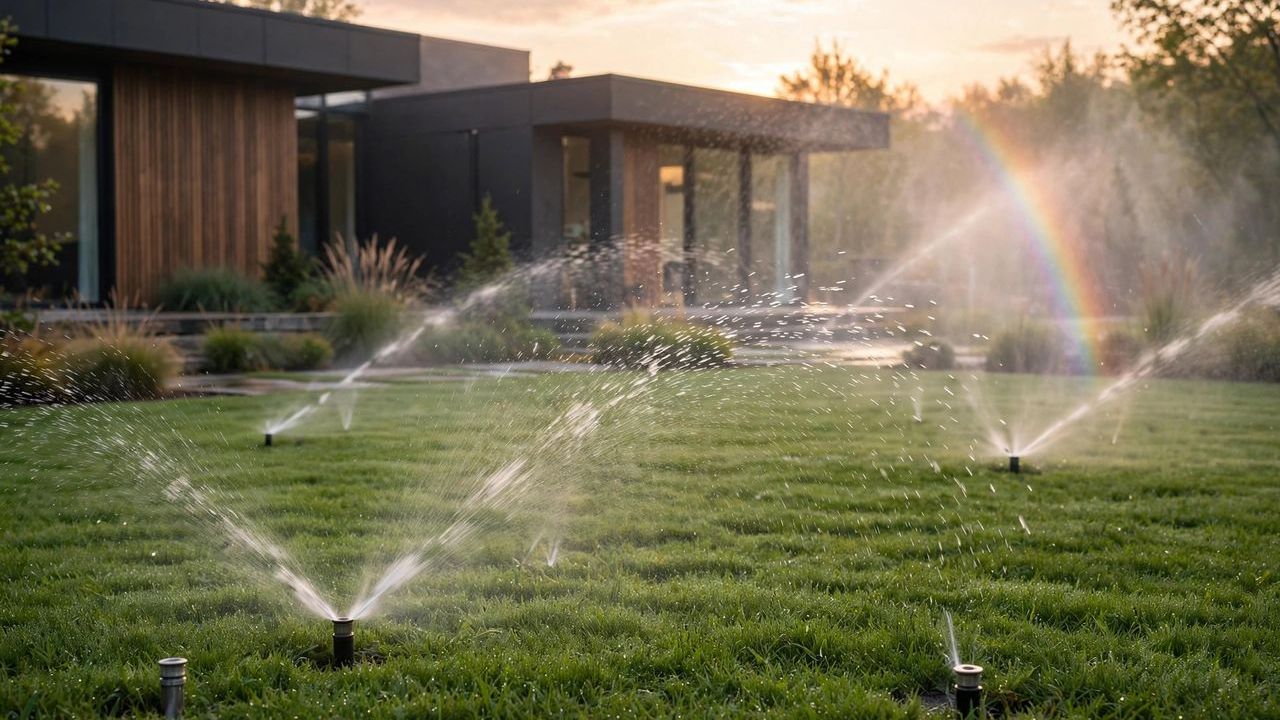
Traditional sprinklers water on a timer — rain or shine, needed or not. Smart sprinkler controllers check the weather, know your soil, and water only when the lawn actually needs it. The result: a greener lawn with a water bill cut by up to half. Here is how to get there in 2026.
The Controller Does the Thinking
A smart controller replaces your old timer box and wires into your existing valves — usually a 30-minute DIY job. It pulls local weather forecasts to skip watering before rain, adjusts for heat waves, and calculates each zone's needs from soil type, plant type, sun exposure, and slope. You answer a few setup questions; it handles the daily math forever.
Zones: The Secret to Even Coverage
Your shady front strip and sunny backyard slope do not want the same water. Divide the yard into zones by sun, soil, and plant type, and give each its own schedule. Walk the yard during a cycle and look for dry spots and puddles — adjust sprinkler heads before blaming the controller. Most brown patches are coverage problems, not scheduling problems.
Water Deep, Not Often
The golden rule smart controllers follow: water deeply 2–3 times per week, not a daily sprinkle. Deep watering grows deep roots; daily misting grows shallow roots and weeds. Early morning watering (before 10 AM) loses least to evaporation and prevents the fungal diseases that plague evening watering.
Watch for Local Rules and Rebates
Many water districts offer rebates for smart controllers — sometimes covering most of the cost — and enforce watering-day restrictions the controller can follow automatically. Check your utility's website before buying; the rebate often makes the upgrade nearly free. Enable freeze skip and wind skip in the app to avoid watering the sidewalk in a storm.
A smart sprinkler is the rare gadget that pays for itself, saves a precious resource, and makes the neighbors jealous of your lawn — all while you do absolutely nothing.