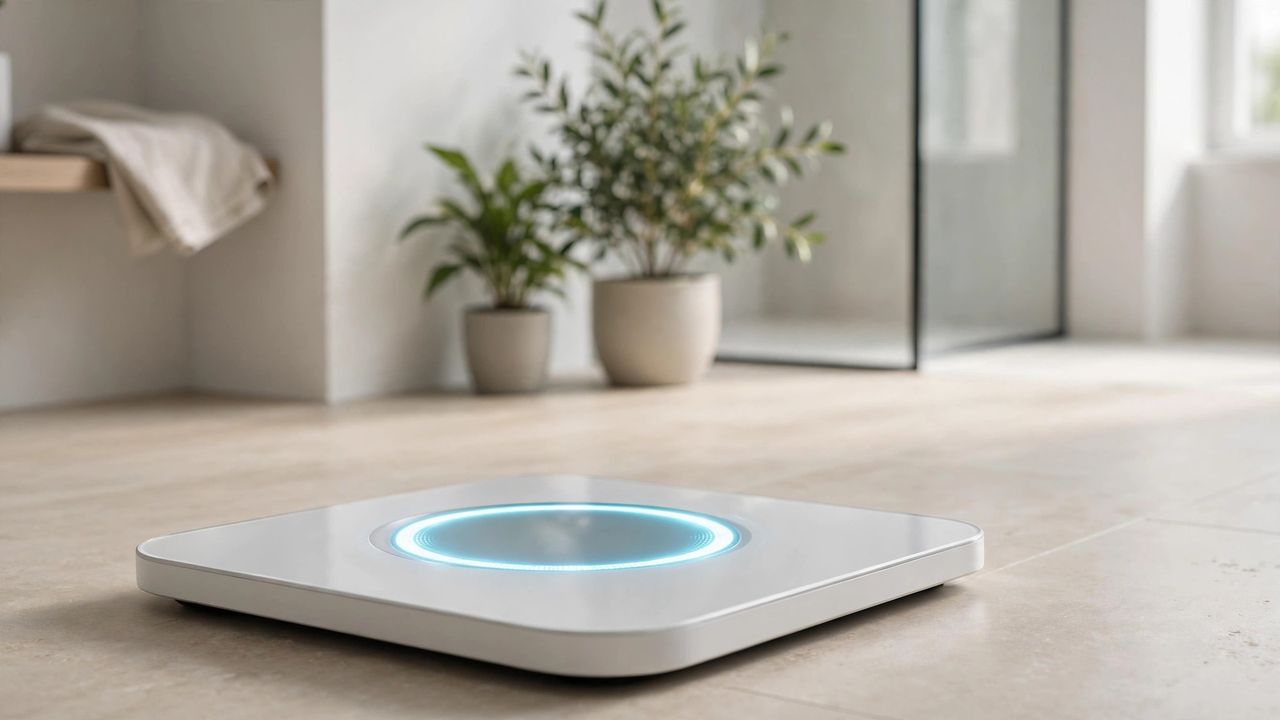
Your weight alone tells you almost nothing — two people at the same weight can have completely different health. Smart scales add body fat percentage, muscle mass, water weight, and more, then chart it all in an app. Here is what these numbers really mean and how to use them in 2026.
What Bioimpedance Can (and Can't) Tell You
Smart scales send a tiny electrical current through your feet (bioelectrical impedance, or BIA) to estimate fat vs muscle. The absolute numbers are approximate — hydration, meals, and even foot moisture shift them. But the trends over weeks are genuinely useful: muscle mass climbing while weight holds steady means your training is working, whatever the mirror says.
How to Weigh for Useful Data
Consistency beats precision. Weigh at the same time daily — first thing in the morning, after the bathroom, before food or coffee. Place the scale on a hard, flat floor (carpet ruins readings). Ignore any single day's number; watch the 7-day average. Daily weight swings of 1–2 kg are normal water fluctuation, not fat gain.
Features Worth Paying For
Wi-Fi sync beats Bluetooth — readings upload even when your phone is in another room. Multi-user recognition keeps family members' data separate automatically. Look for an app with trend graphs, not just numbers, and integrations with your fitness apps. Athlete mode adjusts the algorithm for very lean or muscular bodies; use it if that is you.
Who Should Skip the Extra Metrics
Be honest about your relationship with the scale: if daily numbers cause anxiety, weigh weekly and hide the body-fat screen. People with pacemakers or who are pregnant should skip BIA scales (the current is tiny but the guidance is caution). And remember — no scale measures health directly. It measures inputs; how you feel, sleep, and move is the real dashboard.
A smart scale is a trend-spotter, not a judge. Step on consistently, read the lines not the dots, and let the data quietly confirm what your habits are already building.