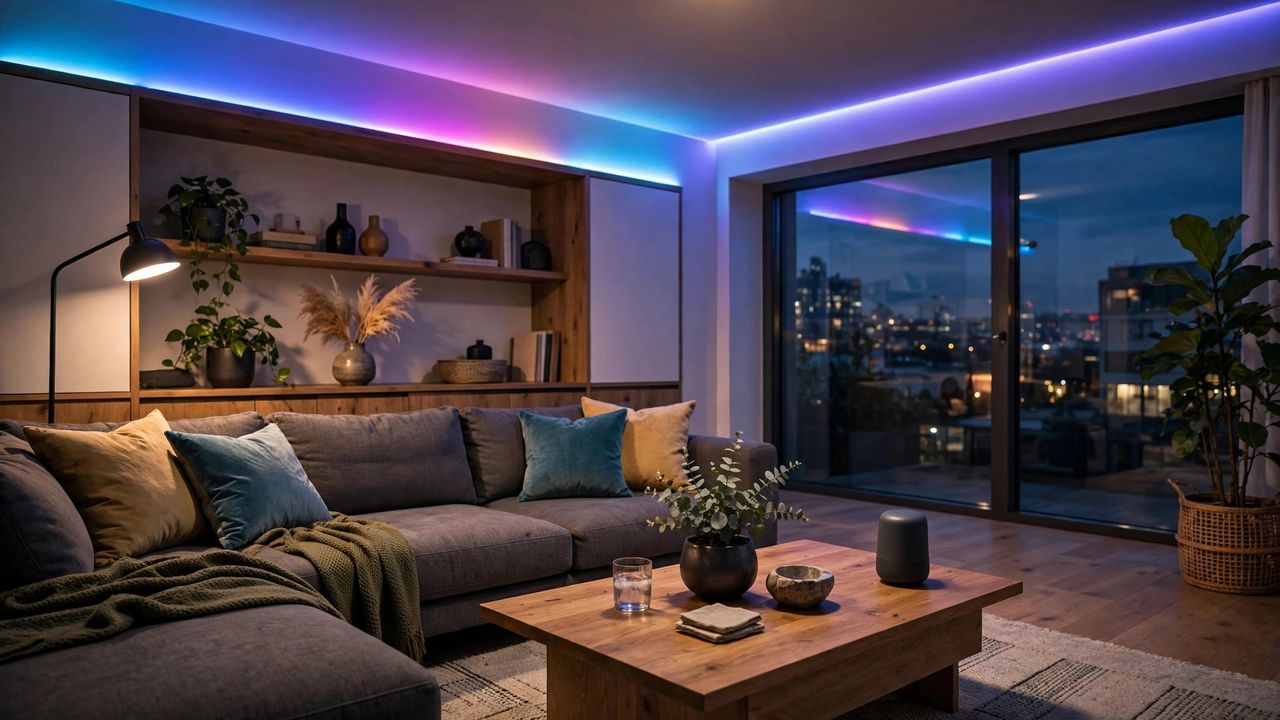
Smart lighting sounds expensive, but the entry price has crashed: a decent smart bulb now costs less than a pizza. For under $100 you can automate the rooms you use most — lights that fade on at sunset, turn off when you leave, and dim for movie night from your phone. Here is the budget starter plan for 2026.
The under-$100 starter kit
Buy four Wi-Fi smart bulbs for the bedroom and living room, two smart plugs for lamps you already own, and one motion sensor for the hallway. That is the whole kit — roughly $80 to $100 on sale. Wi-Fi bulbs need no hub, which keeps costs down. Stick to one brand or the Matter standard so everything works in one app.
Routines that are actually worth it
Set three routines first: sunset on / bedtime off, motion-triggered hallway light at night, and a "movie mode" that dims the living room. Add a vacation mode that randomizes lights while you travel. These four automations deliver 90% of the smart-home feeling. Skip complex multi-step scenes until the basics feel natural.
Voice control and schedules
Connect your lights to your voice assistant for hands-free control — "turn off all lights" as you leave never gets old. Use gradual wake-up routines that brighten the bedroom over 20 minutes; it genuinely makes mornings easier. Geofencing (lights off when your phone leaves home) saves energy without you thinking about it.
Avoid the common money traps
Do not buy color bulbs for every socket — white-tunable bulbs cost less and suit most rooms; save color for one accent lamp. Check bulb brightness (800+ lumens for main rooms) and confirm your Wi-Fi reaches each location. Renters: smart bulbs and plugs need no wiring changes, so your deposit stays safe.
Start with one room, prove the value, then expand. Smart lighting under $100 is not a gimmick anymore — it is the cheapest real upgrade you can make to your home.