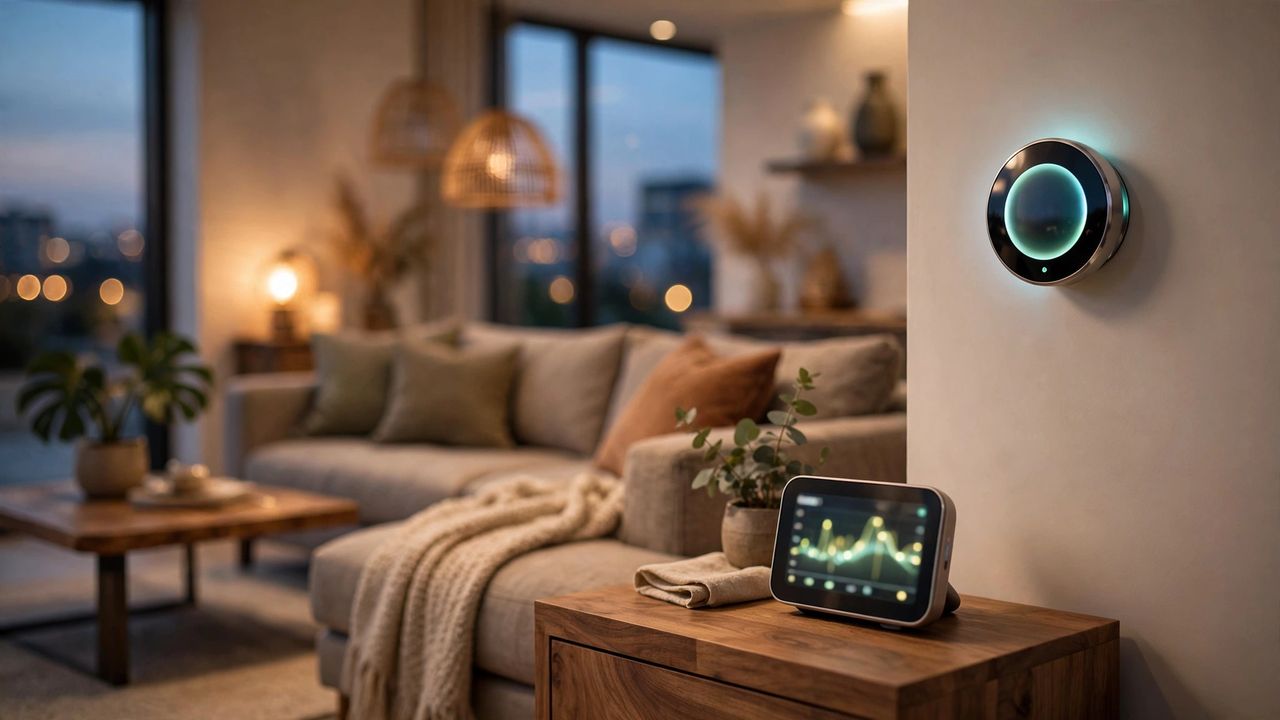
Electricity prices keep climbing, but the average home wastes nearly a third of the power it uses. In 2026, affordable smart-home gear makes it easier than ever to find that waste and eliminate it — most households can cut 20–30% off their bill without changing their lifestyle.
Start With an Energy Monitor
You cannot fix what you cannot see. A whole-home energy monitor (a small device fitted in your breaker panel) shows exactly which appliances eat the most power, in real time. Many owners discover one culprit — an old water heater, a garage fridge, a forgotten space heater — responsible for most of the waste. Measure first, then act.
Let a Smart Thermostat Do the Work
Heating and cooling are typically 40–50% of a home's electricity use. A smart thermostat learns your schedule and eases off when nobody is home, then pre-cools or pre-heats before you return. Set it one degree lower in winter and one higher in summer — you will barely notice, and the savings compound every month.
Master Time-of-Use Tariffs
Many utilities now charge cheaper rates at night and on weekends. Shift heavy loads — dishwashers, washing machines, EV charging — to off-peak hours, and use smart plugs with scheduling so it happens automatically. Check your utility's tariff plan; switching to a time-of-use plan can save money even before you change a single habit.
Kill Standby and Phantom Loads
TVs, game consoles, chargers and set-top boxes draw power 24/7 doing nothing. Smart plugs with energy monitoring and auto-off rules cut power to idle devices. A single TV setup can waste $50–100 a year in standby alone — multiply that across the house and it becomes a real bill.
The 80/20 Upgrade Checklist
Do the high-impact, low-cost moves first: swap every bulb to LED, seal drafty doors and windows, service your HVAC filters monthly, and use motion sensors for outdoor lights. Together these small wins routinely beat one expensive gadget purchase.