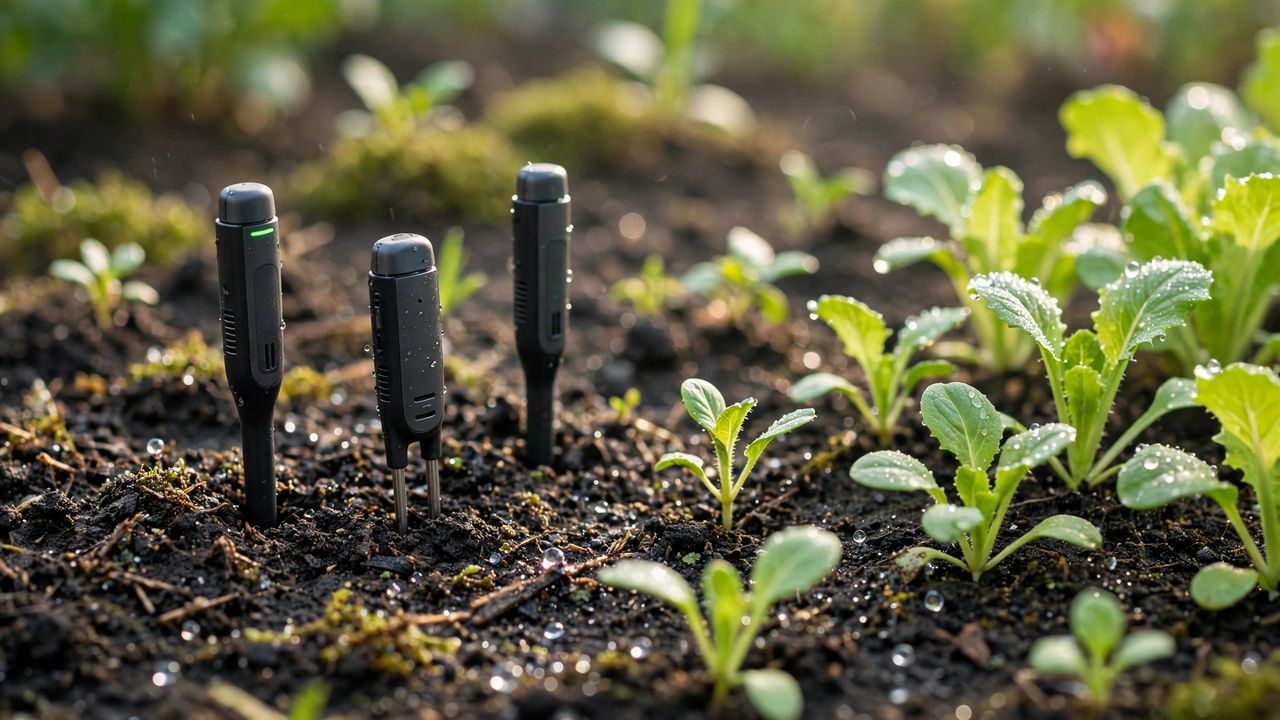
Most garden plants die from kindness — overwatering kills more plants than drought ever will. Smart garden sensors take the guesswork out: a small probe in the soil reads moisture, light, temperature, and sometimes nutrients, then tells your phone exactly what each plant needs. Here is how to use them in 2026.
What These Sensors Actually Measure
The core reading is soil moisture at root depth — far more reliable than poking the surface with your finger. Better models add light intensity (in lux or DLI), soil temperature, and fertility (EC). The companion app compares readings against a database of thousands of plant species and alerts you when something drifts out of range: "your basil wants water" instead of a raw percentage.
Placement Matters More Than Price
Push the probe to root depth — about 4–6 inches for vegetables — not just under the surface. Keep it a few inches from the stem to avoid root damage, and away from drip emitters that create false wet readings. One sensor per bed is the minimum; containers each deserve their own, since pots dry out at wildly different rates. Recalibrate seasonally: soil compacts and sensor tips corrode over time.
Pair Sensors With Smart Watering
A sensor alone is a reporter; paired with a smart valve or irrigation controller, it becomes a gardener. Set moisture thresholds per zone and let the system water only when soil actually dries out — users routinely cut water use by 30–50%. Start with one zone to learn the rhythms of your soil before automating the whole yard.
Common Beginner Mistakes
Do not chase a single "perfect" moisture number — different plants want different things, and the app's species profiles exist for a reason. Do not trust the first week of readings; sensors need a few days to settle. And cheap no-name probes often drift within a season — a mid-range sensor with replaceable batteries will outlast three bargain ones.
Smart sensors will not replace the joy of gardening, but they replace the anxiety. Water when the soil asks, feed when the numbers say so, and watch your plants do the rest.