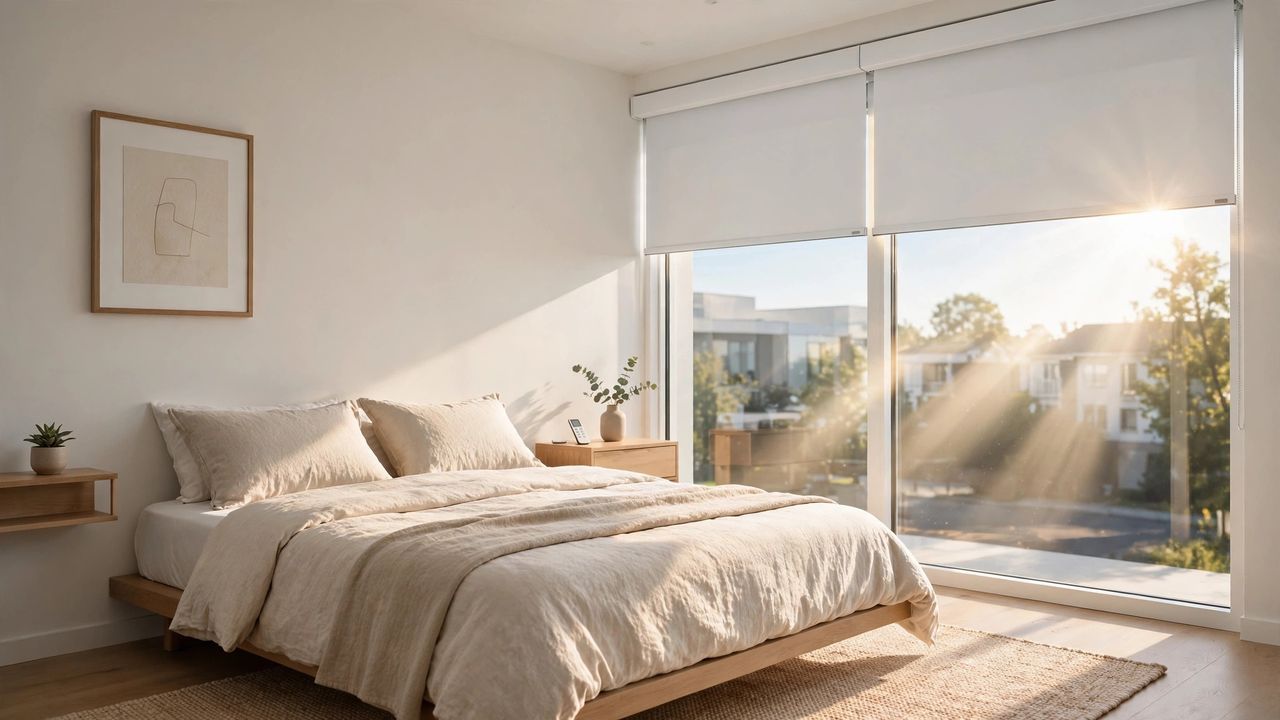
Blinds that open with the sunrise, close against the afternoon heat, and respond to your voice feel like luxury — but in 2026 they are a practical upgrade that cuts energy bills and protects your furniture from sun damage. Whether you retrofit what you own or buy new, here is the complete guide.
Retrofit Motors vs Built-In Smart Blinds
Already own blinds you like? Retrofit motors clip onto existing roller or venetian blinds and motorize them for a fraction of replacement cost — installation takes about 15 minutes per window. Buying new? Built-in smart blinds look cleaner, run quieter, and integrate better. Rule of thumb: retrofit for rentals and budgets, built-in for renovations and forever homes.
Power: Battery, Solar, or Wired?
Rechargeable battery motors dominate the market — expect 6–12 months per charge with normal use. Solar panels trickle-charge the battery on sunny windows and can make charging nearly a non-event. Hardwired motors never need charging but require an electrician during construction or renovation. For most people, battery plus a small solar panel is the sweet spot.
Pick the Right Protocol
In 2026, Matter is the standard to bet on — one protocol working across Apple, Google, Amazon, and Samsung ecosystems. Older Zigbee and Z-Wave blinds still work fine but may need a hub. Wi-Fi blinds connect directly but drain batteries faster. Check compatibility with your voice assistant before buying, not after.
Automations Worth Setting Up
The real payoff is automation: open at sunrise, close south-facing blinds during summer afternoons (this alone can cut cooling costs noticeably), and close everything at sunset for privacy. Tie blinds to a "movie mode" or "goodnight" scene. Measure windows carefully — inside-mount vs outside-mount changes both look and light leakage — and order one blind first to check fit before outfitting the house.
Start with the bedroom: waking to natural light instead of an alarm is the kind of upgrade you feel every single morning. The energy savings are just the excuse.