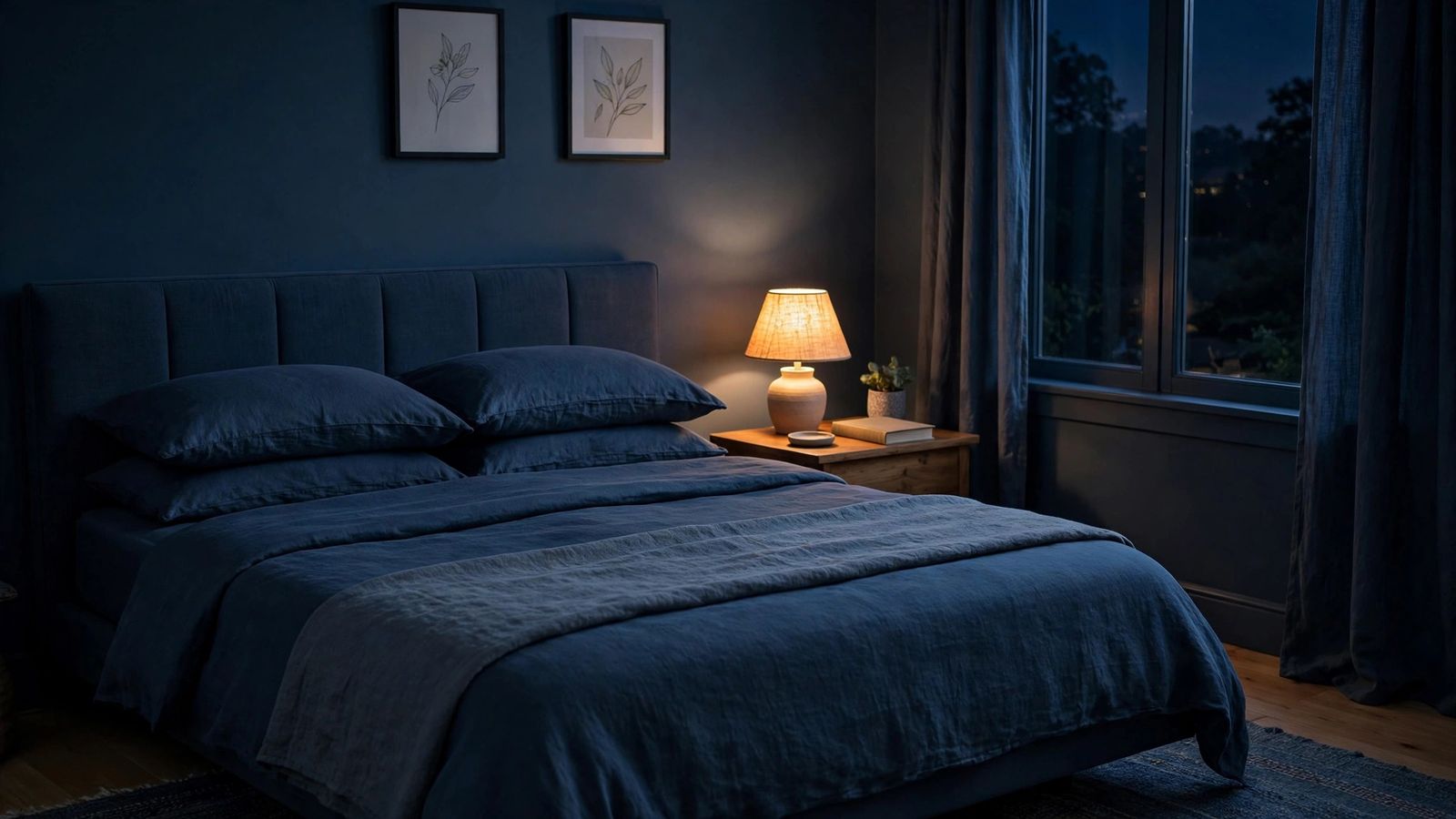
One bad night makes everything harder — focus, mood, even your immune system. Sleep hygiene isn't a gadget; it's the collection of daily habits that teach your body when to power down. Better sleep is built during the day, not at midnight.
Lock In Your Schedule
Go to bed and wake up at the same times every day, including weekends — your circadian clock runs on consistency, not catch-up sleep. Get bright light within an hour of waking; it anchors your rhythm more powerfully than evening darkness. Keep naps to 20 minutes before 3 PM. A fixed wake time is the single most powerful sleep habit.
Light, Temperature, and Noise
Dim lights 2 hours before bed and keep screens out of the bedroom — blue light delays melatonin. Cool your room to around 65°F (18°C); your core temperature must drop to fall asleep. If noise wakes you, steady white noise beats silence. Cool, dark, and quiet: the three ingredients of a sleep-ready bedroom.
Food, Caffeine, and Alcohol
Cut caffeine by early afternoon — its half-life is 5–6 hours, so a 4 PM coffee is still half-active at 10 PM. Alcohol feels like a sedative but fragments sleep and suppresses dreaming. A light evening snack is fine; a heavy late dinner is not. Caffeine has a curfew: none after lunch if you struggle to fall asleep.
The Wind-Down Routine
Give yourself 30–60 minutes of low-stimulation wind-down: shower, read a physical book, stretch gently. Keep a notepad by the bed — writing down tomorrow's worries stops them looping in your head. If you're awake after 20 minutes, get up and do something boring in dim light until sleepy. Lying awake teaches your brain that bed is for worrying — get up instead.