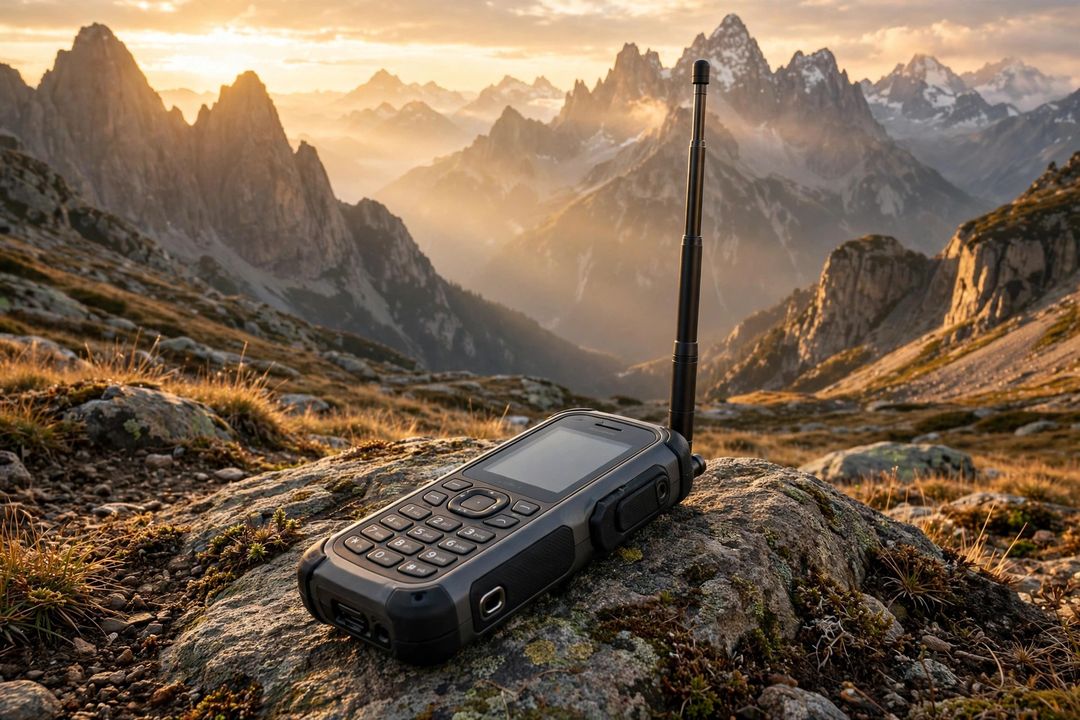
Deep in the mountains, far offshore, or driving through empty desert — places where your smartphone shows "No Service" — a satellite phone still rings. In 2026, satellite connectivity has evolved from clunky gear for explorers into practical tools for hikers, sailors, field workers, and travelers who can't afford to be unreachable. Here's everything you need to know before buying one.
How Satellite Phones Work
Instead of cell towers, satellite phones talk directly to satellites orbiting Earth. Networks like Iridium use dozens of low-orbit satellites that constantly move overhead, so coverage is truly global — poles included. The trade-off: the phone needs a clear view of the sky; it won't work indoors, in dense forest, or deep valleys. Call quality is decent but not smartphone-crisp, and there's a slight delay (about half a second) while your voice travels 35,000 km up and back. Text messaging and basic email work reliably; heavy data and apps don't — this is a lifeline, not a streaming device.
Best Models and What They Cost in 2026
The big names remain Iridium and Inmarsat. A dedicated Iridium handset costs roughly $1,000-1,500, plus airtime — prepaid bundles run about $50-150 per month depending on minutes, or you can buy annual prepaid cards if you only need the phone for expeditions. A smart alternative for 2026: satellite communicators and hotspots that pair with your regular smartphone via Bluetooth, letting you send texts and SOS alerts through your phone's screen at a fraction of the cost. Newer flagship smartphones also offer limited emergency satellite messaging built in — free, but only for SOS, not conversations. For most travelers, a Bluetooth satellite communicator at a few hundred dollars plus a modest plan is the sweet spot.
Practical Tips Before You Buy
First, check whether your destination even needs one: many popular trekking routes and highways now have cell coverage or community phones. Rent before you buy — weekly satellite phone rentals cost far less than owning, and most outfitters include airtime. Always test the phone before leaving civilization: register it, charge it fully, and send a test message so you know it works. Carry a portable solar charger, because satellite mode drains batteries faster. Finally, learn the SOS procedure of your device before you need it — in an emergency, muscle memory beats a manual you'll never find.
A satellite phone is insurance you carry in your pocket: boring until the one day it's everything. Whether you buy, rent, or rely on your smartphone's satellite SOS, the real lesson is preparation. Know your route, tell someone your plan, and bring the lifeline that fits your trip.