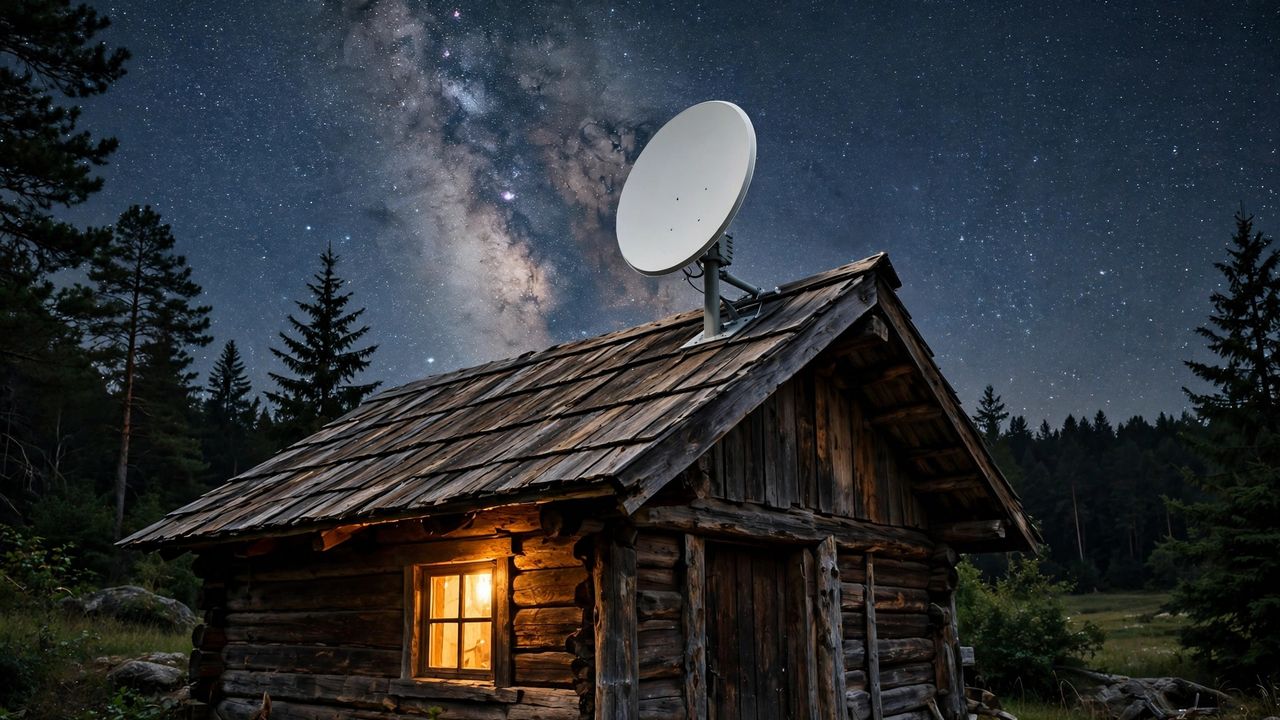
For rural homes, RVs, and off-grid cabins, satellite internet is often the only path to fast, modern broadband. In 2026 the market is dominated by low-orbit providers, led by Starlink, with legacy geostationary players still in the mix. Here is what actually matters before you sign up.
How Satellite Internet Works Now
Legacy services (Viasat, Hughesnet) use satellites parked 22,000 miles above Earth — great coverage but high latency (500ms+), which hurts video calls and gaming. Low-orbit constellations like Starlink orbit ~340 miles up, cutting latency to 25–60ms and pushing speeds of 100–250 Mbps down, fast enough for 4K streaming and remote work.
Starlink: What to Know
- Equipment: you buy the dish kit (typically a few hundred dollars) and install it yourself with a clear view of the sky.
- Plans: residential plans are fixed-location; roaming/RV plans cost more but work on the move.
- Obstructions: trees and buildings cause dropouts — mount the dish high if needed.
- Congestion: speeds vary by area and time of day; dense areas see slowdowns.
Viasat vs Hughesnet
The legacy providers offer lower equipment prices and wide availability, but data caps and high latency make them a second choice wherever Starlink or cellular is available. They still suit light users who mainly browse and email.
Alternatives Worth Checking First
- 5G home internet: cheaper with no dish if you have tower coverage.
- Fixed wireless: local providers beaming signal to a rooftop antenna.
- Fiber expansion: check your address again yearly — rural fiber builds are accelerating.
Bottom Line
Choose satellite only if terrestrial options truly fail you. Among satellites, low-orbit service wins for speed and latency — just confirm coverage, sky visibility, and total first-year cost before ordering the dish.