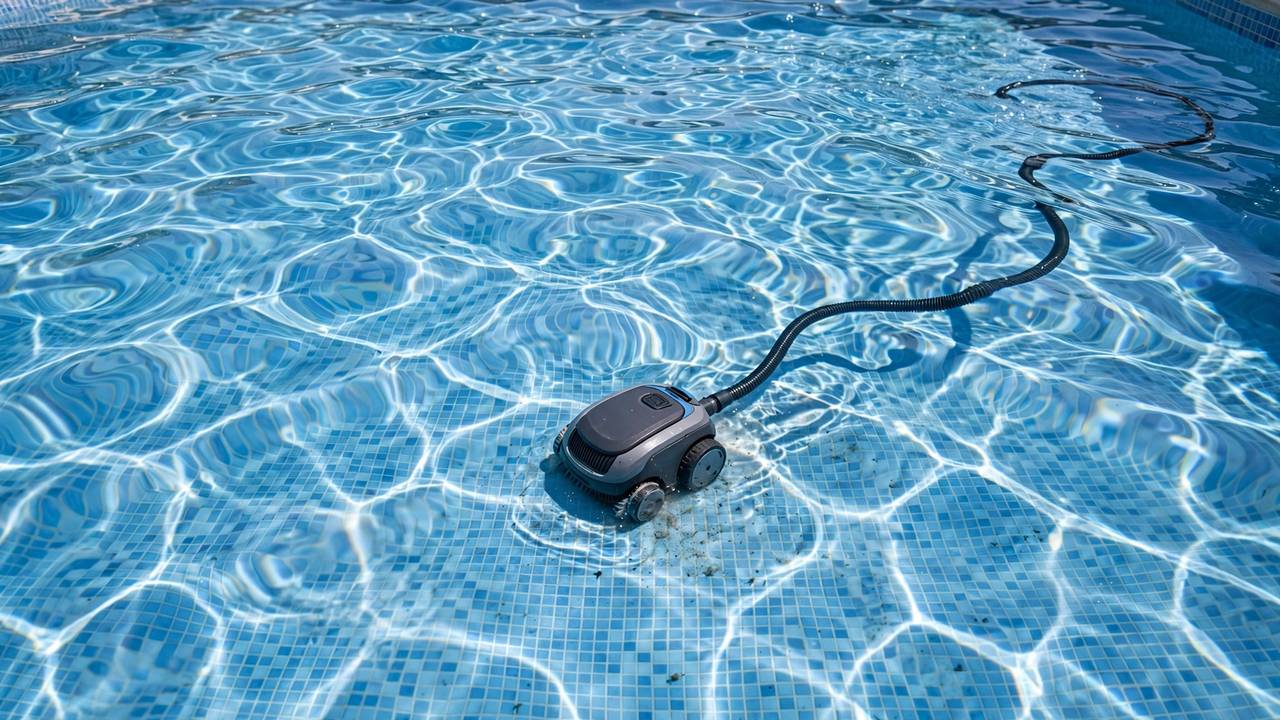
Manual pool vacuuming is the chore nobody misses. Robotic pool cleaners do it for you: drop one in, press a button, and come back to a spotless pool — floor, walls, and waterline. They have gotten smarter, cheaper, and far more reliable. Here is what to know in 2026.
Why Robotic Beats Suction and Pressure Cleaners
Old-school cleaners hook into your pool's pump and filtration, running up your electricity bill and wearing out equipment. Robotic cleaners are independent: they have their own motor, filter, and low-voltage power supply. They clean more thoroughly, use a fraction of the energy, and do not depend on your pump running — which alone can cut filtration costs.
What to Look For
Wall-climbing and waterline scrubbing separate good robots from toys — the waterline is where grime actually accumulates. Dual filtration (fine + ultra-fine baskets) handles both leaves and silt. Smart models map the pool for efficient coverage instead of random bouncing. For large or oddly shaped pools, check the cable length or go cordless; tangled cables are the number one owner complaint.
Corded vs Cordless in 2026
Cordless robots have matured: 2–3 hour runtimes now cover most residential pools on a single charge, with no cable to untangle or trip over. Corded models still win for huge pools and commercial use — unlimited runtime, stronger suction. If your pool is standard-sized, cordless is the lifestyle upgrade; if it is Olympic-adjacent, stay corded.
Maintenance Is Almost Nothing
After each cycle, rinse the filter basket — thirty seconds under the hose. Store the robot in shade, out of the water, when not in use; UV and chemicals age everything. Check the brushes yearly and replace when worn smooth. Never yank a corded robot out by its cable — use the retrieval hook or let it climb to the edge first.
A robotic cleaner turns pool ownership from a part-time job back into a pleasure. Drop it in, walk away, and swim — that is the entire maintenance program.