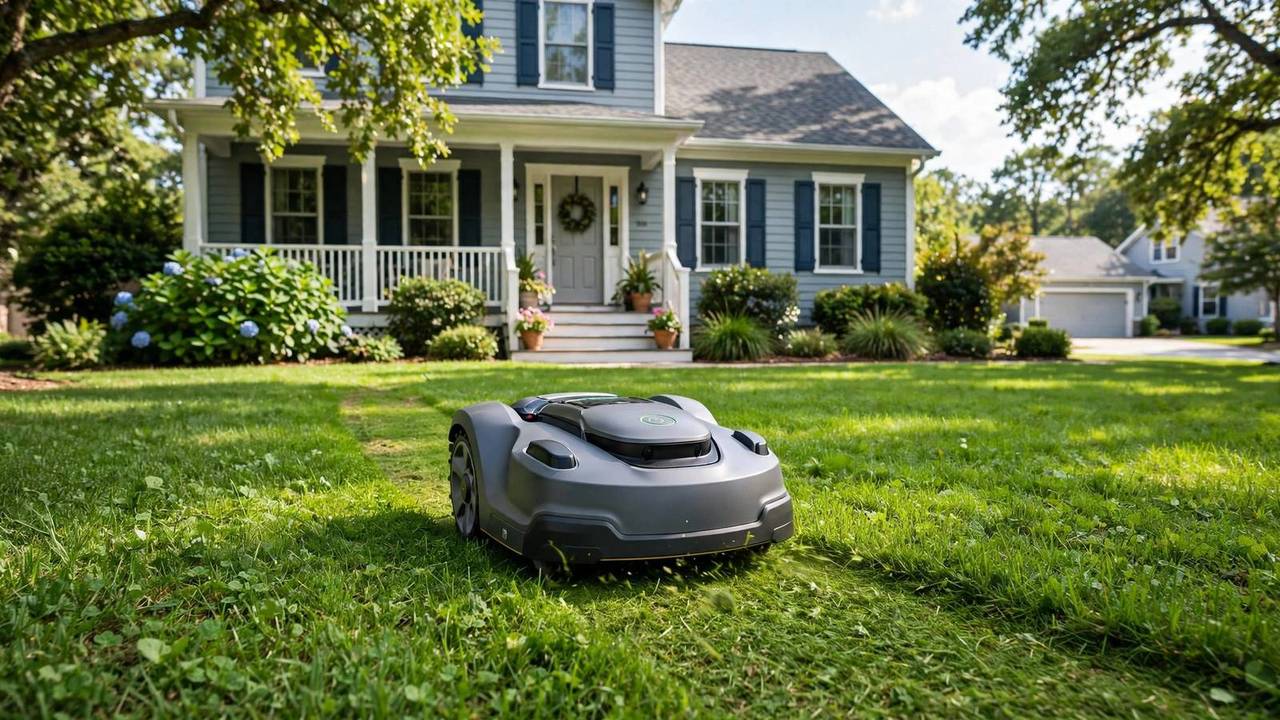
Imagine coming home to a perfectly trimmed lawn every single day without lifting a finger. In 2026, robot lawn mowers have matured from quirky gadgets into genuinely capable machines: no more buried boundary wires, smarter navigation, and models for nearly every yard size. But they are a real investment — here is how to decide if one is worth it for you.
How Modern Robot Mowers Map Your Yard
The newest models use GPS, cameras, and AI vision to map your lawn from a single walkaround or even automatically — the old perimeter wire is finally optional. They learn obstacles like trees and garden beds, mow in efficient patterns, and return to charge themselves. Walk the mapping route yourself first and remove hidden hazards like hoses and toys; the map is only as good as what the mower can see.
Costs: Upfront and Ongoing
Expect to pay from a few hundred dollars for small flat yards to well over a thousand for large or complex lawns. The upside: tiny electric motors sip power, blades are cheap to replace, and there is no gas or oil. Calculate what you currently spend on a lawn service per year — most owners break even within two to three seasons.
Maintenance Is Surprisingly Simple
Robot mowers need far less care than gas mowers: wipe the sensors, check the blades monthly, and store the unit indoors over winter. Because they trim a little grass daily, clippings mulch invisibly into the lawn — no bagging, ever. Replace blades at the first sign of tearing rather than cutting; sharp blades are the secret to a healthy lawn.
Which Lawns Are the Best Fit?
Robot mowers shine on small to medium lawns up to about half an acre with reasonably open layouts. Very steep slopes, dense obstacles, or sprawling multi-acre properties still favor traditional mowers or riding machines. Rain sensors now send most models home during storms. Measure your lawn and match the model's rated capacity with 20% headroom — an undersized mower will never catch up.
In 2026, for the right yard, a robot mower genuinely earns its keep: a better-looking lawn, zero weekend mowing, and lower long-term costs. If your lawn fits the profile, it may be the best home upgrade you make this year.