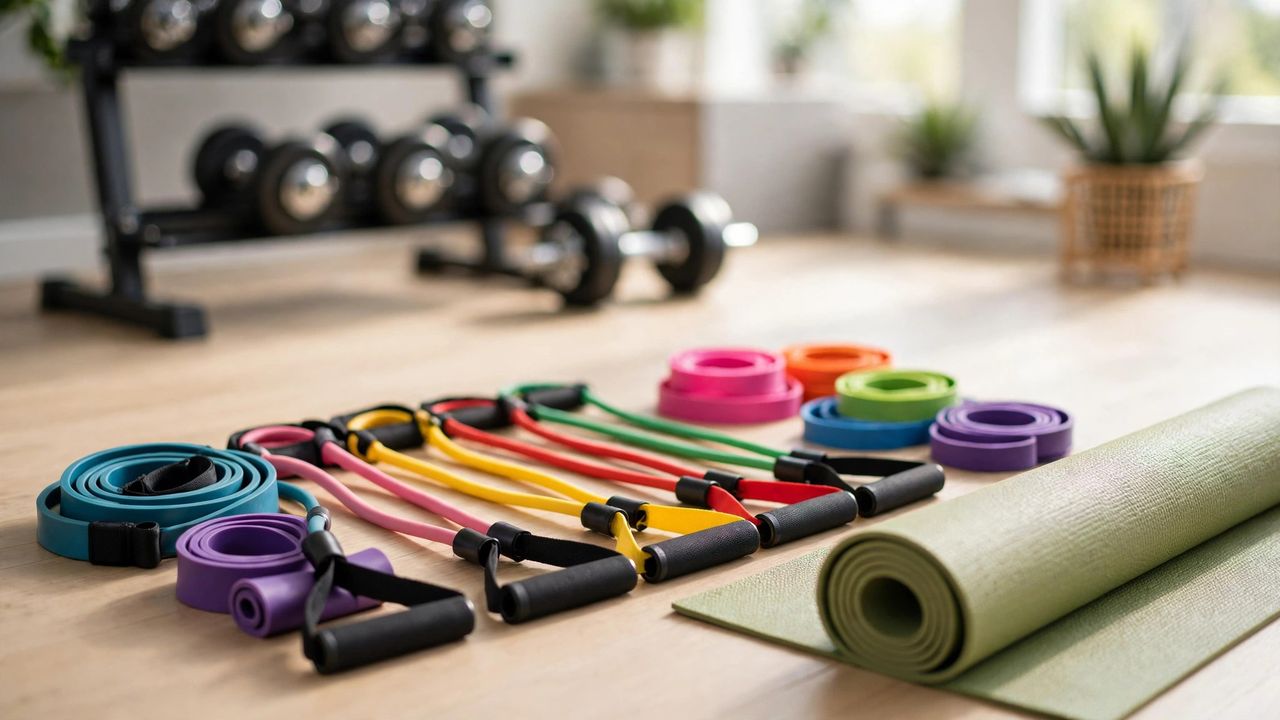
You don't need a gym membership to build real strength — you need about $20 and a doorway. Resistance bands are the most underrated fitness tool on the planet: portable, joint-friendly, and surprisingly effective at building muscle. Studies show band training produces strength gains comparable to free weights when programmed correctly. Here's your complete beginner guide.
Why Bands Actually Work
Bands create variable resistance — they get harder as they stretch, which means maximum tension exactly where your muscles are strongest (the top of the rep). That constant tension keeps muscles working through the entire range of motion, unlike dumbbells that get "easy" at certain angles. They're also gentle on joints: no heavy weights crashing down, making them ideal for beginners, older adults, and anyone rehabbing an injury. And the logistics are unbeatable — a full gym's worth of resistance fits in a backpack, so travel, small apartments, and busy schedules are no longer excuses.
A Simple Full-Body Beginner Routine
Do this 3 times per week, 3 sets of 10–15 reps each, resting 60–90 seconds between sets. Legs: band squats (stand on the band, handles at shoulders) and lateral walks for glutes. Push: chest press (band anchored behind you) and overhead press. Pull: seated rows and face pulls — these fix the desk-posture slouch. Core: pallof press (resist rotation) and banded dead bugs. Start with a light-to-medium band; you should struggle on the last 2–3 reps but keep perfect form. When 15 reps feel easy, move to a heavier band or slow the tempo — progressive overload works with bands just like weights.
Tips for Safe, Effective Band Training
Inspect bands before every workout — small tears become sudden snaps, and a band to the face is no joke. Replace worn bands immediately. Anchor securely: use a proper door anchor, never a doorknob, and test it before loading. Control every rep — the elastic wants to snap back, so a slow 3-second lowering builds more muscle and protects joints. Warm up with 5 minutes of light movement; cold muscles and explosive band work are a bad combo. Finally, track your workouts: note band color, reps, and how hard it felt, so you can see real progress week to week.
Resistance bands won't replace a barbell for competitive powerlifting — but for building a strong, capable body at home, they're genuinely elite. Grab a set, follow the routine above for 8 weeks, and prepare to be surprised by the mirror.