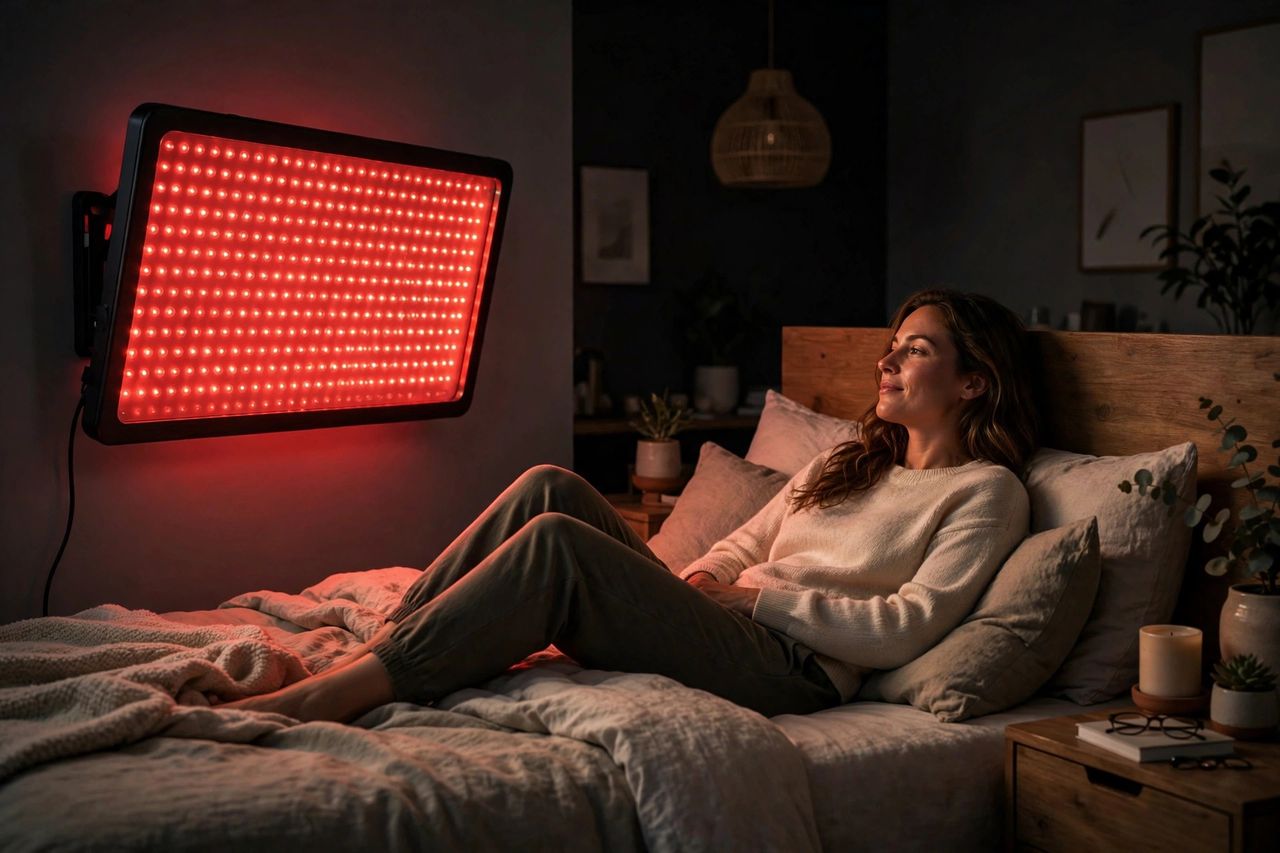
Red light therapy panels are everywhere in 2026 — promising glowing skin, faster recovery, and less pain. But what does the science actually say? Here's an honest look at the evidence.
What It Actually Is
Red light therapy shines low-level red and near-infrared light (630–850nm) on skin — no heat, no UV, no tanning. The theory: cells' mitochondria absorb the light and produce energy more efficiently. It's been studied for decades, mostly in small clinical trials.
What Evidence Supports
The strongest evidence is for skin benefits — several trials show modest improvements in wrinkles and skin texture. There's promising but weaker evidence for muscle recovery and joint pain. For fat loss, hair regrowth, and "biohacking" claims: the evidence is thin. Be skeptical of miracles.
Home Devices: What to Buy
Panels beat masks for value — a mid-size panel ($200–$400) covers more body. Look for published wavelength specs (660nm red + 850nm near-infrared) and third-party irradiance testing. Cheap devices with no specs are likely underpowered toys.
How to Use It Safely
Typical protocol: 10–20 minutes per area, 3–5 times a week, device 6–12 inches away. It's generally safe — no UV, minimal side effects. But don't stare into the lights, skip it if you're pregnant (not enough data), and keep expectations realistic: it's a supplement, not a cure.
Red light therapy has real, modest benefits for skin and possibly recovery — but it's not the miracle social media claims. Buy a decent device, use it consistently, and judge your own results.