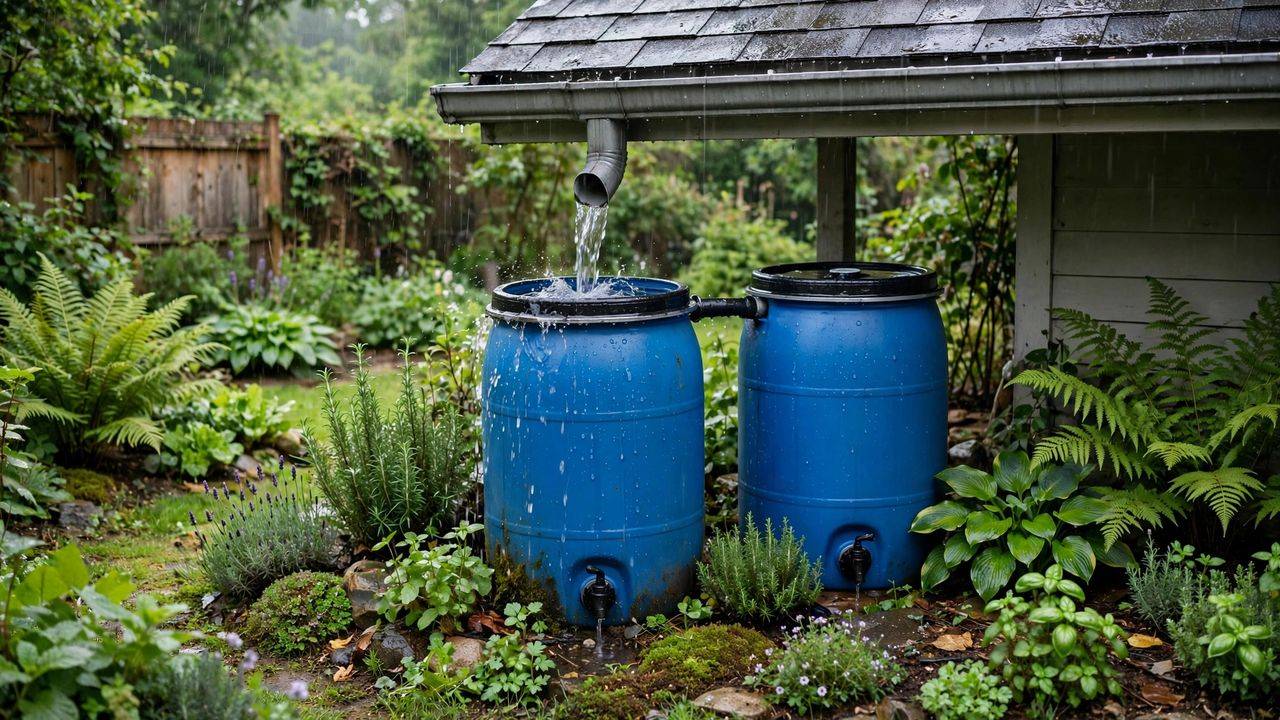
A typical roof collects hundreds of gallons from a single inch of rain — water that currently runs down your driveway and into the storm drain. Rainwater harvesting captures it for gardens, lawns, car washing, and even indoor non-potable use, cutting water bills and keeping your plants happier (rainwater is naturally soft and chemical-free). A basic beginner system costs under $150 and installs in a weekend.
Start With a Simple Barrel System
You do not need an underground cistern to begin. A 55-gallon food-grade barrel under one downspout, fitted with a spigot and an overflow hose, is the perfect starter system. Elevate the barrel on cinder blocks — gravity is your water pressure, and every foot of height helps. Add a mesh screen over the inlet to keep out leaves and mosquitoes, and a first-flush diverter (a simple $20 fitting) that discards the dirty first few gallons off a dusty roof. One barrel fills fast; plan the overflow route before the first storm.
Know Your Roof Math
Sizing is simple arithmetic. One inch of rain on 1,000 square feet of roof yields about 600 gallons — multiply your roof area by your average rainfall to size your storage. Most beginners underestimate: a single heavy storm can fill a 55-gallon barrel in minutes, so either add more barrels in series or accept that overflow is normal. Check local regulations first — a few regions restrict rainwater collection, though most now encourage it.
Use It Where It Counts
Gardens are the ideal first use: plants prefer rainwater, and outdoor watering is typically 30-60% of a home's water use. Connect a soaker hose to the barrel spigot for slow, deep garden watering that needs zero pumping. Beyond the garden, harvested rainwater works for washing cars, cleaning tools, flushing toilets (with a simple pump setup), and topping up ponds. Do not drink it without proper filtration and treatment — roof runoff picks up contaminants that a barrel system does not remove.
Maintain It Twice a Year
Rain systems are low-maintenance, not no-maintenance. Clean gutters and screens each spring and fall, drain and disconnect barrels before hard freezes, and scrub out algae annually. Mosquito dunks (harmless bacterial tablets) in the barrel prevent breeding all summer. Inspect the first-flush diverter and spigot washers yearly — small leaks waste the water you worked to collect. Fifteen minutes of maintenance per season keeps the system running for a decade.
Buy the barrel, pick your downspout, and install it this weekend. The next rainstorm becomes free water instead of runoff.