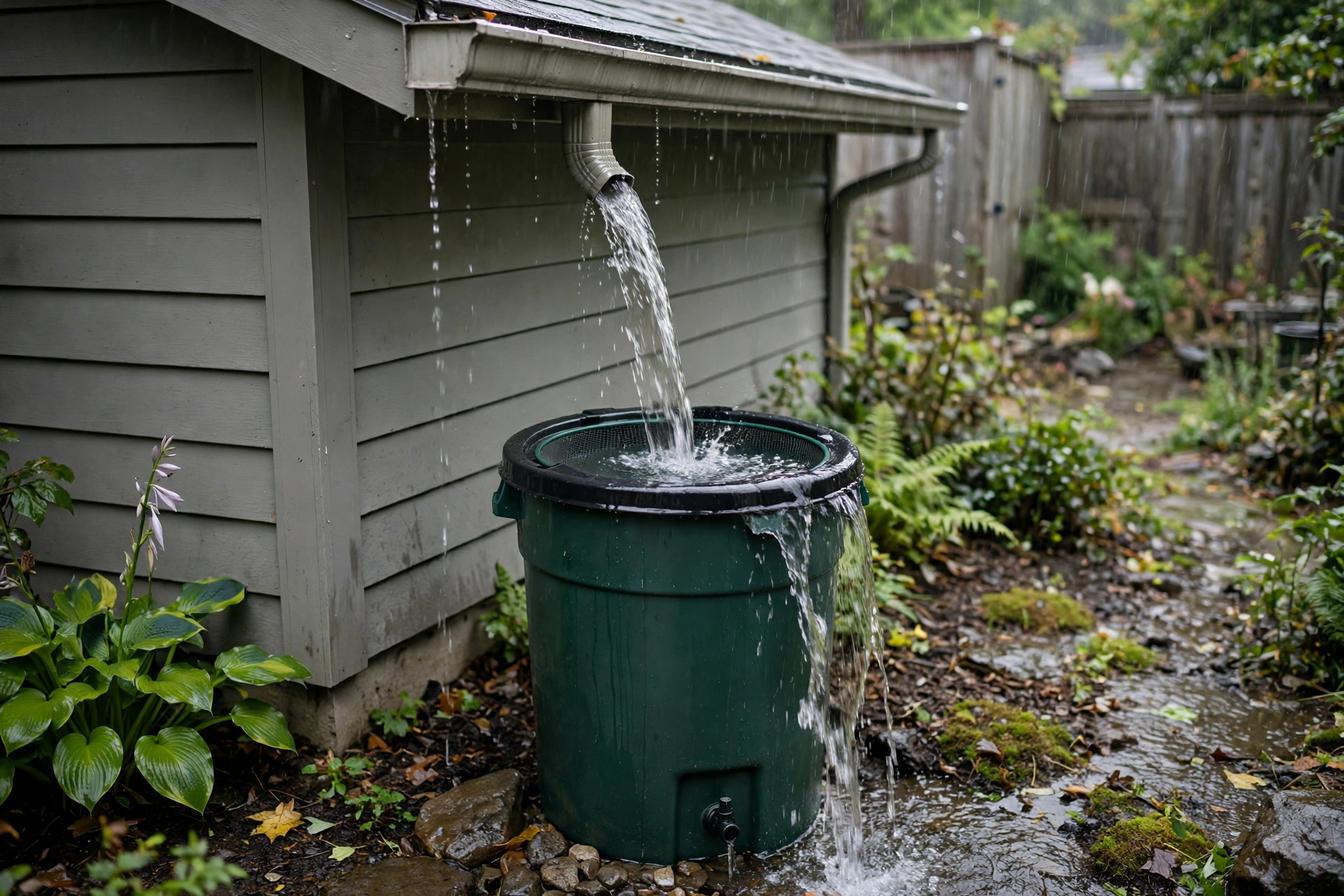
A rain barrel captures roof runoff you would otherwise lose, giving your garden free, chlorine-free water. Just one inch of rain on a 1,000-square-foot roof yields over 600 gallons — a single storm can fill several barrels.
Choosing the Right Barrel
Food-grade 55-gallon plastic barrels are the affordable standard; wooden or decorative models cost more but look better. Always use food-grade barrels — never containers that held chemicals or oils. Dark colors slow algae growth inside.
Placement: Under the Downspout
Set the barrel on level ground directly beneath a downspout, ideally near the garden you will water. Elevate the barrel on cinder blocks — gravity flow needs height to push water through a hose. Two feet of elevation makes a dramatic difference.
Installing the Diverter and Spigot
Cut the downspout and fit a diverter kit that routes water in while letting overflow bypass back down. A proper diverter is the difference between a tidy system and an overflowing mess in heavy rain. Fit a spigot near the base and a mesh screen on top to keep out leaves and mosquitoes.
Linking Multiple Barrels
Connect barrels in series with overflow hoses so one downspout fills them all. Linking two barrels doubles your storage for a fraction of a second system's cost. Keep the linking hose near the tops so levels equalize naturally.
Keeping Water Clean and Safe
A sealed lid and fine mesh screen stop mosquitoes from breeding; a tablespoon of vegetable oil on the surface also smothers larvae. Mosquito prevention is non-negotiable — a screened barrel stays pest-free with zero effort. Drain and scrub barrels once a year to clear sediment.
Using Your Harvested Water
Rainwater is soft, slightly acidic, and chlorine-free — plants love it. Use rainwater for watering cans and drip irrigation; it is gentler on seedlings than tap water. Do not drink it or use it on edible leaves without treatment, since roofs collect dust and debris.