Quantum computing keeps making headlines, and in 2026 the technology is finally moving from pure research into early practical use. If the jargon confuses you, don't worry — the core ideas are surprisingly simple, and you don't need a physics degree to understand why everyone from drug companies to logistics giants is paying attention.
What Makes Quantum Computers Different
Your laptop stores information as bits, each one a tiny switch that's either 0 or 1. A quantum computer uses qubits instead. A qubit can exist in a combination of 0 and 1 at the same time, which means a group of qubits can represent many possible answers simultaneously. That's the root of quantum power: exploring vast solution spaces in parallel instead of checking one option after another.
Qubits, Superposition and Entanglement — Simply
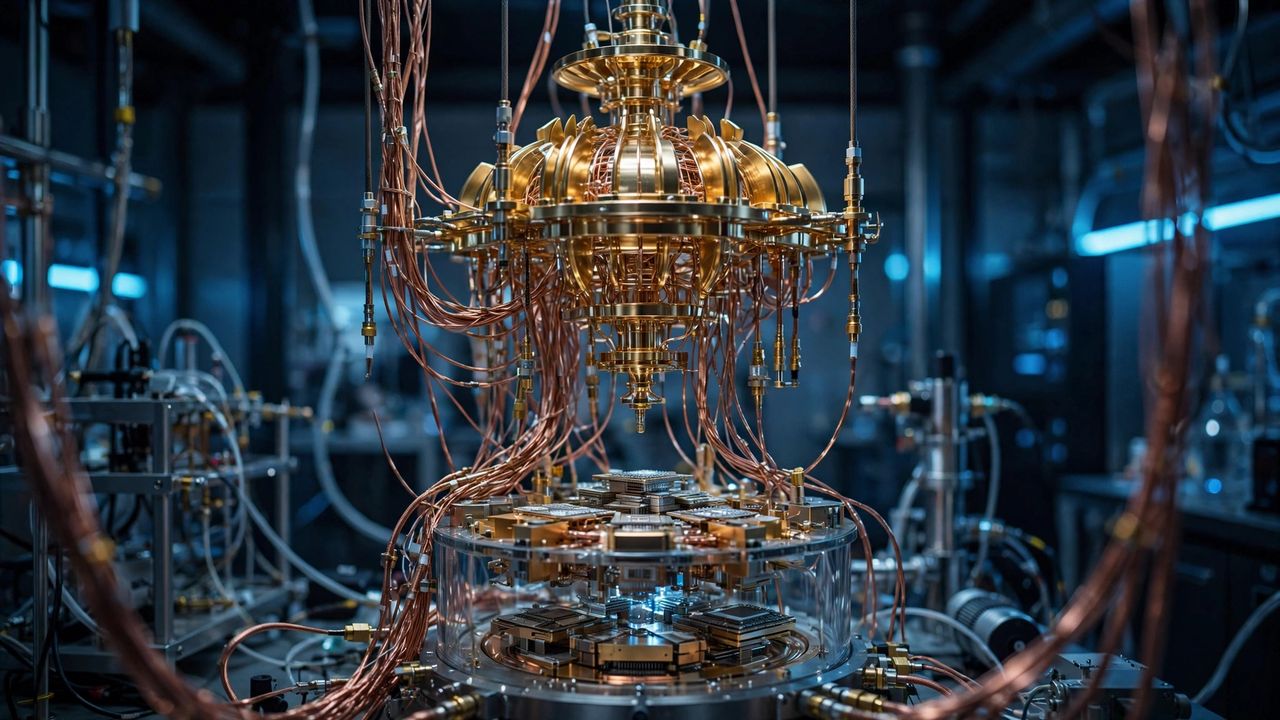
Superposition is the idea that a qubit holds multiple states at once until you measure it. Entanglement is stranger: two qubits can be linked so that measuring one instantly affects the other, no matter the distance. Programmers use these quirks to build quantum algorithms — recipes that cancel out wrong answers and amplify the right one. The catch? Qubits are extremely fragile. Even tiny vibrations or temperature changes corrupt them, so machines must run near absolute zero in special refrigerators.
What Quantum Computers Actually Do in 2026
Despite the hype, quantum computers won't replace your laptop. In 2026 they're used for niche problems: simulating molecules for new medicines and batteries, optimizing delivery routes and financial portfolios, and developing cryptography that's safe against quantum attacks. Error rates are still high, so most practical work pairs quantum processors with classical computers in hybrid workflows — the quantum chip tackles one hard step, classical hardware does the rest.
How to Start Learning for Free
Want to explore? You can run real quantum programs from your browser. IBM Quantum offers free access to small machines, and its open-source Qiskit toolkit has beginner tutorials. Microsoft and Google provide similar cloud playgrounds. Start with a one-hour intro course, then try a five-qubit "Hello World" circuit. The math looks scary, but the coding interfaces in 2026 are genuinely beginner-friendly.
Quantum computing won't change your daily life tomorrow — but understanding it today puts you ahead of the curve. Ask US AI's free chat anything else you're curious about, from qubits to career paths in quantum software.