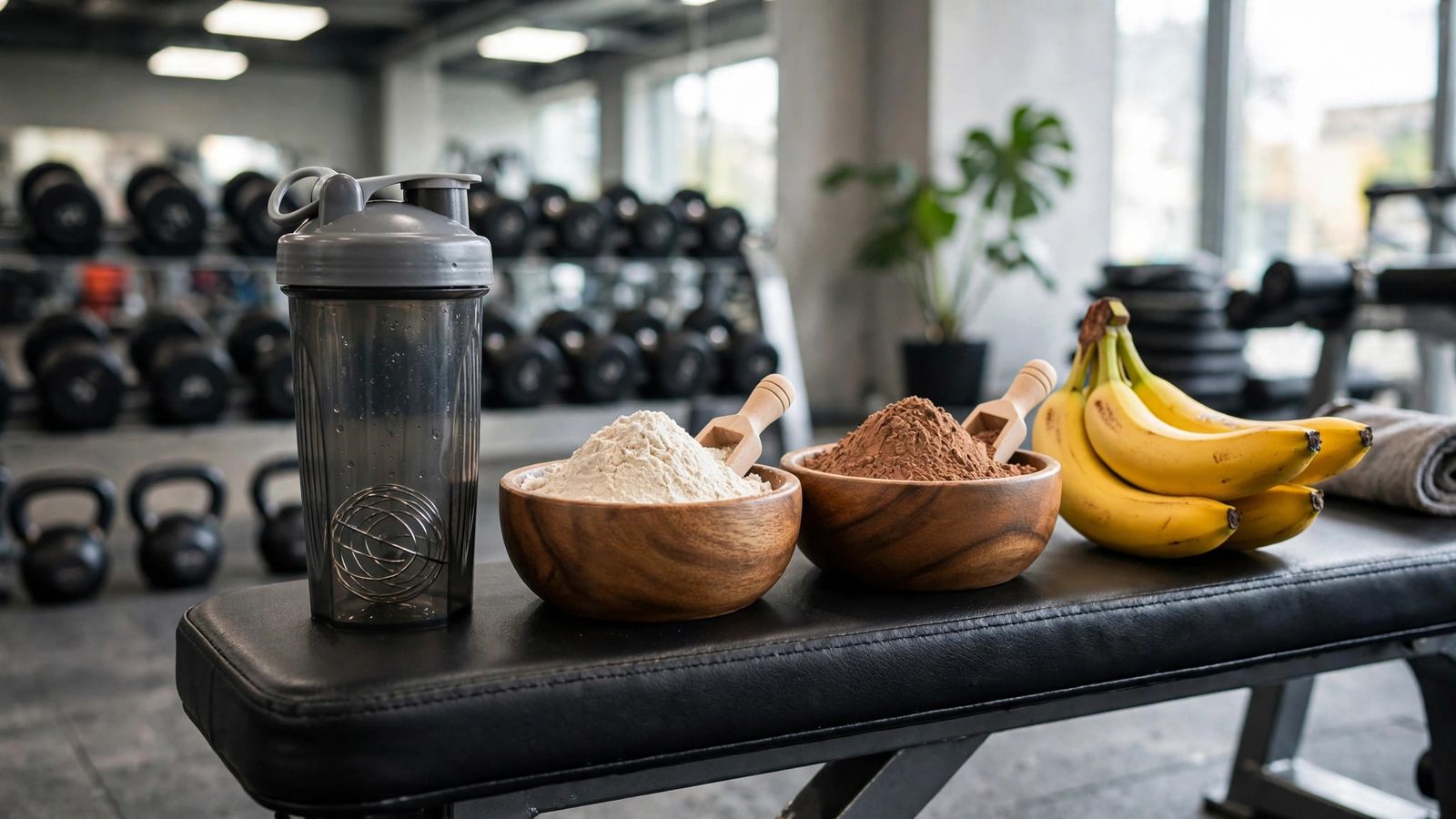
Walk into any supplement store and you're hit with fifty tubs promising everything from bigger biceps to faster weight loss. Protein powder is just food in convenient form — but the type, quality, and dose matter. Match the powder to your goal, and it's a useful tool; pick blindly and it's an expensive milkshake.
How Much Protein Do You Actually Need?
Most adults need about 0.7–1 gram of protein per pound of body weight daily; lifters and dieters aiming to keep muscle need closer to 1 gram per pound. Food comes first — powder just fills the gap when chicken, eggs, and beans fall short. Aim to hit your protein target with food first, then use powder to close the gap.
Whey vs. Casein vs. Plant-Based
Whey protein absorbs fast, tastes good, and is the best-studied option — ideal after workouts. Casein digests slowly, making it a solid bedtime option. Plant blends (pea + rice) now rival whey for muscle building and suit anyone dairy-free. Egg-white and beef protein powders exist but cost more with little proven edge. For most people, a whey isolate or a quality plant blend covers every need.
Reading the Label Like a Pro
Check protein per scoop (20–30g is normal), sugar content (under 3g unless it's a mass gainer), and the ingredient list — short is better. Third-party testing seals (NSF, Informed-Sport) prove the label is honest and the product is clean. Skip anything listing proprietary blends that hide doses. No third-party testing seal, no purchase — that's the rule.
Common Mistakes
More is not better: your body can't use more than about 30–40g in one sitting for muscle building. Shakes don't replace sleep, training, or real meals. And "mass gainers" are mostly sugar bombs — you'd do better with extra rice and olive oil. Protein powder is a supplement to a good diet, not a shortcut around one.