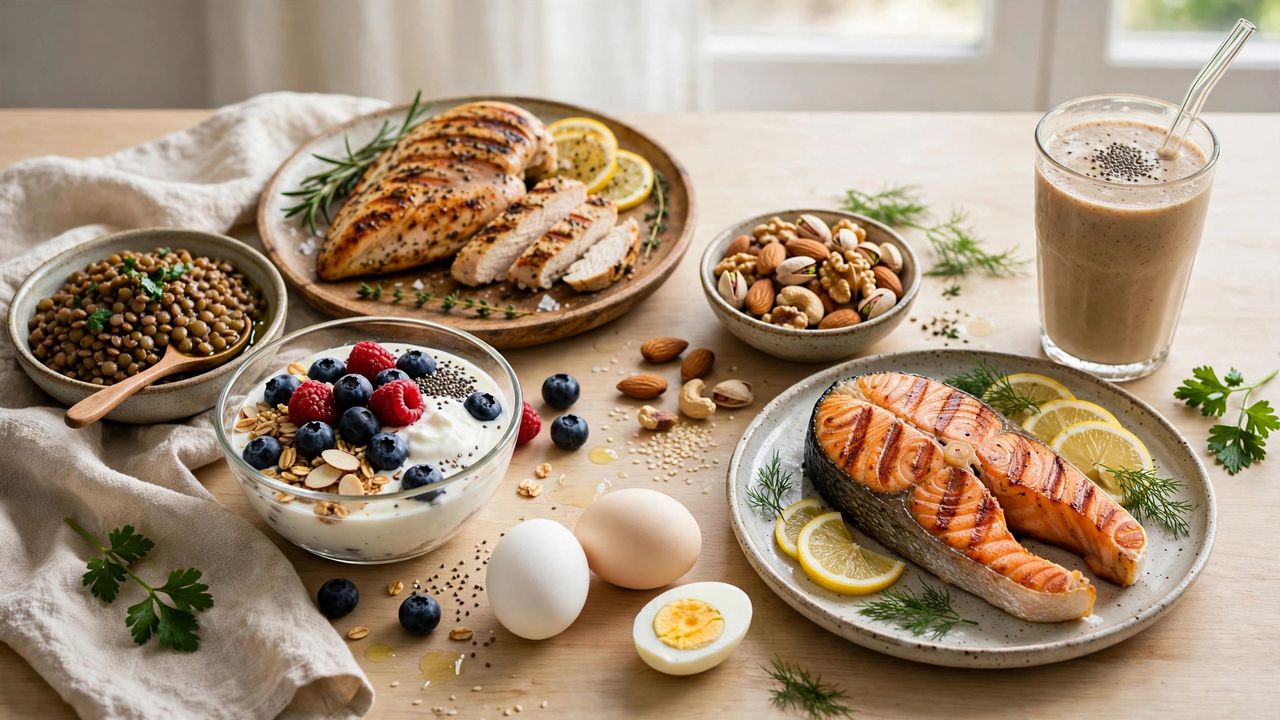
Protein is the building block your muscles, skin, and immune system are made of — and in 2026, more people than ever are tracking it. Athletes, desk workers, and anyone trying to stay full on fewer calories have all joined the protein conversation. Yet most of us either get too little or obsess over far too much. This guide cuts through the noise with practical, science-backed advice you can actually follow.
How Much Protein Do You Really Need?
The old guideline of 0.8 grams per kilogram is a minimum, not a target. For active adults, 1.2–1.6 grams per kilogram of body weight per day is the sweet spot most nutrition research supports — more if you're building muscle or recovering from injury. Spread it across the day: your body uses protein better in 25–40 gram portions per meal than in one giant dinner. Consistency beats the occasional protein bomb.
Best Sources for Every Diet
Animal foods like eggs, chicken, fish, Greek yogurt, and cottage cheese deliver complete protein in small portions. Plant eaters can combine beans, lentils, tofu, tempeh, quinoa, and edamame to cover all essential amino acids. Don't forget the middle ground — soy milk, seitan, and even whole grains add up faster than people expect. Aim for a palm-sized portion of protein at every meal rather than memorizing grams.
Easy High-Protein Meal Ideas
Breakfast is the easiest win: Greek yogurt with berries, or eggs with whole-grain toast. Lunch can be a lentil soup or a chicken salad wrap. For dinner, stir-fries with tofu or salmon cook in fifteen minutes. Keep snacks simple — a handful of nuts, a boiled egg, or roasted chickpeas. Meal-prepping two protein bases on Sunday removes weekday guesswork entirely.
Common Mistakes to Avoid
More is not always better — excess protein doesn't build extra muscle, it just costs more and taxes your digestion. Another trap is ignoring fiber; a diet of shakes and chicken with no vegetables leads to sluggish energy and poor digestion. Finally, don't treat protein bars as health food — many are candy with good marketing. Real food first, supplements only to fill gaps.
You don't need a perfect plan — just a protein anchor at every meal and a little planning. Start with breakfast tomorrow, keep it simple for two weeks, and notice how your energy and hunger change. Small, steady changes beat dramatic diets every single time.