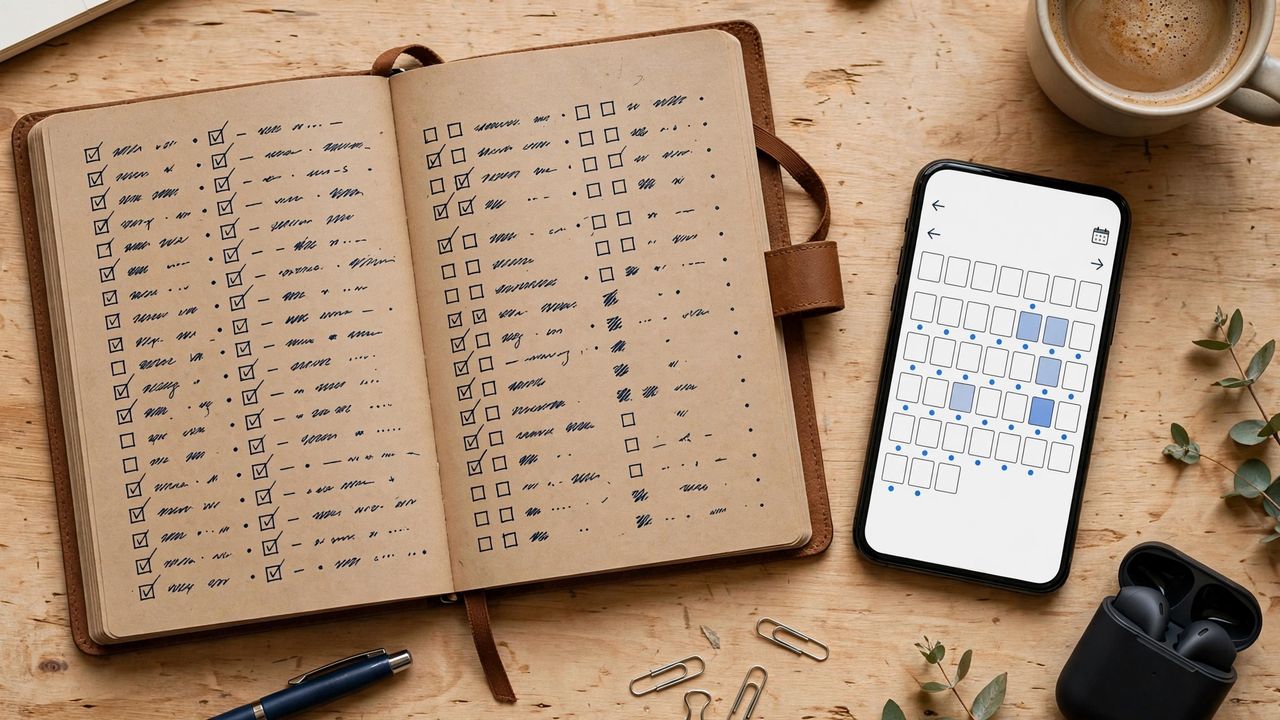
Every January, millions buy a new planner — and by March, most are abandoned. The problem is rarely the planner; it is the mismatch between the tool and your brain. In 2026, paper and digital options are both excellent. Here is how to pick the one you will actually keep using.
Paper planners: focus without notifications
Writing by hand forces your brain to slow down and prioritize — that is why paper fans swear by it. A simple weekly spread beats a fancy dated planner with 47 unused sections. The downside: no reminders, no search, and no syncing. Paper works best if you plan once a day, at the same time, and keep the book open on your desk.
Digital apps: reminders that actually fire
Apps like Todoist, Notion, and TickTick win on one thing: they remind you at the right moment. Recurring tasks, location alerts, and calendar sync mean nothing slips through. The trap is over-engineering — a 12-database Notion system you never open is worse than a sticky note. Pick the simplest app that has reminders.
The hybrid system that beats both
Many productive people use both: paper for the daily top-3 priorities, digital for everything with a deadline. Each morning, write your three must-do items on paper. Let the app handle appointments, recurring bills, and project lists. This split gives you focus from paper and reliability from digital — without the weaknesses of either.
How to make any planner stick
The tool matters less than the habit. Attach planning to something you already do — review your day with your morning coffee. Keep the system embarrassingly simple for the first month. And forgive missed days: a planner survives on restarts, not streaks. The people who stay organized are the ones who reopen the planner after a bad week.
Stop shopping for the perfect planner. Choose the simplest tool that matches how you think, use it for 30 days, and adjust. Organization is a practice, not a purchase — and the best system is the one still open in December.