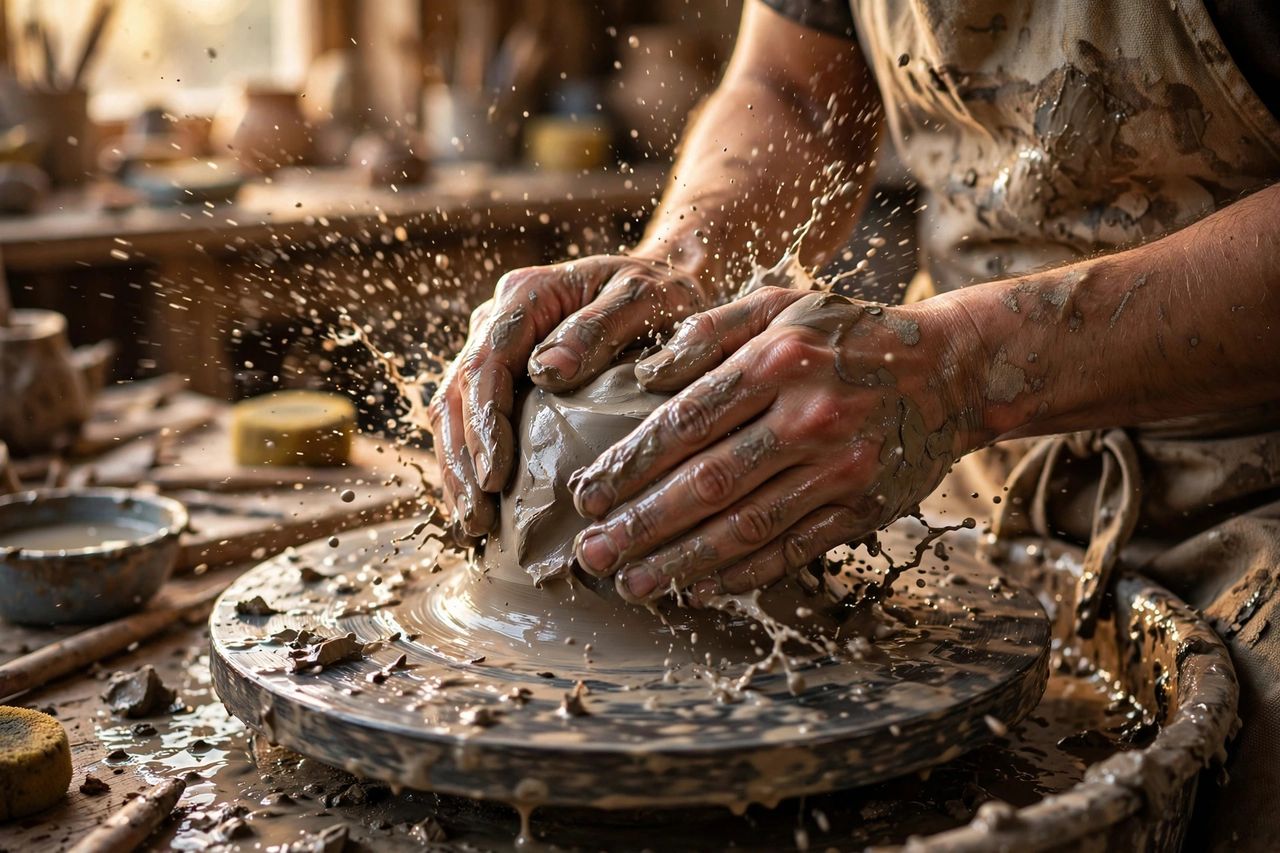
Your first pottery wheel class is equal parts exciting and intimidating — everyone remembers their wobbly first attempt. The good news: instructors expect total beginners, the clay is forgiving, and the learning curve is fast. Here's how to walk in prepared and actually enjoy it.
What to Wear and Bring
You will get muddy — embrace it. Wear clothes you don't mind staining and trim your nails short; long nails carve accidental grooves into your pot. Tie back long hair, remove rings and bracelets, and bring a small towel. Most studios supply clay, tools, and aprons, but ask ahead so you're not the one person without a hair tie.
What Actually Happens in Class
A typical first session starts with the instructor demoing wedging (kneading air bubbles out of the clay) and centering — pressing a spinning lump into a perfect mound. Then you try it yourself, fail gloriously, and try again. You'll likely finish one or two small cylinders or bowls. Nobody expects a masterpiece; the goal is learning how clay responds to your hands.
Centering Tips That Really Help
Centering is the hard part — master it and everything gets easier. Keep your elbows braced against your body so your arms move as one stable unit, not two wobbling ones. Use plenty of water for slip (lubrication) but don't drown the clay. Lean your body weight in rather than pushing with your fingers, and slow the wheel down when things get chaotic — beginners almost always spin too fast.
After Class: What Happens Next
Your pieces get trimmed, dried, fired, glazed, and fired again — a process taking several weeks. Manage your expectations: your first bowl might be lopsided, and that's perfect. Book your next session soon while muscle memory is fresh, because pottery is a skill that compounds fast in the first month.
Pottery rewards patience and muddy hands. Sign up for that class, expect a mess, and enjoy making something with your own two hands. Ask US AI's free chat for studio recommendations or beginner tool lists.