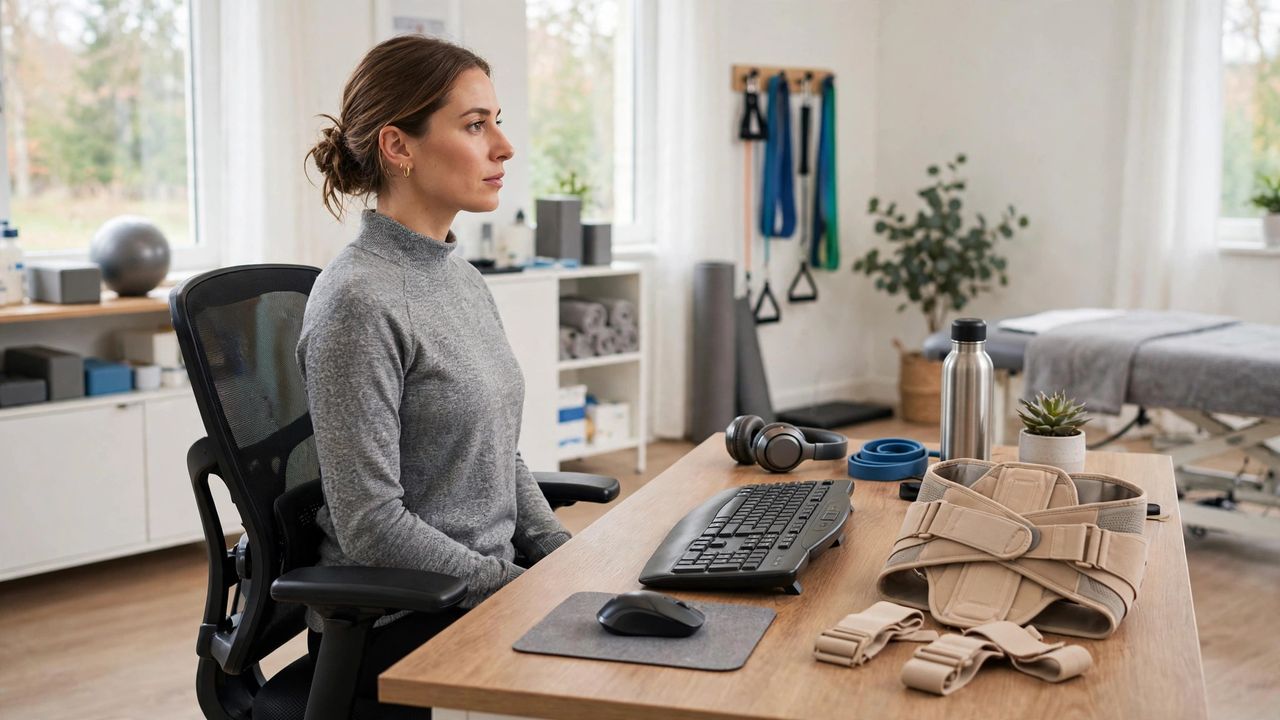
Forward head, rounded shoulders, aching lower back — "tech posture" is the defining body complaint of the desk era, and it is getting worse every year. The good news: posture is a habit, not a bone structure, which means it is fixable at any age. The combination of targeted exercises and a few smart gadgets can straighten you out in weeks, not years.
Fix the Foundation: Your Setup
No exercise overcomes eight hours in a bad chair position. Set your monitor so the top third is at eye level, keep elbows at 90 degrees, and sit with your back fully against the chair — feet flat, knees at hip height. A $15 laptop stand plus an external keyboard does more for posture than any gadget. If you use a phone heavily, raise it to eye level instead of craning down; "text neck" adds up to 60 pounds of effective force on your cervical spine at full tilt.
The 9 Exercises That Actually Work
Forget complicated routines. The highest-impact moves are: chin tucks, wall angels, doorframe chest stretches, thoracic extensions over a chair, bird-dogs, dead bugs, glute bridges, planks, and the standing hip-flexor stretch. Ten minutes a day, five days a week — that is the entire program. Focus especially on strengthening the upper back and glutes (the muscles sitting weakens) and stretching the chest and hip flexors (the muscles sitting shortens). Consistency for six weeks visibly changes how you stand.
Gadgets Worth Buying (and Skipping)
Posture correctors — the brace-style straps — get mixed reviews for a reason. A brace can help as a short-term reminder (30-60 minutes a day) but wearing one all day weakens the very muscles you need to build. Better investments: a lumbar support cushion that enforces your chair's curve, a standing-desk converter for position changes, and a simple posture-reminder app or wearable that buzzes when you slouch. The best gadget is the one that trains the habit, then becomes unnecessary.
Measure Progress Monthly
Posture changes are slow and invisible day to day, which kills motivation. Take a side-profile photo against a doorframe on day one and repeat monthly — the visual comparison keeps you going when the mirror lies. Track pain levels too: most people notice less neck and lower-back ache within 3-4 weeks, well before the photos show dramatic change. If pain is sharp, radiating, or numb, see a physiotherapist before exercising — no guide replaces professional diagnosis.
Fix your setup this weekend, start the 10-minute routine Monday, and take that day-one photo. Your future spine is counting on it.